
GoodVision: “The world would be a good deal fairer and better”

Interview with GoodVision founder Martin Aufmuth

To this day, people – especially in the Global South – still lack access to even the most basic vision aids, eye exams, and more. One organization working to address this problem is GoodVision. MAFO has spoken with founder Martin Aufmuth about why basic care is still lacking and how this affects education and social participation.
The GoodVision program is firmly established in eleven countries, including Malawi, Burkina Faso, Bolivia, and Nepal – some of the poorest countries in the world. In more than 25,000 eye camps, the GoodVision-team has provided more than one million people with GoodVision glasses.
MAFO: How widespread is the problem of untreated vision impairment worldwide today, and in which regions do you see the greatest need for action?
Aufmuth: About one billion people worldwide need glasses but don’t have them. Children cannot learn, and adults cannot work. Uncorrected vision problems are among the biggest – and at the same time, the easiest to remedy – health issues today. Those most severely affected are people in remote rural areas or in slums – in Africa, Asia, and Latin America. Many of them have no access to basic eye care.
MAFO: Why exactly do billions of people worldwide still lack access to simple eyeglasses?
Aufmuth: There is a severe shortage of eye care professionals worldwide. The few opticians, optometrists, and even ophthalmologists in poor countries live where they can earn the most money: in the cities. As a result, rural areas do not have too few professionals – they usually have none at all. People in rural areas usually don’t even have the money to travel to the city, let alone afford an eye exam or a pair of glasses. There’s also a lack of education: We often see people with poor vision who ask for eye drops to correct their vision problems. We then have to explain to them that their problem can’t be solved with eye drops – they need glasses.
MAFO: What are the societal consequences of the lack of glasses for education, health, and overall economic development?
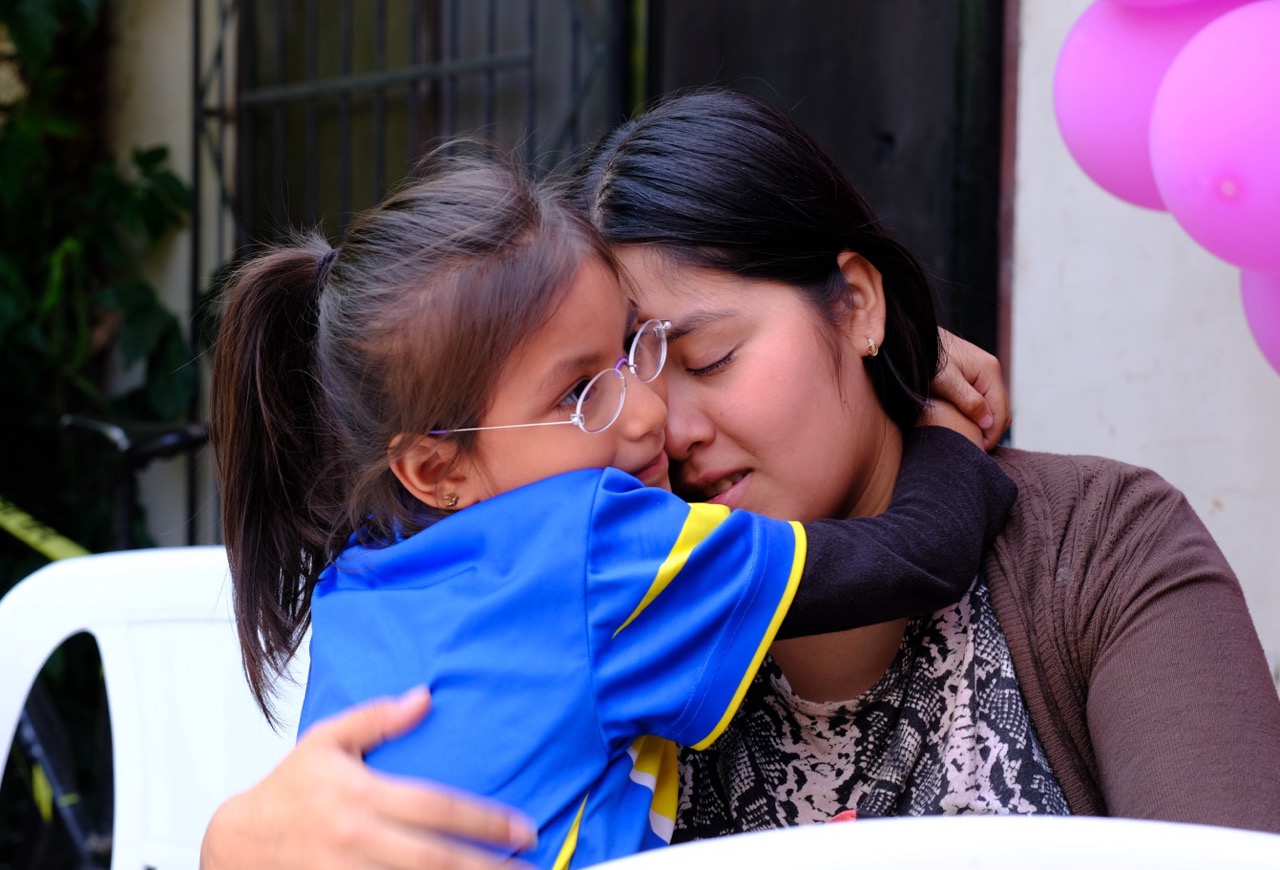
Aufmuth: People with poor vision are disabled. Poor vision acts as an invisible obstacle to one’s entire life. In school, it means that children cannot see the blackboard or their books clearly – and they often drop out early.
We once tested a student in Ethiopia. She was extremely nearsighted but had good grades. We asked, “How do you do it? You have good grades, but you can hardly see anything.” She said, “I have a trick: Whenever there’s a break, I go up to the blackboard and memorize everything. Then I go back to my seat.” How motivated and dedicated must a child be to succeed in school under such conditions?
From an economic perspective, this lack of access means that people cannot perform certain tasks or cannot perform them efficiently, that they have less income – or often none at all – and that their potential remains untapped. A pair of glasses is an inexpensive yet highly effective tool for boosting productivity, self-reliance, and social participation.
MAFO: How exactly does your solution work to address the global vision problem?
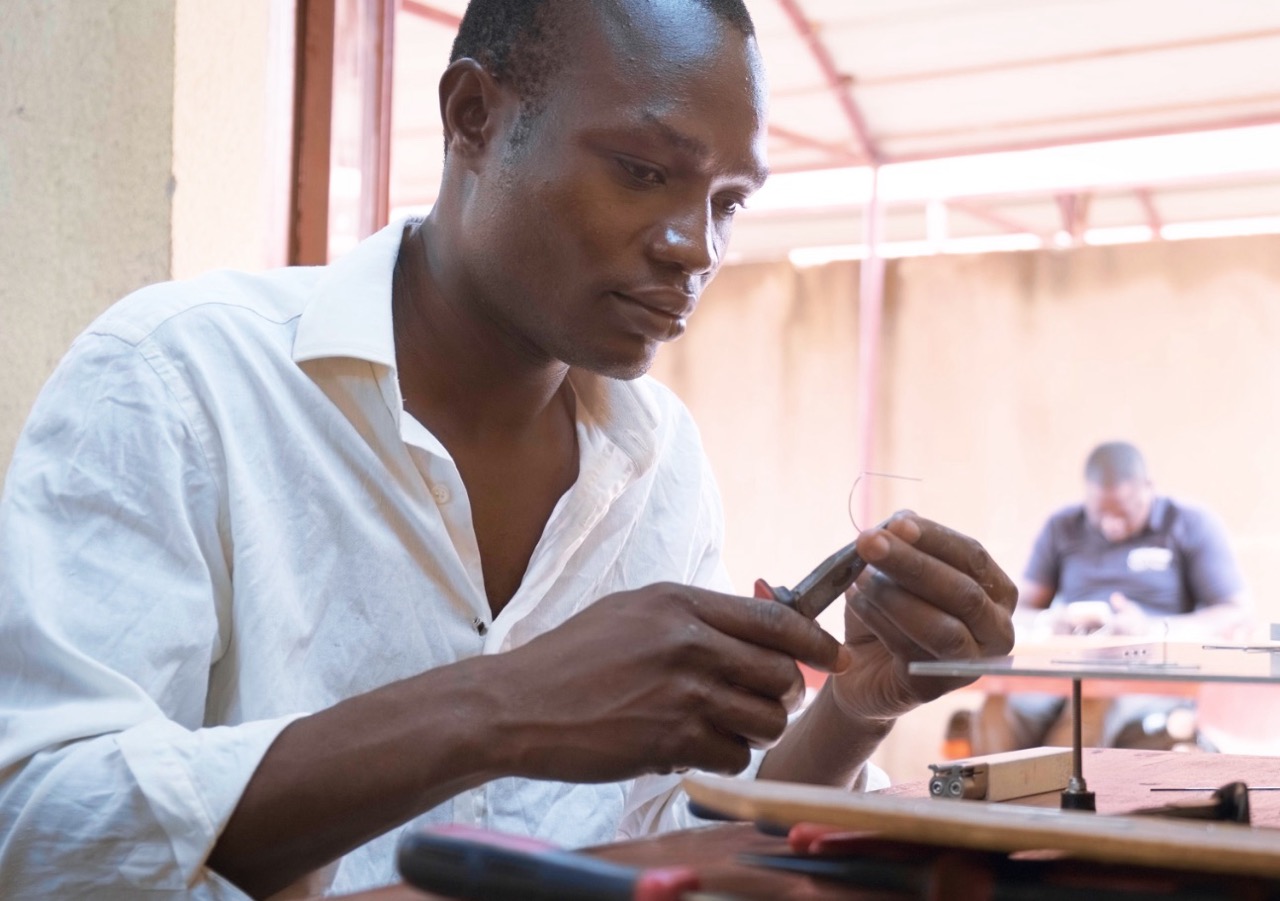
Aufmuth: The GoodVision glasses are manufactured by local people using a simple bending machine. The lenses can be snapped into the lightweight spring steel frame with a single, simple motion. Mobile teams then travel to people in remote villages, conduct eye exams, and immediately provide patients with the appropriate glasses. The material costs for a pair of glasses are about one U.S. dollar. The glasses are then sold for two to three times the local daily wage – helping people help themselves through a social enterprise.
MAFO: Where and how are the spectacle lenses manufactured in advance?
Aufmuth: In my previous life, I was a math and physics teacher. I regularly told my students about my ideas and projects, including the Good Vision glasses. Jonas, a student of Chinese descent, mentioned at the time that his father had a friend in China who manufactures eyeglasses. Jonas established contact with Mr. Zhang in Wenzhou, in southern China, who has been manufacturing the lenses for us ever since – probably at cost price. He doesn’t want to make a profit on the lenses – that’s his contribution to our social project, he once told us. Because the lenses are a fixed standard size, they can be used universally with different frame sizes and can also be easily replaced later without the need for complex equipment on site.
MAFO: Is it correct that the lenses are purely spherical, and if so, how do you address the needs of people with higher astigmatism?
Aufmuth: Our system is intentionally kept simple: basic care that helps as many people as possible quickly, reliably, and affordably. People with mild astigmatism are usually happy when they can read and work again thanks to a spherical correction – it’s about survival, not perfection. However, people with severe astigmatism require a cylindrical correction that goes beyond standard solutions. In such cases, we try to help those affected with custom-made glasses.
GoodVision
is an international non-profit organization that improves access to affordable eye care in low-income communities around the world. The organization provides vision screenings, low-cost eyeglasses, education and more. A key part of its approach is the local production of durable, low-cost glasses – a concept that creates additional jobs and strengthens the local people’s specialist knowledge.
Martin Aufmuth founded the organization in 2012 under the name EinDollarBrille (global brand: GoodVision).
MAFO: How do crises, conflicts, or climate change affect access to vision aids?
Aufmuth: People whose crops fail due to climate change, drought, or flooding are struggling to survive. In Malawi, even in normal years, people go hungry for about two months before the next harvest arrives. And there’s no money for glasses then either.
Conflicts make the situation much worse. In Burkina Faso, due to the high risk of terrorism, we haven’t been able to access rural areas – especially in the north – for a few years now. About 1.5 million people have fled to escape the violence. We’ve just started training nurses at health clinics to conduct simple vision tests, so we can still reach these people. Under such conditions, you have to be creative if you want to reach people anyway.
MAFO: What would you like to see from governments or the optical industry to help provide vision aids to more people worldwide?
Aufmuth: We hope that governments will consistently incorporate and fund basic eye care as an integral part of primary health care, including regular screenings – for example, in schools. The GoodVision initiative is now valued by numerous governments as a reliable and innovative partner. Another important aspect is the training of skilled professionals. We hope the optical industry will form partnerships with us – both on a technical level and, ideally, in the form of financial support: Often, even here, good and simple solutions simply fail due to a lack of funding.
MAFO: In your opinion, are there technological advances that could improve global eye care in the coming years?
Aufmuth: Yes, technological advances can and will significantly improve care if they are applied in a practical way. Digital screenings and vision tests can help detect vision problems early in more people, especially in schools or remote regions. Teleconsultation can help determine when glasses are sufficient and when a medical evaluation is necessary. We have just developed our own app and rolled it out in all the countries where we operate. It allows patient data to be easily entered into a smartphone, which is then fed into our global quality assurance system.
MAFO: If everyone in the world had access to a pair of glasses that fit them perfectly tomorrow – how do you think the world would change?
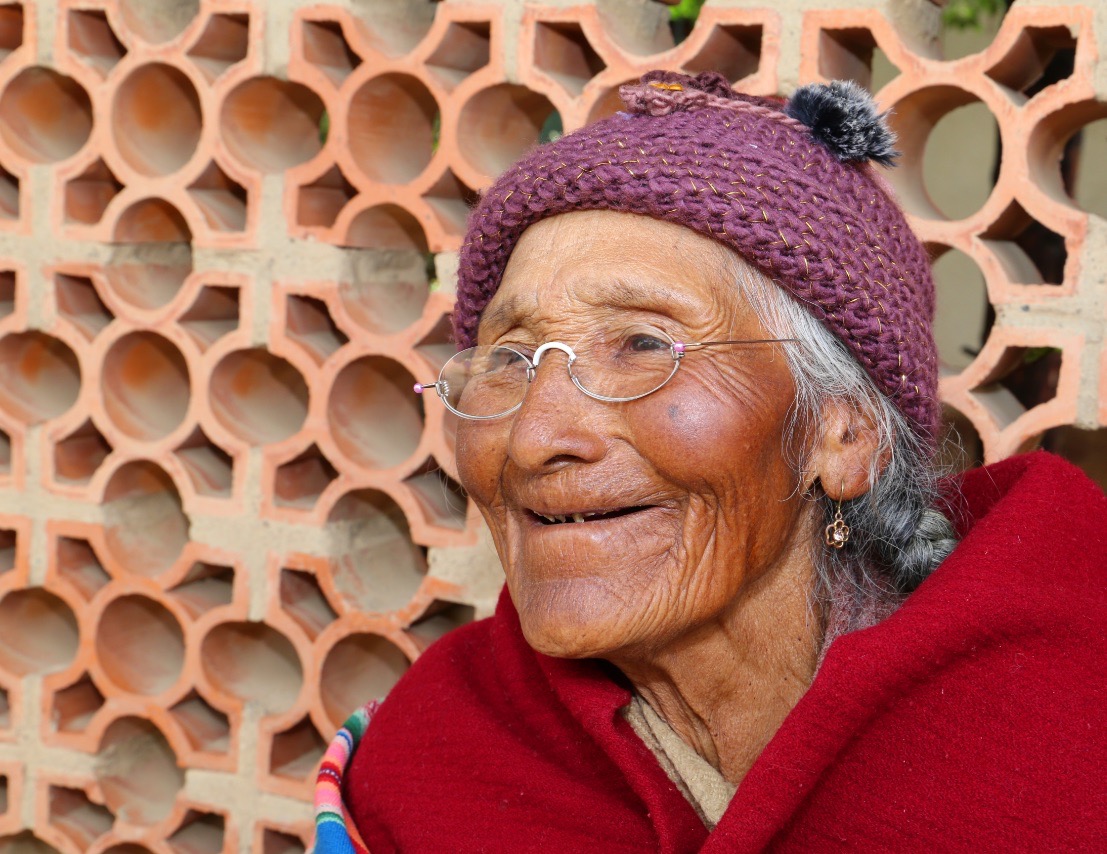
Aufmuth: Children around the world would have a fair chance at education and a future. Adults would be able to work again – or for the first time in their lives – and earn a living for their families. There would be far fewer traffic accidents worldwide, and millions of grandmothers would be happy because they could once again sew for their grandchildren. The world would be a good deal fairer and better. That is what we are fighting for.
MAFO: Thank you very much for the interview.