
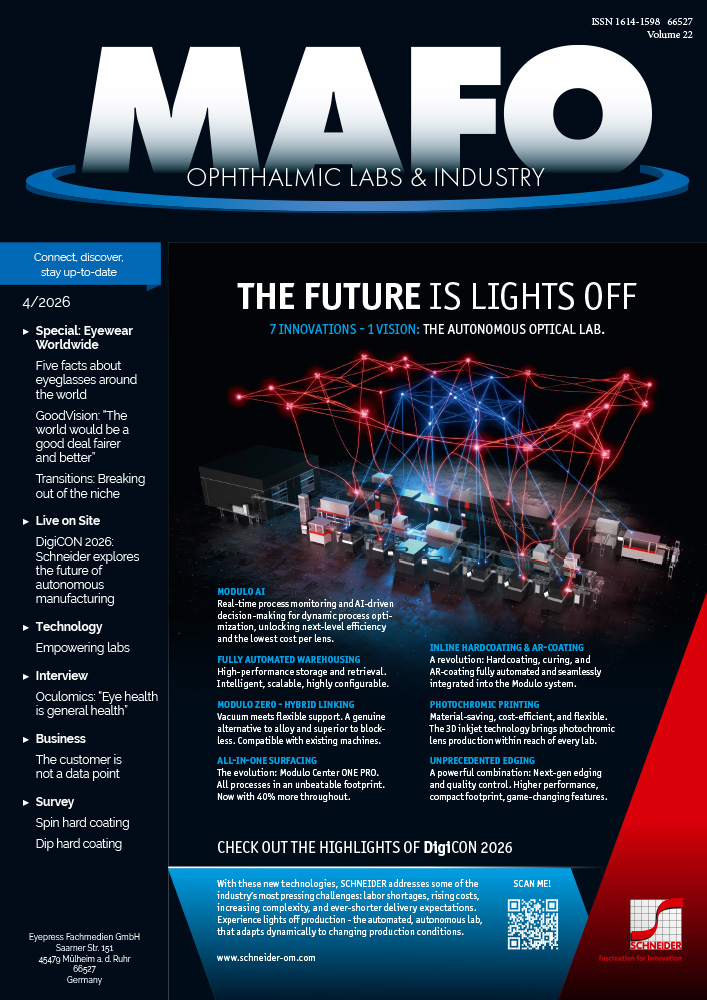
DigiCON 2026
Schneider explores the future of autonomous manufacturing
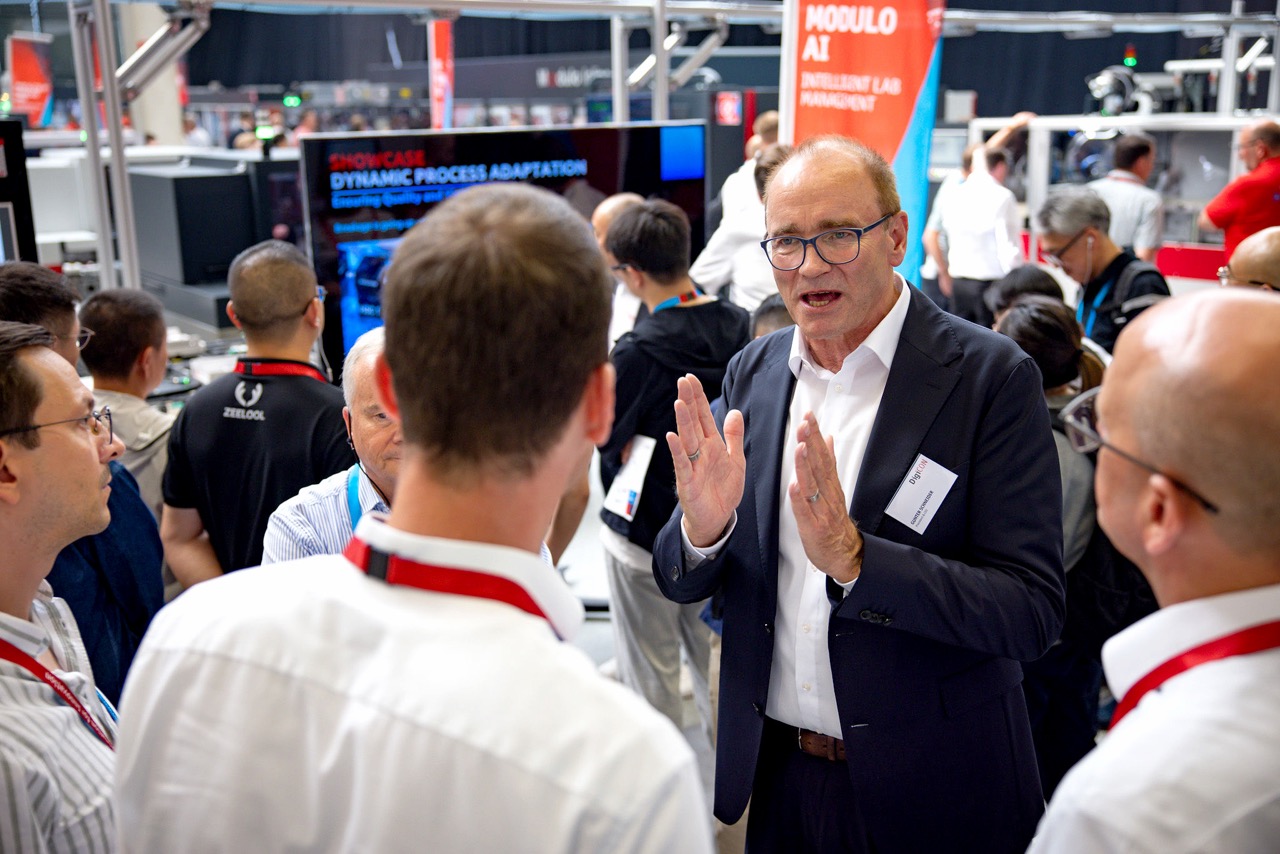
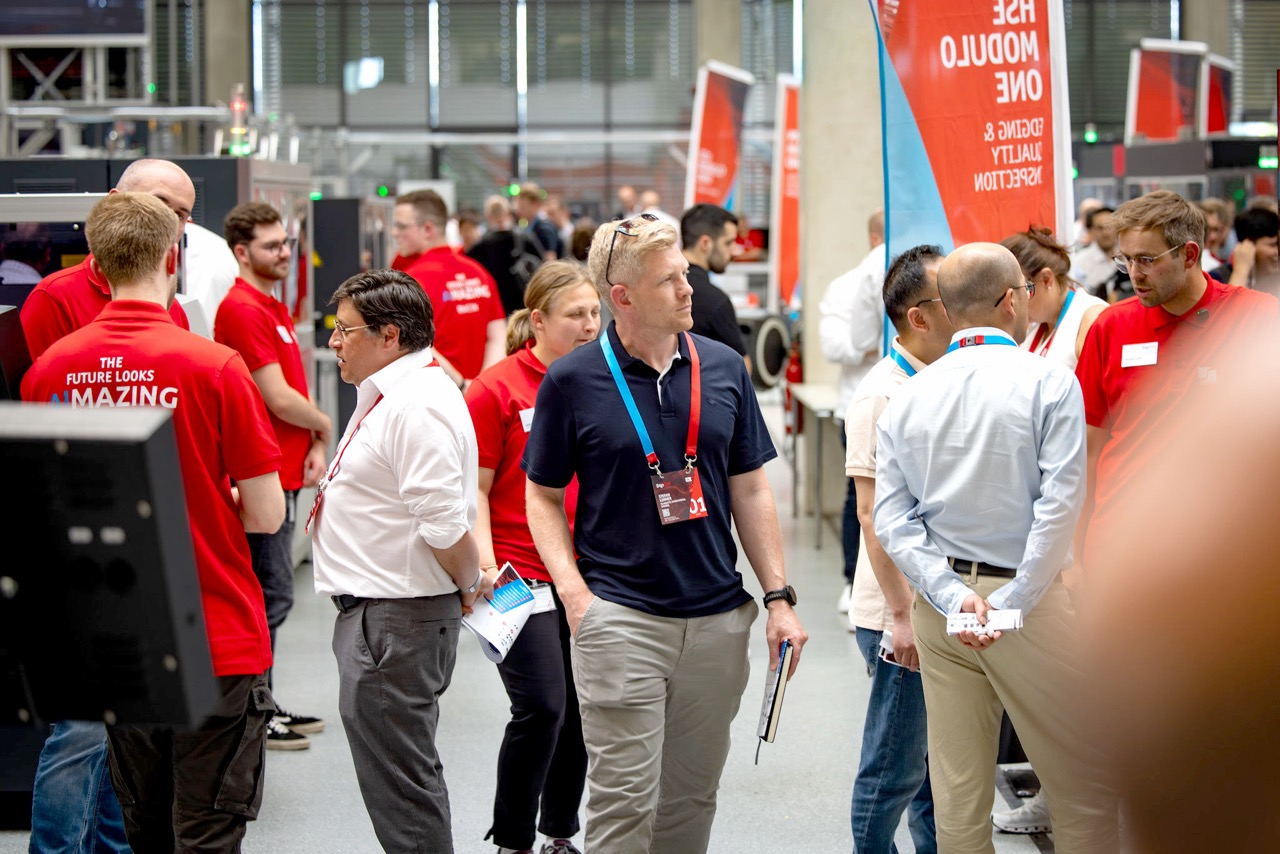
In June, machine manufacturer Schneider Optical Machines hosted its well-known in-house trade show, DigiCON. This year, the event drew more visitors than ever before in the company’s history. No wonder: in addition to showcasing innovations, the machine manufacturer also provided answers to important questions – such as whether Schneider is embracing the blockless trend or how realistic fully autonomous “lights-off” production is for the future.
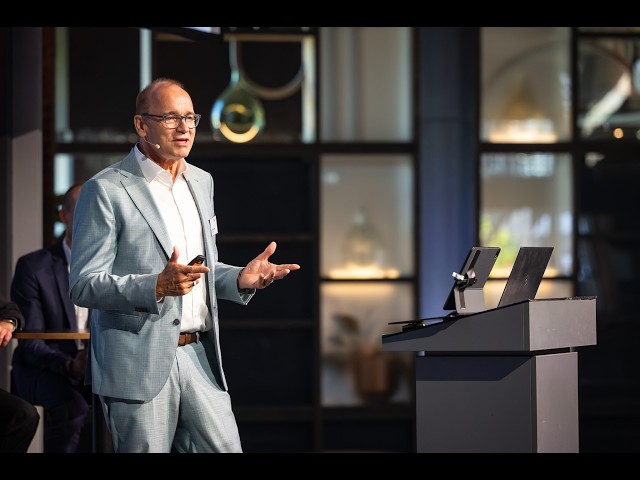
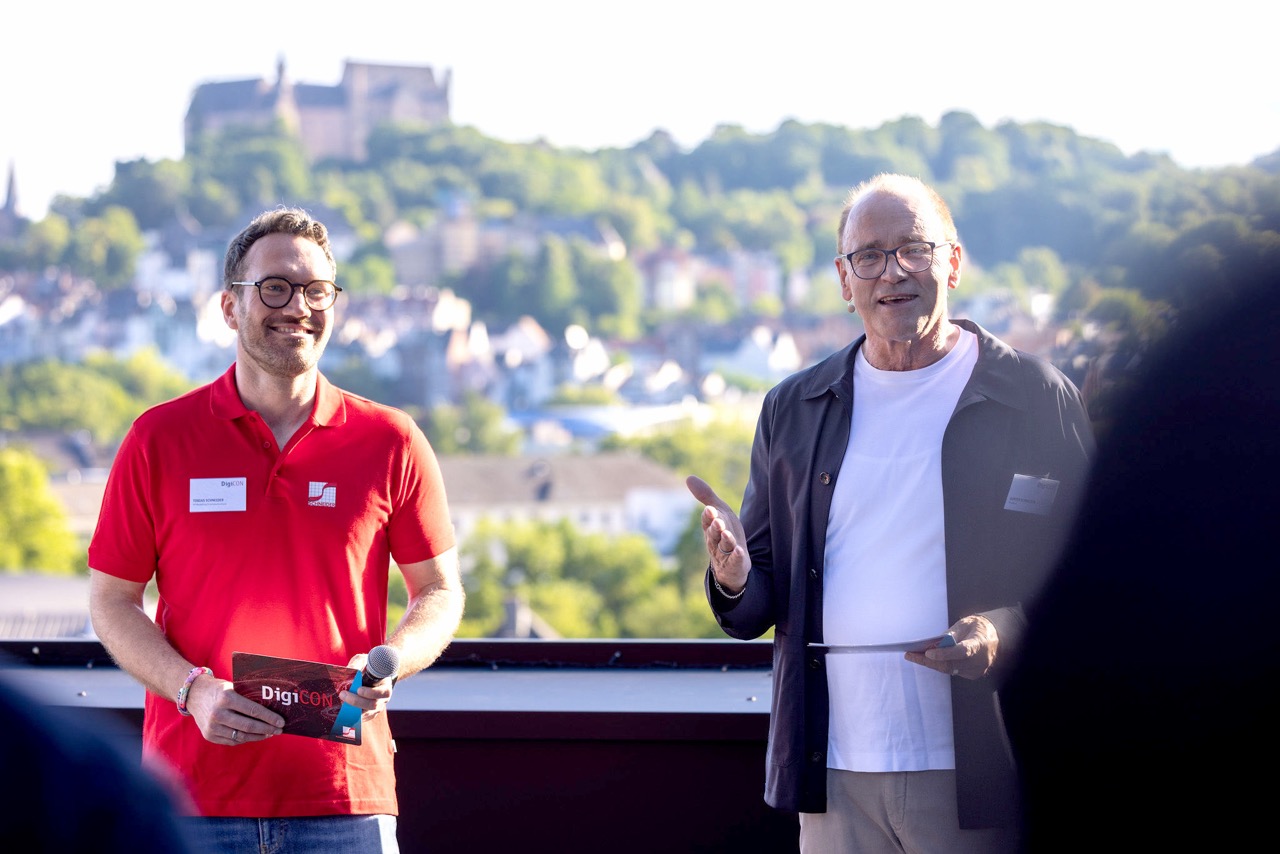
“Every transformation begins with a vision,” said Chairman Tobias Schneider as he kicked off the official stage program of DigiCON in Marburg, Germany, on June 17.
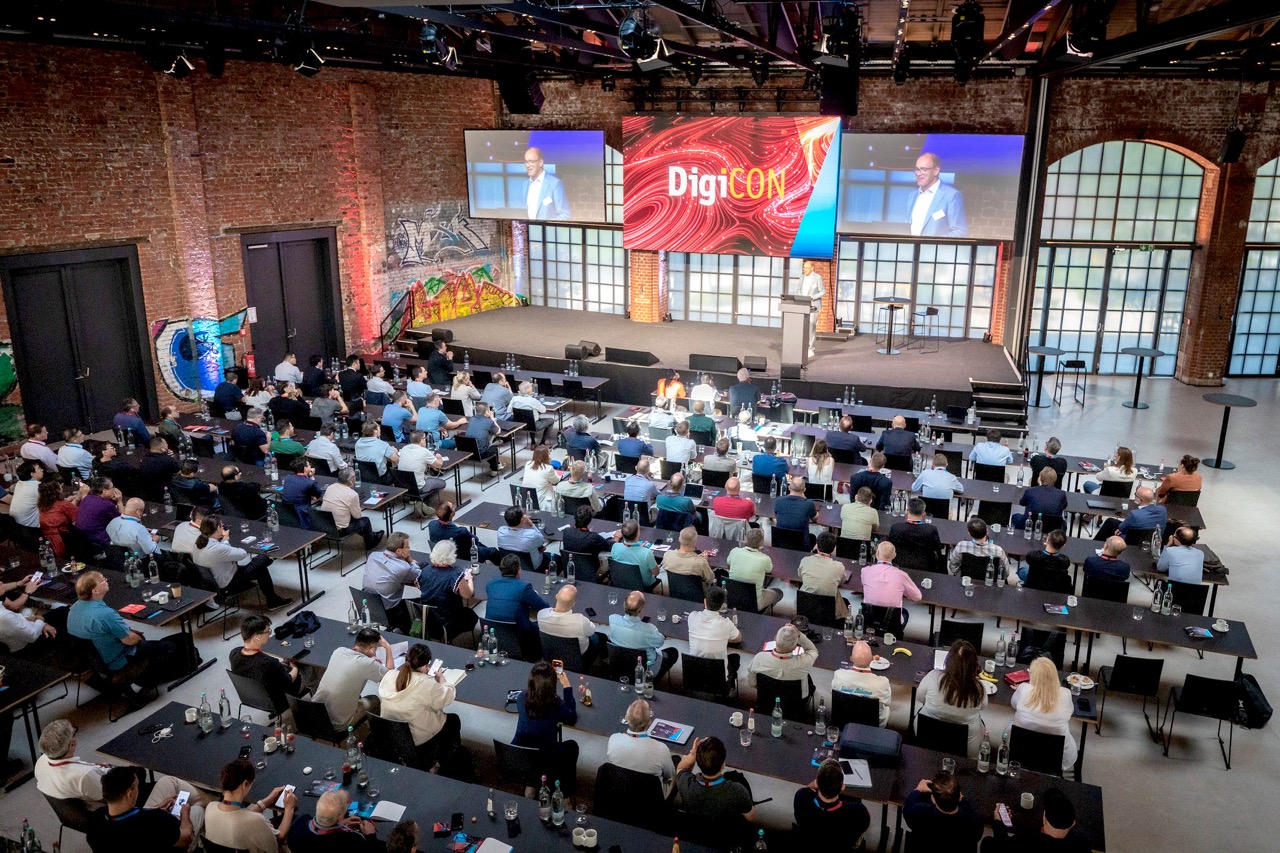
And indeed, the three-day event offered a glimpse into visionary concepts that could redefine the future of manufacturing. Here, in the event location so-called “Lokschuppen,” more than 250 visitors from over 50 countries had gathered to hear more about those new processes and the transformation.
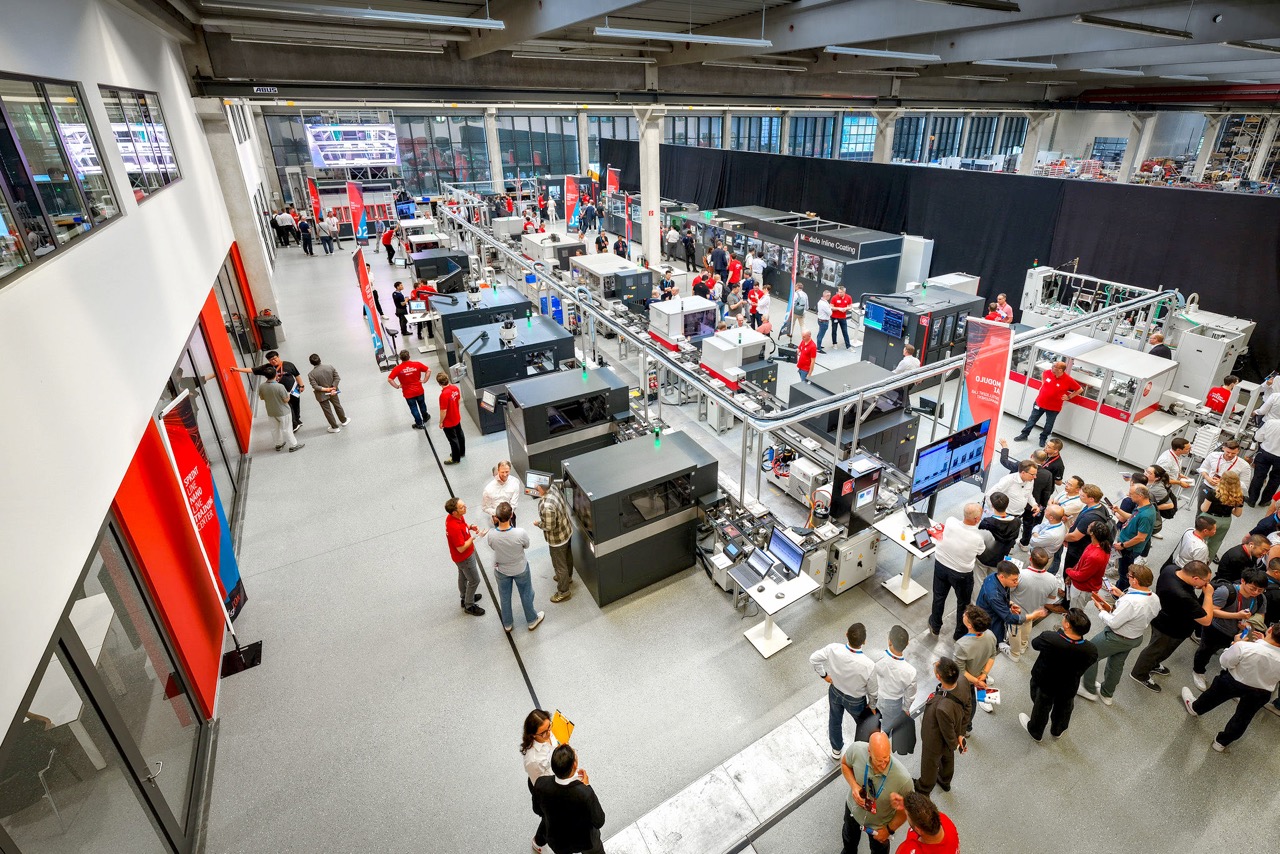
In addition to the engaging program featuring numerous speakers from Schneider, visitors were treated to a live presentation of all the machines at the company’s headquarters nearby in Fronhausen. And, of course, there were plenty of opportunities for networking and a supporting program as well.
A pioneer conquered the market
“It is a great honor for us to welcome leading representatives of our industry from around the world to Marburg and Fronhausen. At the same time, it is a strong vote of confidence in what we are building,” said Gunter Schneider, Founder and President of Schneider. He is the person primarily responsible for the vision teased earlier by his son Tobias Schneider.
Schneider founded the company in 1986 but made his breakthrough in the field of ophthalmics in 1993, when he shook up the market with his unconventional vision. He wanted to build a machine that could do it all: spherical, toric, and progressive lenses. And he had a vision of manufacturing custom lenses based on freely definable mathematical descriptions – the beginning of free-form technology.
Lights off production and what it takes
During DigiCON, however, Schneider experts shared their current vision for the future of optical labs and spectacle lens manufacturing, highlighting the latest trends and innovations shaping the industry. The overarching theme of this DigiCon was the wide range of steps and innovations designed to make lights off production a reality.
Gunter Schneider emphasized the necessity of this approach, particularly in light of pressing challenges such as the shortage of skilled workers, rising production costs, increasing product complexity, and ever-shorter delivery times. But what does thelights off production in the lab actually require?
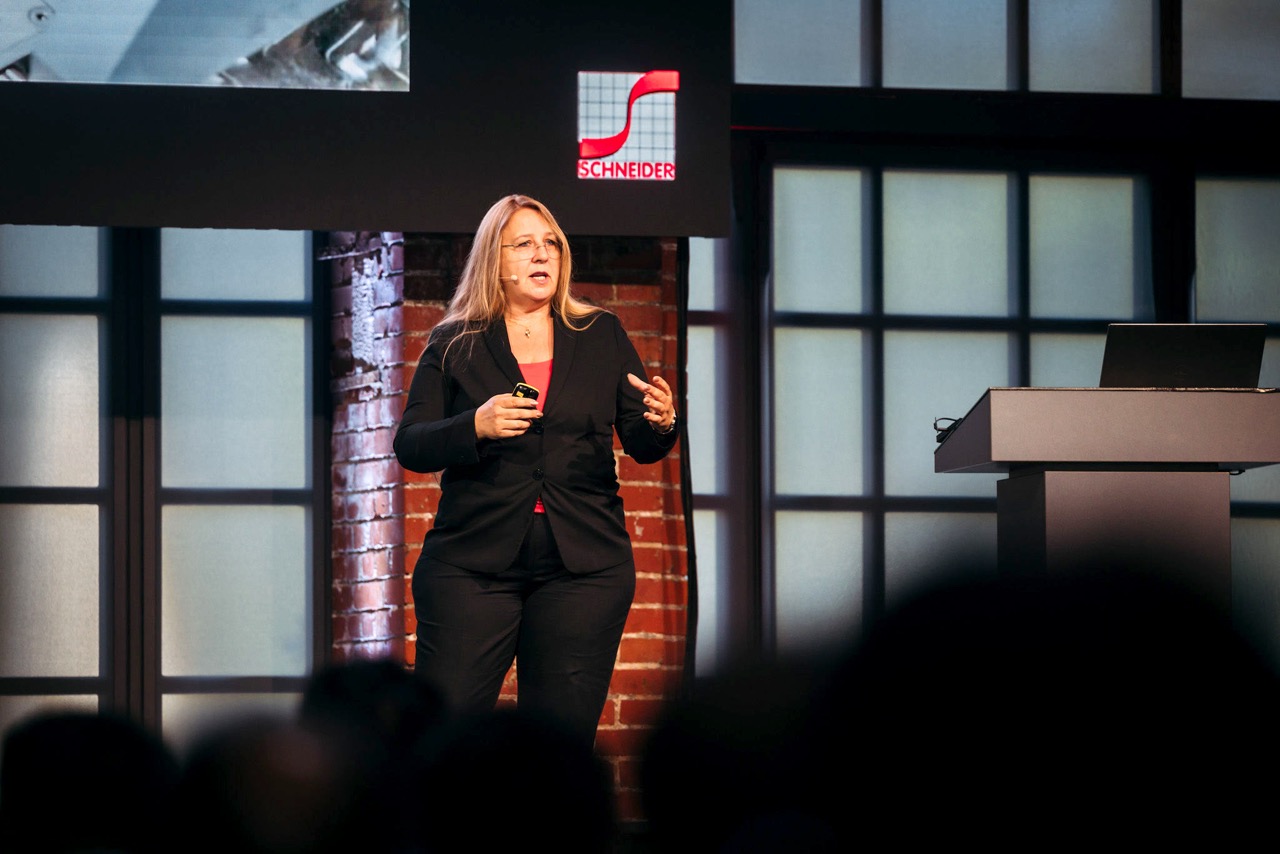
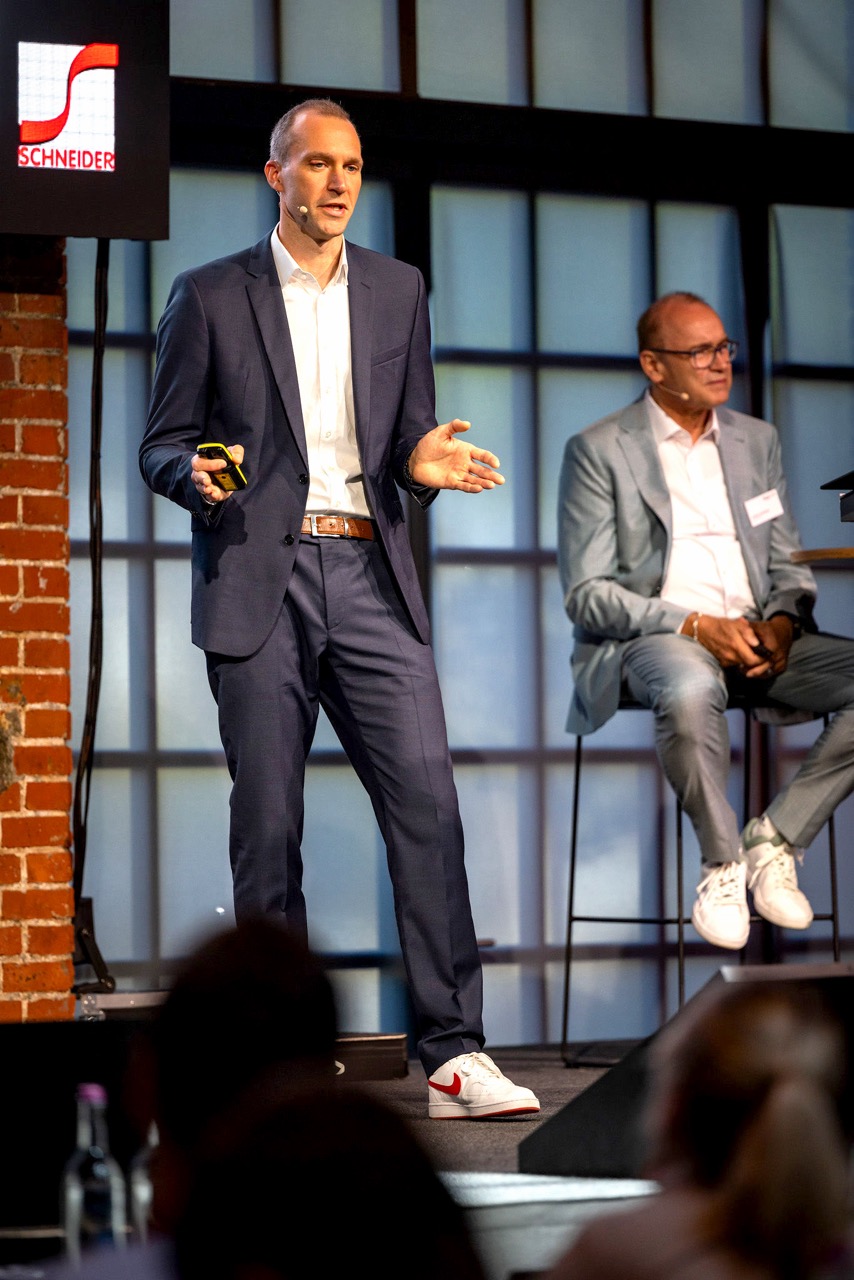
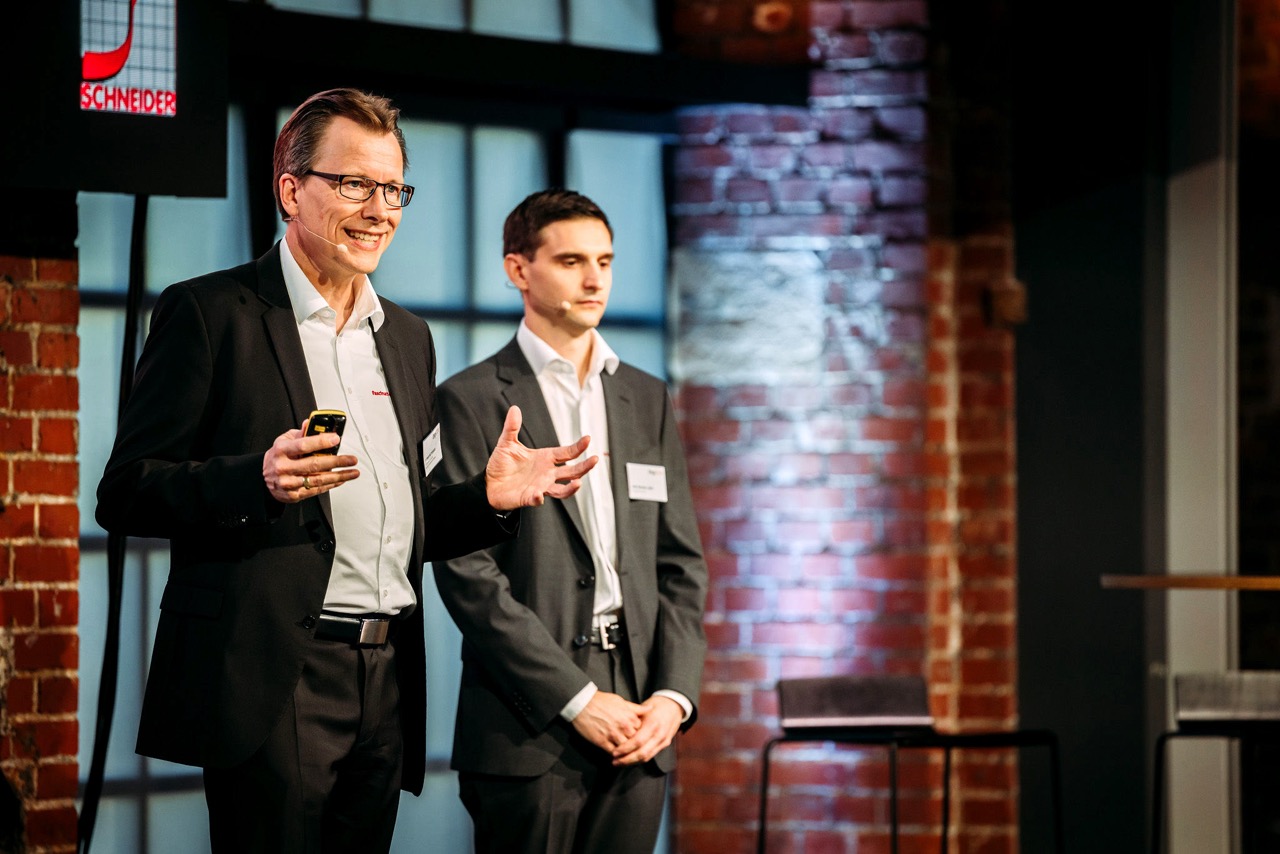
Schneider experts like Dr. Sandra Stry, Dr. Stephan Huttenhuis, Dr. Marcel Mahner, Sebastian Schneider, Kurt Atchinson, and many others – provided detailed answers for a wide range of processes.
The Modulo system as an AI-controlled platform, inline coating, photochromic printing, and vacuum-based blocking are just a few of the key approaches.
Artificial intelligence in the driver seat
“We are putting AI in the driver’s seat” was Gunter Schneider’s motto regarding the AI-optimized lens production platform Modulo. The Modulo system is deliberately designed to integrate a wide variety of processes – such as warehousing, surfacing, cleaning, coating, and edging – in a way that requires only minimal manual intervention. AI now takes this process to the next level. Sensors continuously monitor quality parameters and process data. Based on this information, the AI can then dynamically adjust production parameters.
“Modulo AI enables higher throughput, eliminates bottlenecks, and improves utilization of existing capacity without adding headcount. The savings and efficiencies we unlock this way are significant,” explained Gunter Schneider.

Inline coating
If those in charge have their way, inline coating will be the answer to labor shortages and the lack of automation in the coating sector. Until now, spectacle lens coating has generally been performed in separate cleanrooms. Many steps in this process are manual and difficult to automate.
Schneider’s new solution to this challenge is inline coating. It is one of the decisive steps toward fully autonomous production – and at the same time, a process that has long been considered extremely difficult to automate. The solution is now designed to be a system that combines inline stations for hard coating, thermal curing, and AR coating, allowing the process to run fully automatically. The manufacturer had already been working on in-line coating several years ago, but today’s solution is said to be significantly more mature.
Photochromic printing
According to Dr. François Breton and Kevin Cross, photochromic lenses already account for 12–15% of sales in some regions today – and the market is growing. To meet this rising demand, there is now the opportunity to produce photochromic lenses in-house using a printing process. As the name suggests, the photochromic layer is applied to the lens using a 3D inkjet printing process, making manufacturers independent of photochromic blanks. To save material that would be milled away during edging anyway, only the final shape needs to be printed.
Vacuum-based blocking
Visitors were clearly interested in the new alternative for blockless technologies from Schneider. This was especially evident in the machine hall, where many visitors flocked to the new machine first. This process is not a completely blockless solution, but it is one that does not require alloy – and that is called “hybrid linking.” To achieve this, the machine manufacturer has developed a process that combines vacuum-based fixation with a flexible and adaptable base that provides the best possible support for the blank during surfacing. This combination takes place in a “linking unit,” which can support multiple lines if necessary. The technology is compatible with existing machines, allowing the machine to be easily installed in existing production environments.
All-in-One
The manufacturer is also continuing to expand its all-in-one solution for surfacing. The system combines milling (in two separate, vibration-isolated units), polishing (in two polishing units), as well as washing, drying, and laser marking.
Compared to the previous system, the polishing process has been improved, and polishing time has been reduced thanks to a new polishing liquid. Additionally, DPSS lasers or CO2 lasers can now be used at the laser marking station – either individually or in combination.
Warehousing
Another product was hard to miss simply because of its size – the new warehouse system. Up to 60,000 lenses per unit can be stored in this system. It can accommodate semi-finished and finished lenses as well as frames. Handling is performed using vacuum technology and is video-controlled – another step toward autonomous production.
Overall, Schneider presented itself here as a major player in the global market, aiming to gradually cover every single process for labs and now even offering machines for contact lens manufacturing. This event left no doubt that the future in the lab is becoming increasingly autonomous. The manufacturer has delivered. Now, time will tell how open labs are to going the path towards autonomous production.
DigiCON Oktoberfest
After so much technical input, however, the participants also enjoyed the opportunity to mingle over good food and recreational activities. Many lively conversations and technical discussions enriched the days as a side event, where experts could also discuss the potential of the respective technologies among themselves.
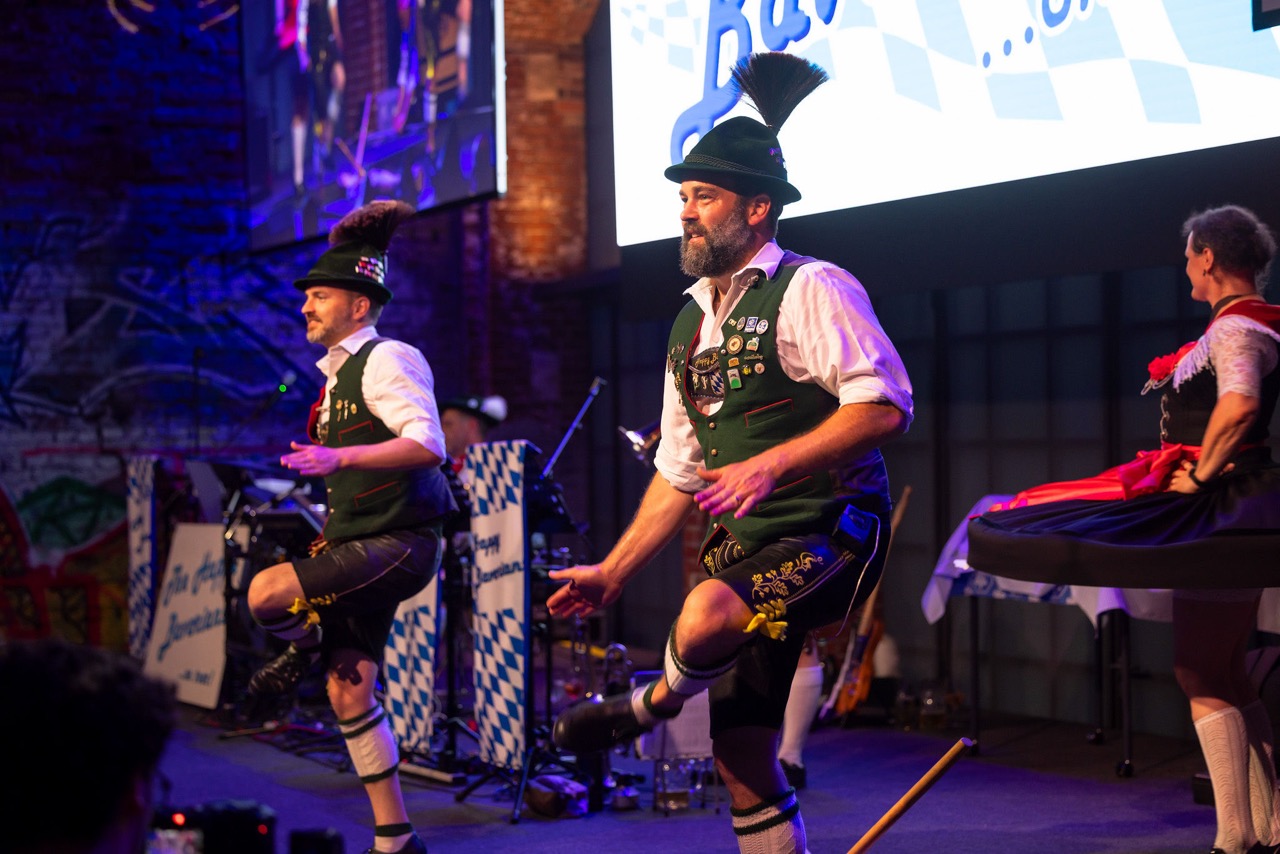
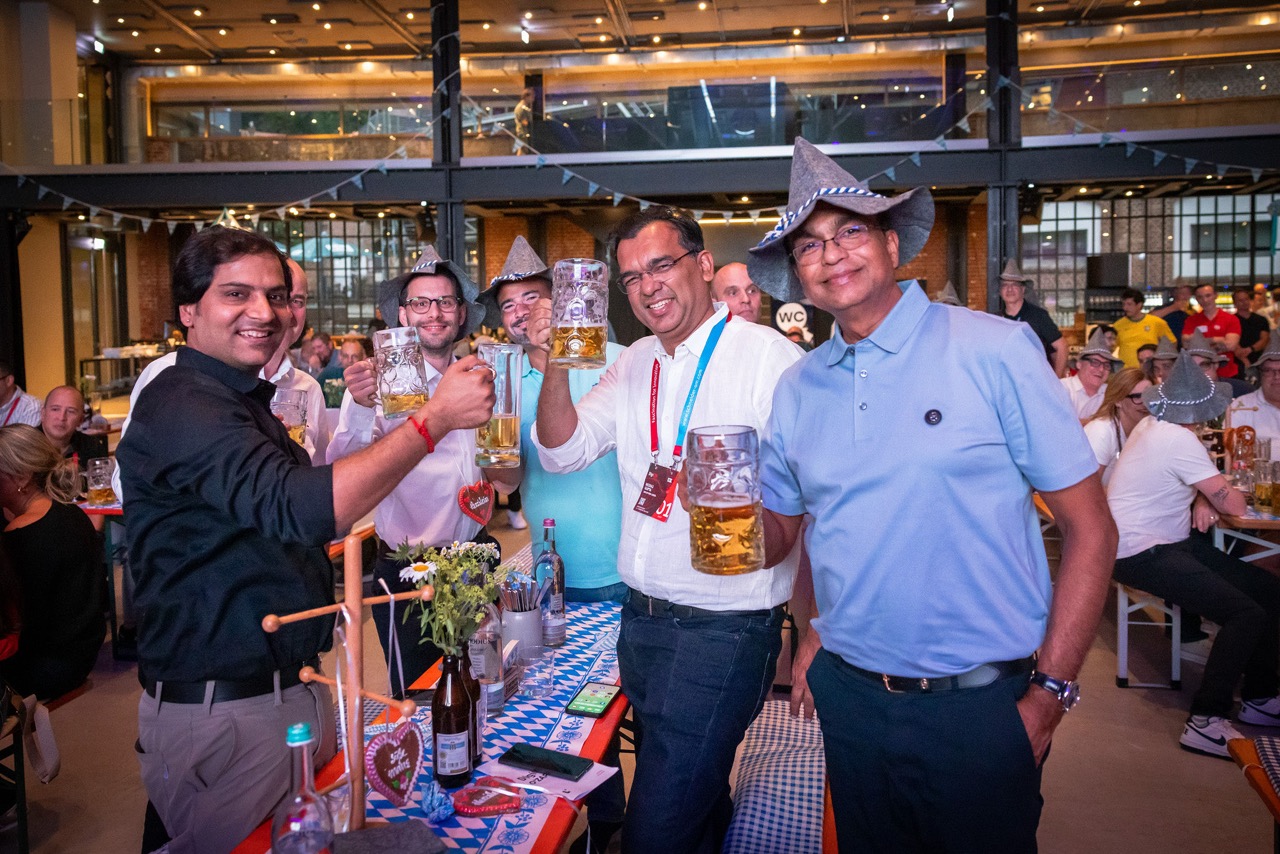
For the international visitors in particular, there were also several program highlights designed to convey the spirit of German traditions. To that end, Friday evening concluded with an Oktoberfest and a statement that we might not hear from this manufacturer again: “Tonight we throw the rules.” Fortunately, this obviously didn’t refer to the art of engineering but to the Oktoberfest – which, unlike the usual practice in Germany, didn’t take place in October in Bavaria, but in June in Marburg.
Not even the sudden thunderstorms on Oktoberfest night could dampen the enthusiasm of the attendees. The evening was enjoyed to the fullest, and many participants carried the good spirits into the next day, joining the entertainment activities together.