Oculomics: “Eye health is general health”
An interview with Dr. Norbert Gorny
The eye as a gateway to overall health, and AI as an assistive technology: in this interview with MAFO, Dr. Norbert Gorny, Chief Scientific Officer at EssilorLuxottica, shares his perspective on where optometry and eye care are headed. He discusses the opportunities and limitations of Oculomics, the new demands on opticians, and why personalized care is set to replace one-size-fits-all approaches.
MAFO: With oculomics, the eye is coming into focus as a window into systemic health. Where do you see realistic applications and where do you see limitations?
Gorny: That’s exactly right. With the scaling of modern imaging technologies – namely, significantly improved fundus cameras and the widespread availability of OCT – the analysis of the retina is increasingly taking center stage. At the same time, capturing such images is no longer exclusively tied to the expertise of a doctor. Well-trained professionals can capture these images in a short amount of time. This generates an enormous amount of data and provides new insights – even in patients who have not yet developed symptoms.
Essentially, we are at the beginning of a development that can certainly be described as a revolution. Today, more than 1,000 biomarkers can be identified from the retina.. At first glance, it may sound as though we’ve found a universal tool for diagnosing all diseases. But it’s not that simple: Only about 50 of these biomarkers are currently clinically relevant, and even these are often not yet sufficiently validated by longitudinal studies to reliably support a diagnosis.
MAFO: Does that mean technological feasibility is further along than clinical validation?
Gorny: That is the key hurdle right now. It may still take several years before these methods are widely adopted in clinical practice and approved by regulatory authorities for diagnostic use. On top of that, regulatory frameworks vary greatly from country to country.
In my view, there are three major hurdles: first, data volume and data quality; second, demonstrating clinical relevance; and third, implementation in everyday practice including reimbursement schemes from healthcare insurers.
To this day, there is no uniform quality standard for retinal images. If you’re seeking international approval for an AI application, you often run into trouble simply because manufacturers of devices – such as OCT systems – can’t agree on a defined minimum quality standard. Radiology is significantly further along in this regard.
MAFO: Where do you see the first realistic areas of application?
Gorny: The clearest opportunity lies in the early detection of subclinical conditions, before symptoms appear.These include changes associated with high myopia, diabetes, and AMD. Another major area is glaucoma. Intraocular pressure remains important, but as a single parameter it is not particularly reliable. Structural data related to the optic nerve provides additional information with tremendous potential.
We then come to systemic diseases. In this area, I see two major groups in particular: cardiovascular diseases and neurodegenerative diseases, especially Alzheimer’s disease.
MAFO: There are many screening providers, and professional roles vary greatly internationally when it comes to the scope of practice for opticians or optometrists. Where do you think screening is best situated?
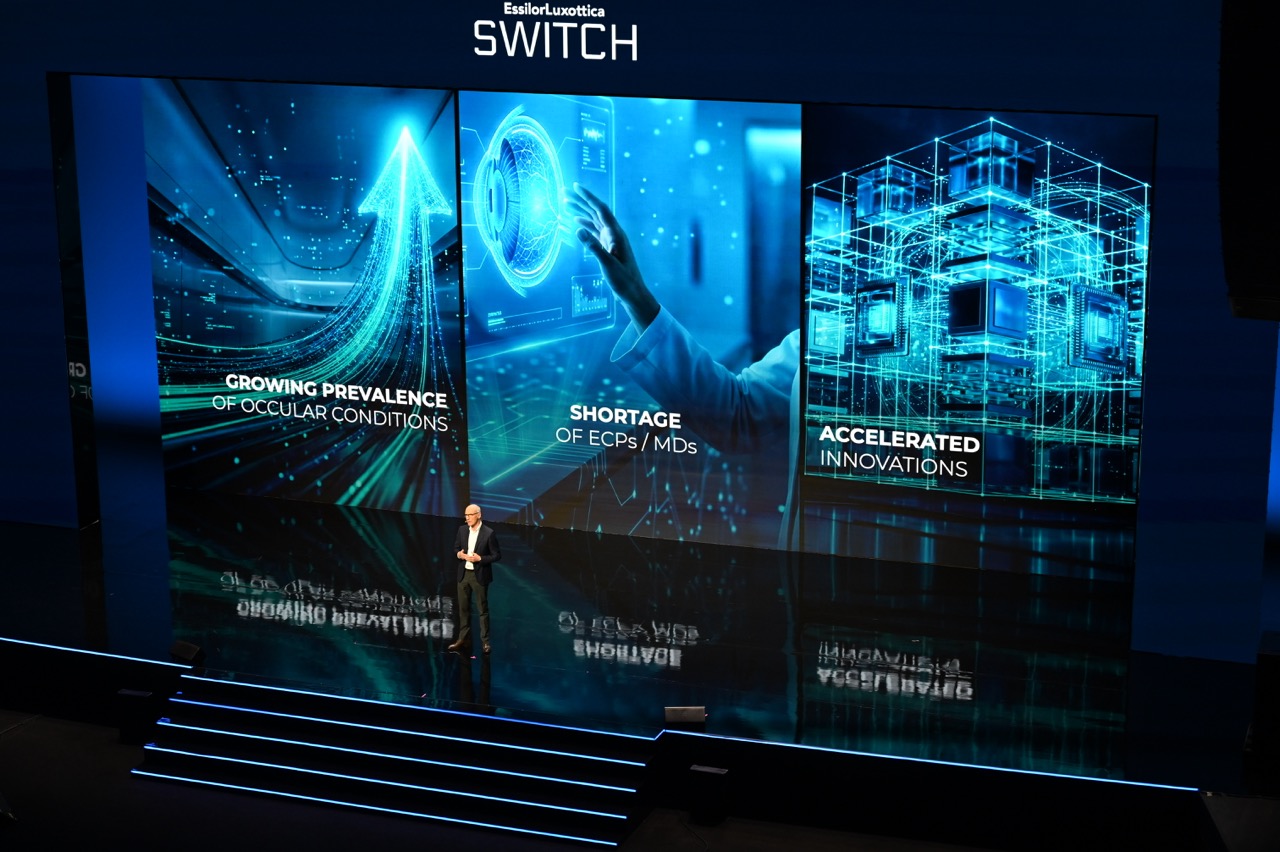
Gorny: At SWITCH (Vision Innovation Summit by EssilorLuxottica), we’ve often said that eye care professionals play an essential role in primary care because they support patients throughout every stage of life, from childhood through older age. That is fundamentally true. However, ECPs have very different levels of education and must operate within different regulatory environments.
The first challenge is to make opticians aware of one simple fact: The classic, successful business model centered on eyeglasses, fashion, and consultation remains important – but it won’t be enough in the long run.
The pressure from online retail, price competition, and cross-channel competition persists. That’s why, in my view, further training is needed. And this training is moving toward digital competence, but also toward higher-value medical services.
MAFO: This means, building expertise beyond traditional refraction?
Gorny: Yes, absolutely. When a company like Fielmann begins systematically introducing fundus cameras into its stores, it shows that they recognize strategic potential there.
For me, that’s a signal: A well-trained German or French optician is fundamentally capable of providing higher-value services. Whether they can already interpret all the resulting information on their own in every case is another question.
Definition of Oculomics
Simply put, the term Oculomics describes the concept that the eye can serve as a window into the health of the entire body. To this end, connections are established between ophthalmic biomarkers and systemic health or disease states. This is because many diseases, such as diabetes and cardiovascular diseases, can cause changes in the eye that can be detected using imaging and measurement techniques.
That’s exactly where AI comes into play. If it’s properly validated and built on standardized, high-quality imaging, it can help a well-trained optician deliver significantly better service. The next question, however, is: Who pays for it? In systems like those in the UK or the US, this is more clearly regulated. There, people know: If I invest in education and equipment, I can also generate additional revenue from it. In many Western European markets, this is not yet sufficiently defined. Insurance providers for example, need to understand better that early intervention for glaucoma or retinopathies is much more cost-effective than delayed action over the course of a patient’s life.
We must constantly emphasize that it won’t work without continuous education. This applies to businesses as well as academic institutions like optometry schools, technical colleges, and all institutions that systematically teach optometry.
MAFO: At the same time, there are low-cost screening options on the market, such as those offered in drugstores. From the customer’s perspective, the price difference is often hard to understand. How do you explain the difference?
Gorny: That’s an important point. I believe this requires a joint effort. As a company, we strive to communicate very clearly on an international level: eye health is general health. Not only because the eye is an indicator of many physical conditions, but also because, in many respects, it ages faster than other organs or sensory systems.
To properly assess these connections, you need training.
Of course, technology can automate many parts of the process. It can generate reports or datasets for expert reviews. But ultimately, who does a physician trust more – a simplified machine-generated assessment, or the judgment of a well-trained healthcare professional?
We also need to consider the risk of false positives and false negatives when these technologies are used without appropriate oversight.
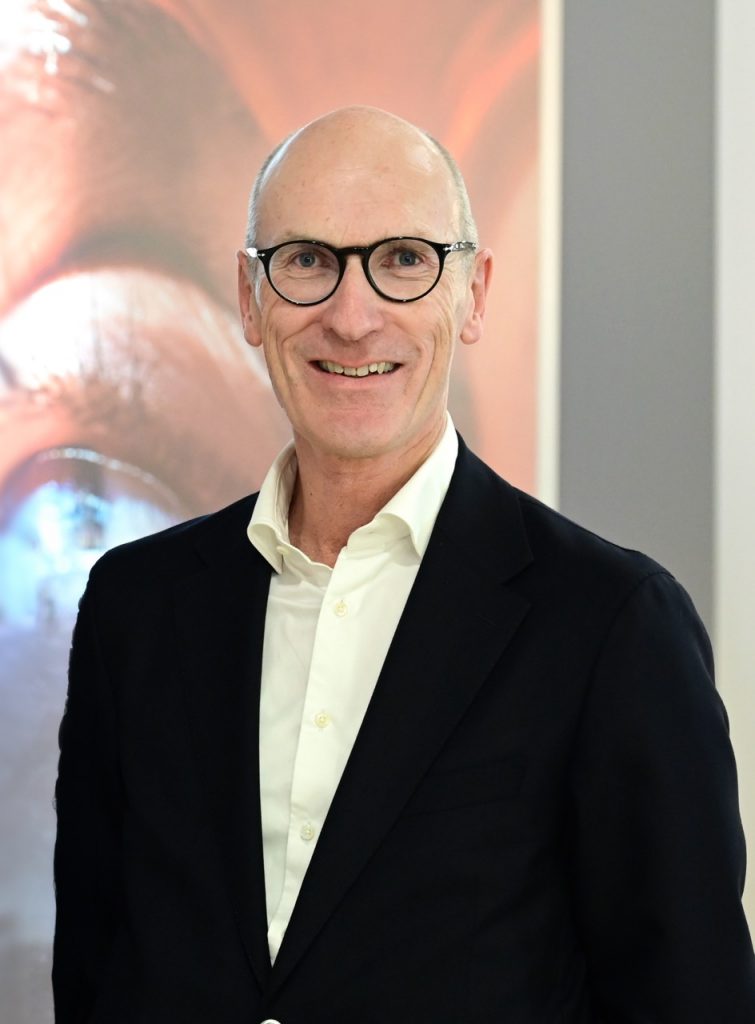
Since joining Essilor in 2011, Dr. Nobert Gorny has held a series of senior leadership positions across the Group, including Senior Vice President Central Europe, President and CEO of the Satisloh Group, and Chief Research and Development Officer Essilor Group. He became COO of Essilor in 2020 and was appointed Co-COO of EssilorLuxottica in December 2021. Prior to Essilor, he served as Executive Vice President at Pöyry Plc. in Finland and spent more than a decade at the Carl Zeiss Group, where he held several executive roles, including President and CEO of Carl Zeiss Vision International and Member of the Executive Board of Carl Zeiss AG. He began his international career as a consultant at McKinsey & Company in Stuttgart, Germany.
MAFO: So, the difference lies in the interpretation and the professional context?
Gorny: Absolutely! This is where a very important concept comes into play: interoperability. Opticians and ophthalmologists need to collaborate more closely. Many ophthalmologists are already open to this, especially when they recognize that qualified opticians can help ease their workload.
Of course, we cannot ignore the marketing power of large retail chains. We have to face this competition head-on. That is precisely why we need education, strategic marketing, and clear communication that highlights the value of professional qualifications and classifications.
MAFO: In some countries, there is a shortage of skilled workers in the optometry field. Could a field like Oculomics or screening help make the profession more attractive and position it more strongly as a healthcare profession?
Gorny: That’s an excellent question. I consider it highly relevant, and it hasn’t been definitively answered yet. If you look at employment trends over the past few years, you’ll see that the medical and nursing professions have experienced strong growth. I often wonder why the optical industry, which is also partly medical in nature, isn’t capitalizing more on this trend.
Society is placing increasing value on health, prevention, healthy lifestyles, and longevity. Opticians and optometrists actually belong at the center of this discussion. That’s why I believe not only the industry but also the professional associations have a responsibility here.
And one more thing: If, in the long term, the profession is limited to refraction and helping customers choose frames, it risks becoming less attractive to younger generations who are growing up with AI, data science, and digital technologies. In my view, Oculomics is therefore a great opportunity to broaden the profession’s horizons and open up new perspectives.
MAFO: Finally, looking ahead: Which innovations do you think have the greatest potential to fundamentally change daily work in optical practices?
Gorny: I believe that the real leverage lies in linking existing information such as biomarkers or retinal imaging with the general information we have on people’s health. The greatest impact won’t come from any single technology, but from intelligently combining retinal imaging, biomarkers, AI, and broader health data to create a more complete picture of a person’s health.
This is where the value is created – for the patient, the treating optician, and the physician alike.
And that is precisely where I see the exciting future of the profession. As the field becomes increasingly medical and embraces data-driven technologies, an entirely new level of attractiveness and expertise emerges.
If I had to sum it up in a single term, I would say that Oculomics is the overarching framework. Within this field are the developments currently generating the greatest scientific momentum and holding perhaps the greatest long-term potential for the healthcare sector as a whole.
MAFO: Thank you for this interview!