
IOT: Ready in three minutes – spectacle lenses from the printer

First printers being piloted at Spanish optical chain
The company IOT, especially known for software solutions in the field of ophthalmic lens design, is currently piloting the first printer for spectacle lenses. Light-form is the name of the manufacturing process that produces lenses additively in just three minutes. The presentation of this revolutionary technology already caught the attention of many experts at the trade fair in Milan. The MAFO editorial team was one of the first to examine the process on site in Madrid in the fall already.
A simple blank, a cup of transparent, viscous substance, and a short flash of light – these are the ingredients for the spectacle lens of the future. In just three minutes, the new IOT printer produces a complete ophthalmic lens.
Single vision lenses, progressive lenses, or in the future even a design for myopia control – according to the developers, there are no limits to the imagination here. Almost any conceivable design can be printed in a very short time. The MAFO team was able to see with their own eyes that this is indeed possible.
The printer in Madrid
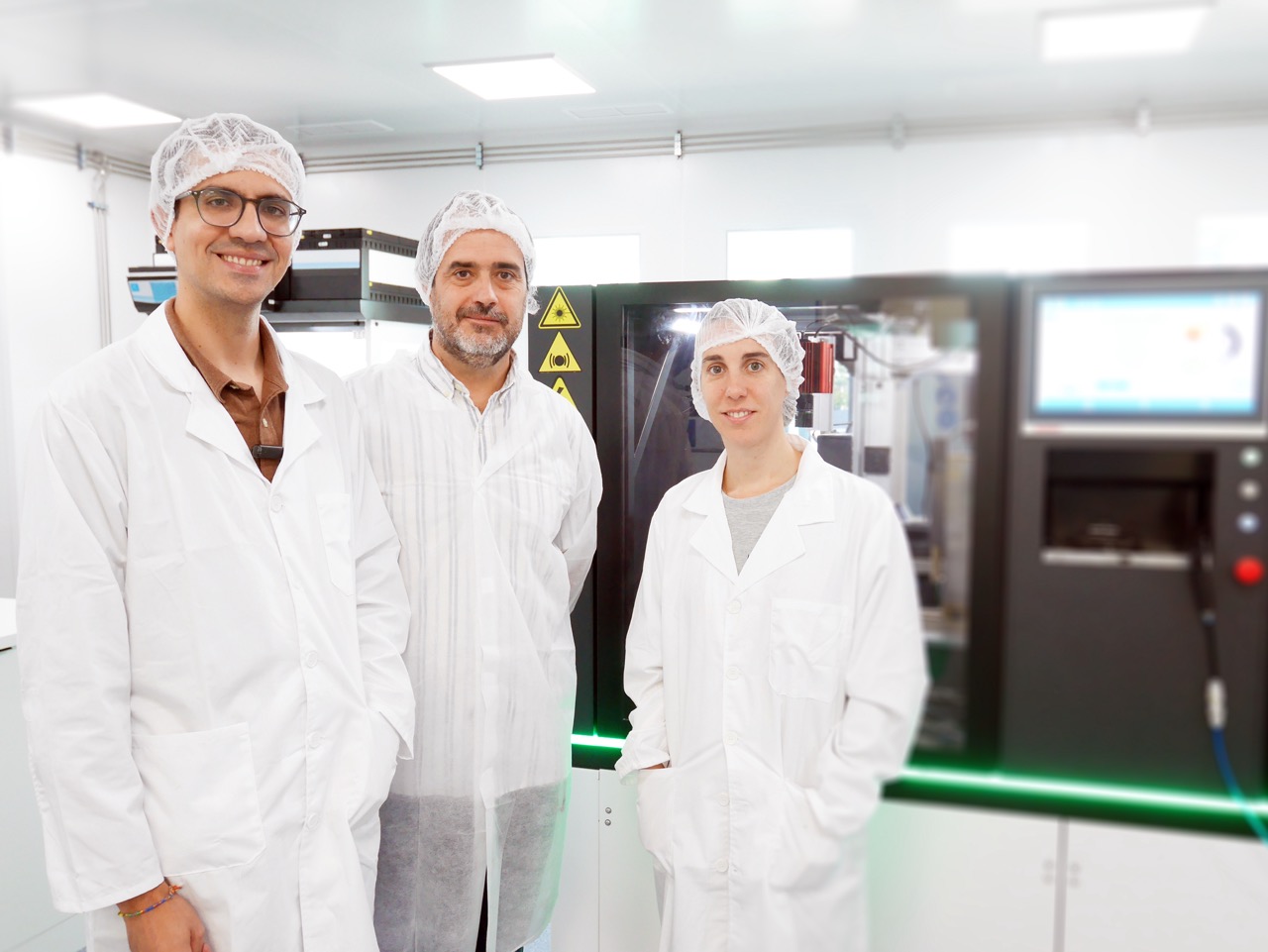
MAFO is in Madrid in a modern building complex that is home to many companies. It is fall 2025, and the IOT company moved here just a few weeks ago. On site, we meet two of the company’s founders: Dr. José Alonso and Dr. Daniel Crespo, as well as Natalia Villaveirán, Marketing and Communications Manager.
The positive tension in the air is almost palpable here – because the MAFO team is among the first external parties to experience the new technology live. The developers and the MAFO team are therefore equally excited to present and see the disruptive technology.

By loading the video, you agree to YouTube’s privacy policy.
Learn more
“We always see ourselves in this constant process of reinventing ourselves,” explains Crespo, “but today we are at a moment in our history where we are more ambitious than ever!”
Before the printer can be inspected, protective clothing must be put on. This is because the machine is currently still in a clean room, even though this will not be necessary for the final machine.
A finished lens in three minutes
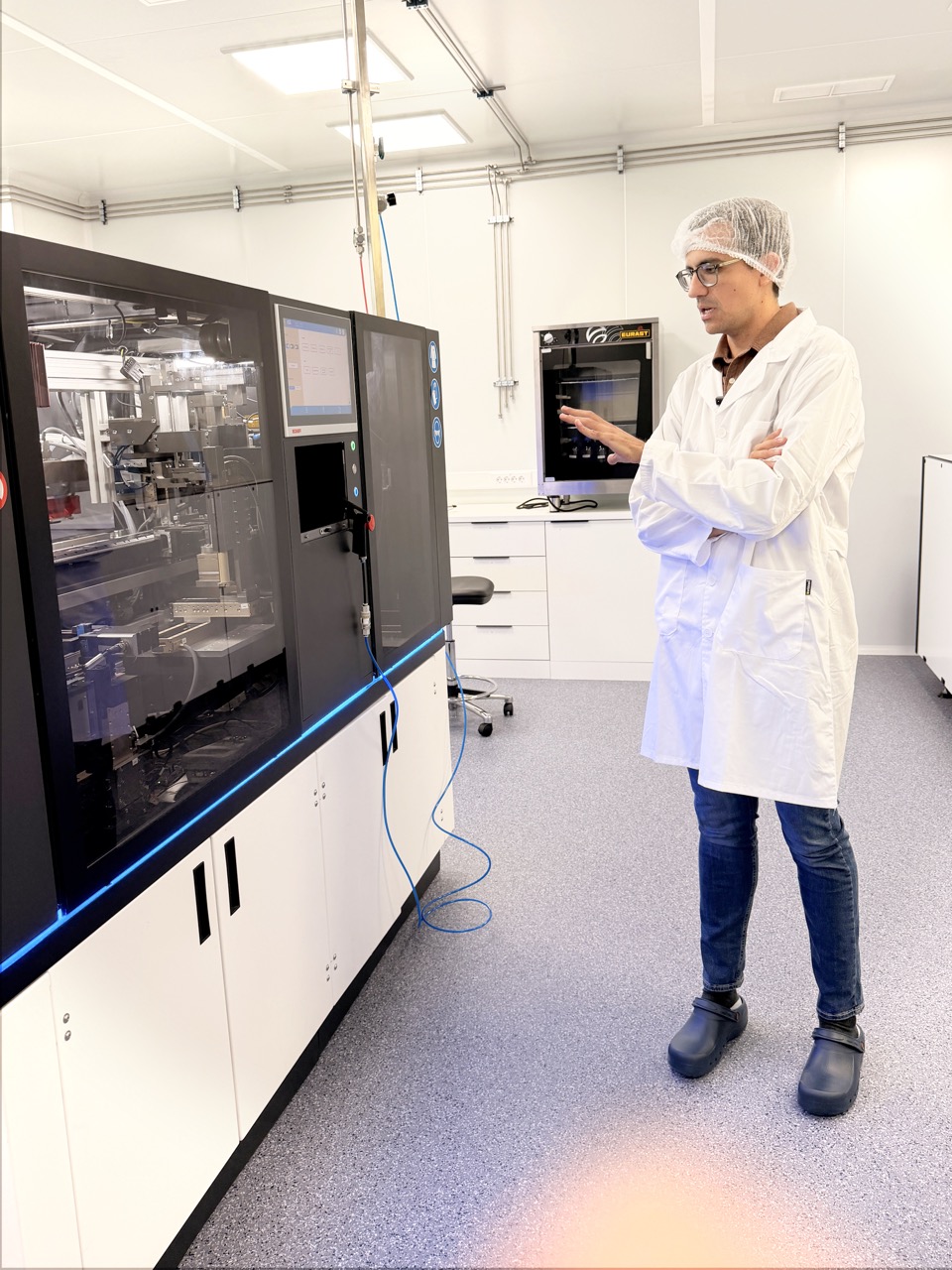
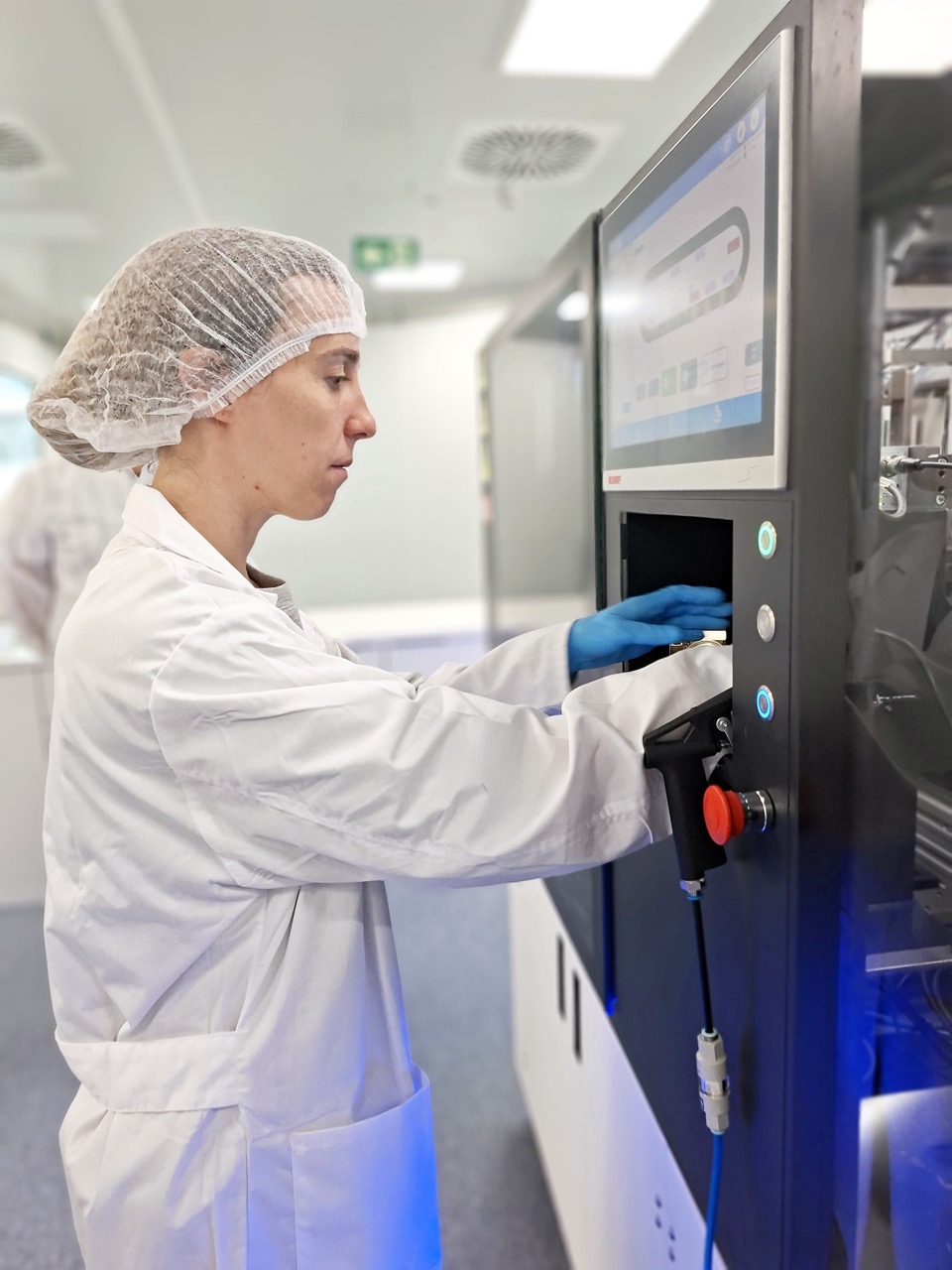
In front of us stands the printer and two of the developers: Nacho Canga, Scientific Research Director in charge of the experimental development of LightForm, and Rocío Plana, Lab Technical Support, who are about to demonstrate the printing process live and explain it in detail.
Light-form is the concept of the future. But unlike other 3D printing processes, this one does not print layer by layer. The inventors explain that this would be too time-consuming. With their process, on the other hand, the entire printing process takes only about three minutes.
This process can also be described as volumetric printing. The entire volume of the spectacle lens is created in a single step. This requires light, a special substrate, and a sophisticated system. Or, as the developers explain: “Light-form is a digital additive manufacturing technology where the whole volume of the Rx lens is manufactured in a single step, in just a few seconds with a single flash of light.” The system for producing personalized Rx lenses is mainly based on stabilized frontal photopolymerization. This can be explained as follows:
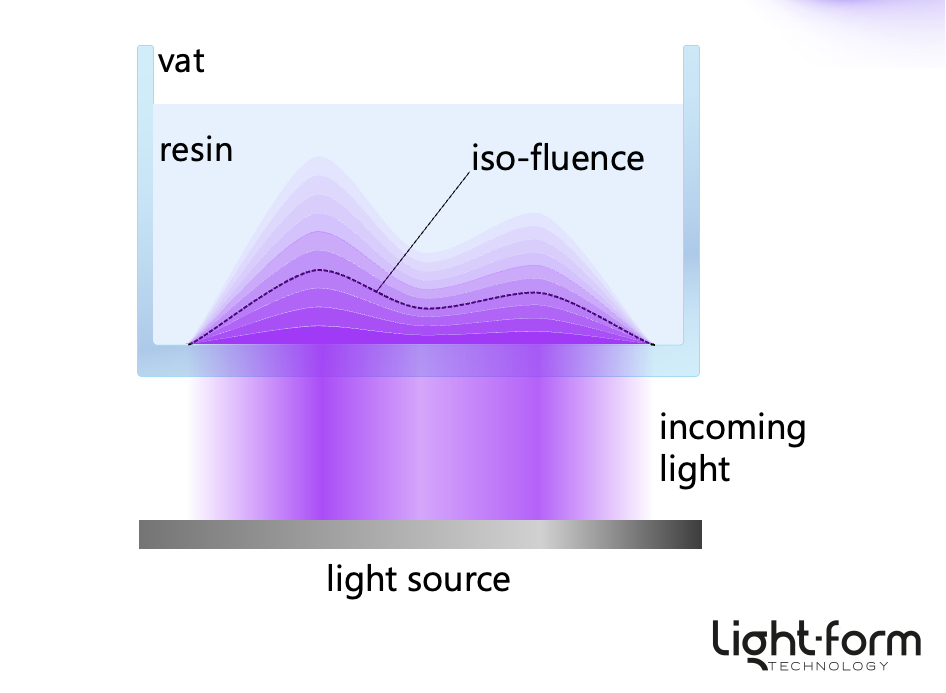
First, a simple flat blank is needed as a substrate, which is covered with a viscous resin. This photopolymerizable resin reaches its gelation point at a certain threshold value of light intensity. This means that the resin becomes solid.
As soon as light enters from below, the photon density distribution decreases along the direction of propagation. After a certain time t, this results in a previously precisely calculated iso-surface that separates polymerized from non-polymerized material at the specified gelation point.
Process structure and where “the magic happens”
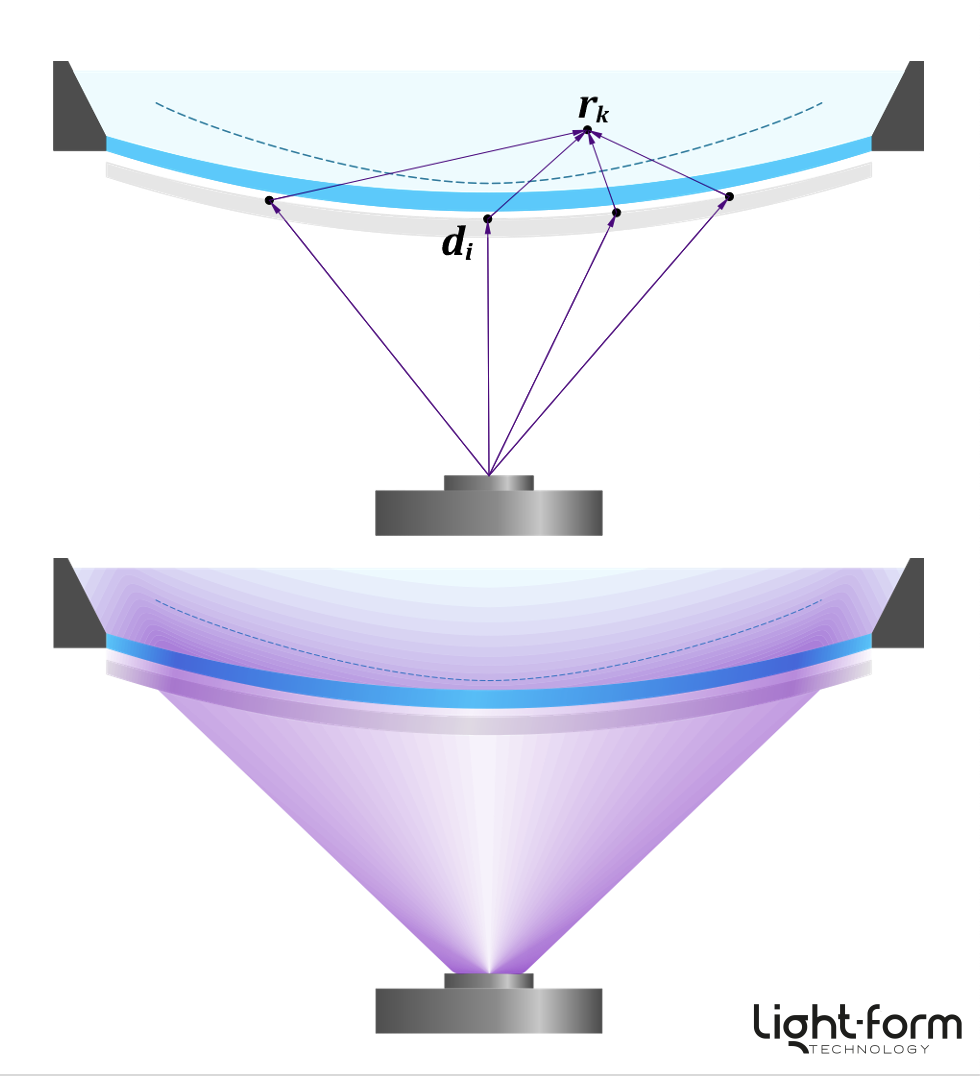
The process structure can be seen in more detail in figure 2. A substrate resembling a lens blank is covered with the resin. These two components are irradiated from below by a light source. A diffuser is placed between the light source and the resin. This ensures that every point in the resin (rk ) receives light from several points (pixels).
The target surface is calculated in advance and the light pattern is computed recisely so that the critical light intensity is reached at the iso-surface matching the target surface. The polymer now “grows” from the substrate to the target area. The lens is finished as soon as the critical light fluence reached at the target iso-surface.
The remaining resin is now spun off and recovered for reuse. At this point, the lens surface is still in a gel state. UV light from above now cures it completely. In about three minutes, a complete spectacle lens has been created.
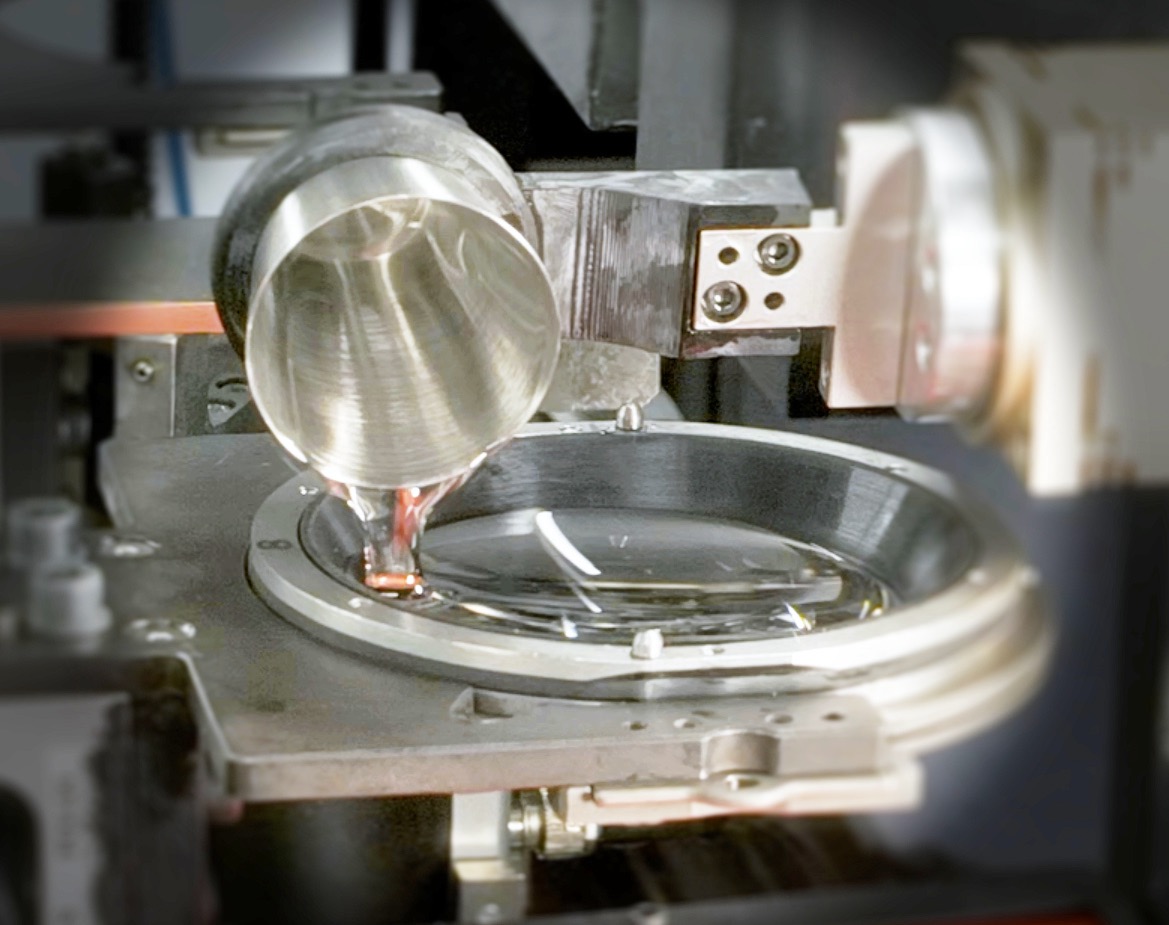
“What we’re doing here is a very complex optimization, to compute the individualized light pattern that will build the whole lens. But it is also exactly this, where all the magic happens,” explains Crespo, enthusiastic. “Especially, as it was very complex to reach that point and achieve the ISO tolerance in power in the whole diameter of the lens.”
The lens can also be engraved in the machine and power mapping is performed. Only the surface finishing with AR coating, etc., has to be done in a separate machine if required. There is another solution for hard coating, explains Alonso: “The substrate will incorporate hard coating on the front. So, you only need to deal with the back surface. At the moment we are doing that with a separate spin coater, but in the future, I guess, we could even incorporate a spin coating process in the machine.”
Any material that is partially transparent to violet light (405 nm), can be used as a substrate. In the current IOT prototype, CR39 with a thickness of 1.4 mm and RI 1.5 resin are used. Currently, base curves of 2, 4, 6, and 8 can be manufactured.
Market readiness and target group
Soon, printer-made spectacle lenses should also be available in Spanish optician stores. IOT and the chain VisionLab have already agreed on a cooperation for this purpose. The project is expected to start in summer 2026.
For the pilot manufacturing program, the lenses are manufactured at the IOT lab, also to control all the parameters, and then get delivered to optician stores in Madrid. A printer prototype that could be delivered to lab manufacturers could be ready by the beginning of 2027.
“When Summer comes, this is going to be the only place in the world where you’re making progress with additive manufacturing. We think that has to count for something,” the IOT founders proudly announce.
The company is still relatively open about the target group for the new additive manufactured lenses. “We have a challenging technology here and we think this could open up many new opportunities,” explained Crespo. “One of them is, of course, the holy grail of progressive lenses. You can get them right now in the store, in a very simple machine in three minutes.”
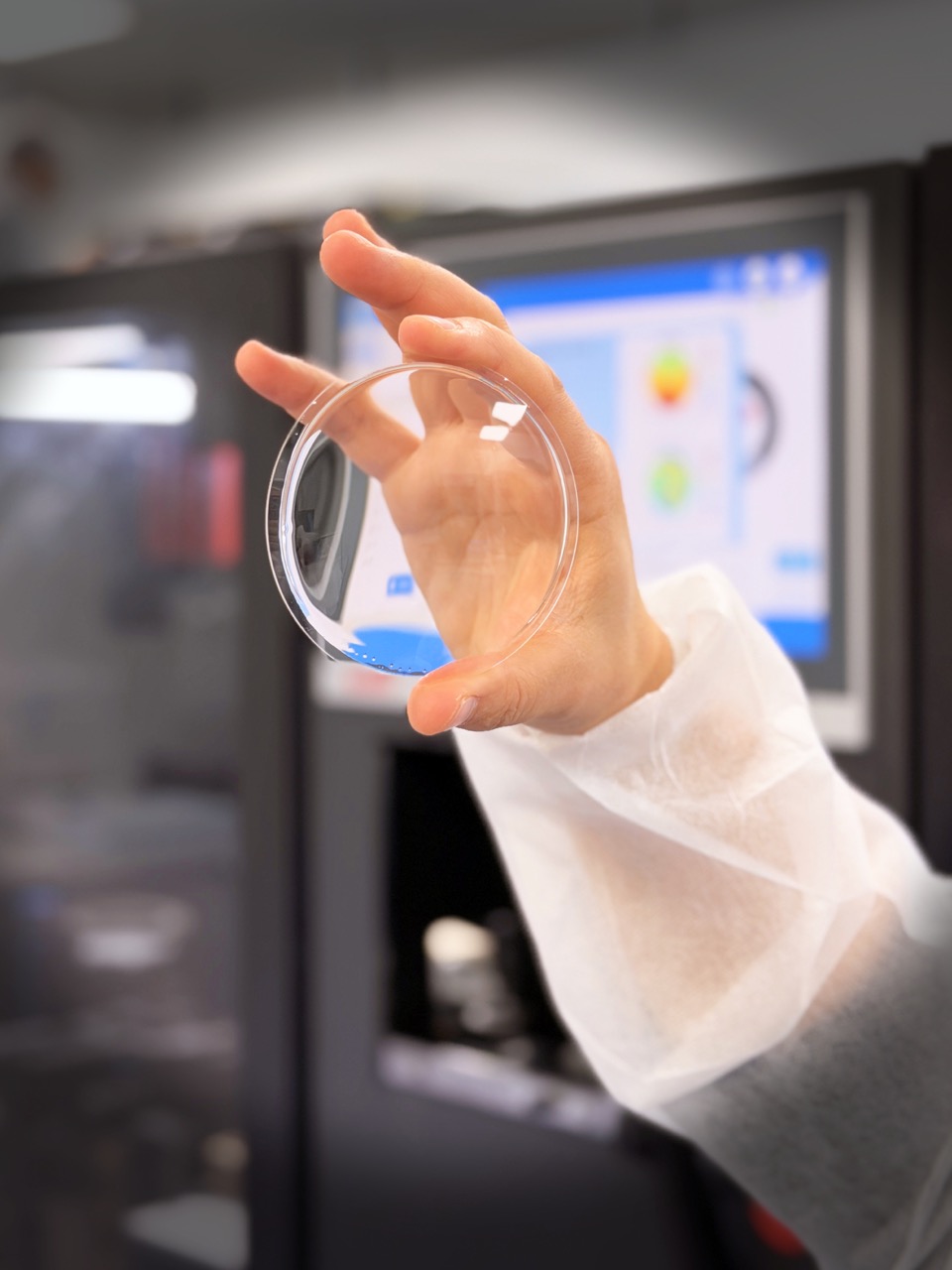
However, Light-form technology can also be used to print on waveguides and flat substrates, for example. This could give the technology more flexibility in the manufacture of smart glasses, for example.
Developing countries, where the supply of eyeglasses has been insufficient to date, could also be a potential target group. “We’re also thinking about certain parts of the world where they don’t have enough glasses because they don’t have those complex industrial operations. Maybe it could be good for remote areas as well,” Crespo thinks aloud.
In addition, the technology is intended to be sustainable, as it produces hardly any waste, does not consume water for production, and requires little energy.
But would it also be conceivable to print a rimmed lens to match the frame? The developers are currently unsure about this. It is definitely not impossible, and there are plans to explore this option. However, some ideas will be tested in the lab over the course of the year.
A look back at the first 3D printers
Nine years ago, the industry was shaken up for the first time by the news that spectacle lenses were being manufactured using 3D printing. At that time, it was the company Luxexcel, which was trying to integrate the disruptive technology into the optical market from outside the industry. But even though both technologies have to do with 3D printing, they differ in many details.
As interested as the industry was at the time, the excitement quickly faded. It soon became apparent that the technology still had a few hurdles to overcome. Printing was done “droplet by droplet,” which meant that printing the lenses took a relatively long time. Even individual early adopters, such as Quest Vision Care Lab in the US, were not satisfied with the new printer after a test phase. They found the system too inflexible.

After a brief period of excitement, the company was acquired by Meta in 2022 and has since ceased to operate as an independent brand, meaning that any further developments are not public knowledge.
Since then, there have been regular rumors about other manufacturers working on 3D printing of spectacle lenses. However, as far as MAFO is aware, there is currently no other manufacturer promoting an additively manufactured ophthalmic lens as market ready.
Only time will tell whether IOT’s technology will prevail and, if so, for which target groups. However, IOT is very open to share details about the new technology and seeks dialogue with experts. The technology was proactively presented at this year’s MAFO – The Conference and at Mido in Milan, where many questions were answered willingly and extensively.
“I am sure this is going to make a big revolution,” Crespo is convinced. “A lot of very interesting things are happening at the moment, but these are not instabilities. Instead, they feel very natural as they reduce complexity.”
The first 3D printed lenses will be available at some VisionLab optical shops by the summer. Then, the printer and lenses have to prove under real-life conditions.