Between trends, tech,and craftsmanship

Silmo Paris 2026 showcases the diversity of the eyewear industry
From bold, statement-making eyeglass frames to machines for lens manufacturing, all the way to smart glasses and artificial intelligence: Silmo Paris 2026, held September 25–28, clearly demonstrated just how multifaceted the international optical industry is today. For four days, the French capital became a meeting place for manufacturers, opticians, designers, and technology developers who discussed the trends and topics of the coming years.
Anyone walking through the halls of Silmo was first struck by an enormous variety of new frame collections. The Trends Forum highlighted numerous developments currently shaping product design. Instead of a single dominant trend, a coexistence of different styles was evident.
The focus was on both expressive forms and minimalist concepts. Bold color combinations met transparent materials, while technical aesthetics met classic lines. At the same time, echoes of the 1990s aesthetic were just as recognizable as futuristic-looking eyewear models with striking silhouettes.
Digital technologies and eyewear care
In addition to design, digital applications were among the defining themes of the trade show. This was particularly evident in the Silmo Next special exhibition area, which focused on future technologies and new approaches to eyewear care.
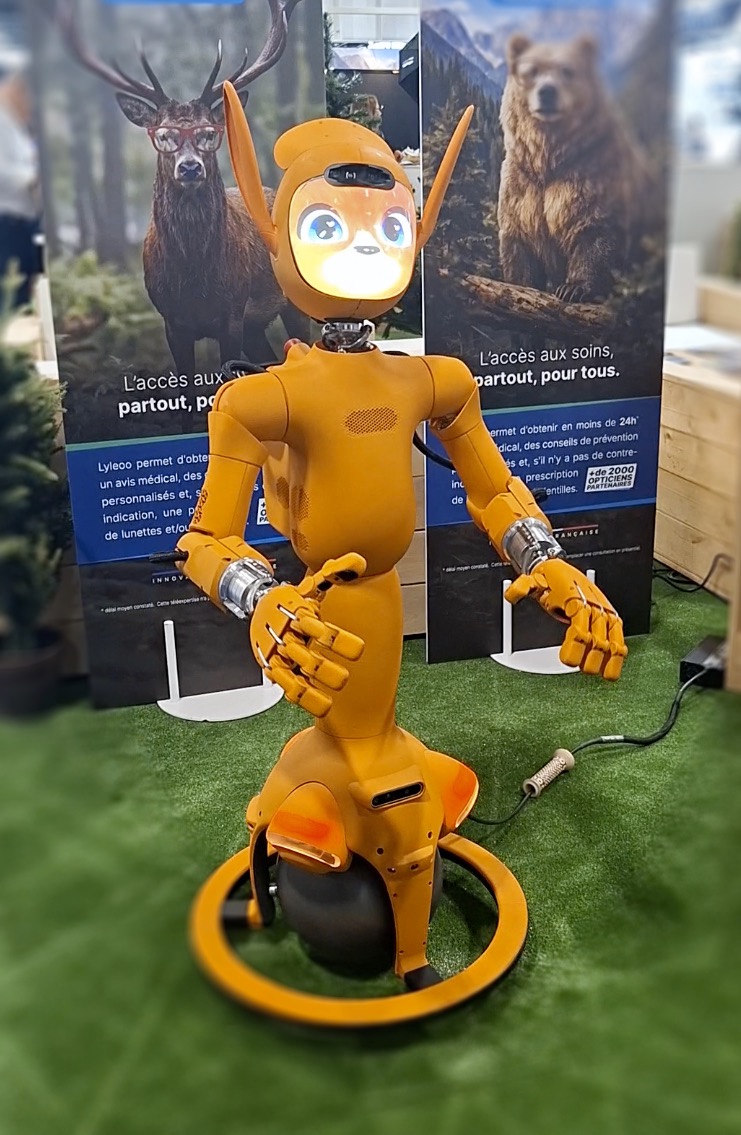
Connected eyewear, health applications, and AI were central themes in many presentations. The focus was less on visionary future scenarios and more on concrete applications. Several providers showcased solutions aimed at supporting diagnostic processes or providing additional information directly through smart eyewear systems.
Another sign of the growing convergence between optics and health was the first-ever international hackathon for smart glasses applications. The “Kimoo” project by Mourdjen Bari and Carla Nykiel won the award. The application is designed to help people with ADHD better manage their attention and cope with stressful situations.
Surge in smart glasses exhibitors
Overall, the range of products offered by smart glasses manufacturers at Silmo was surprisingly extensive. While only a few manufacturers of these products were present at recent international trade shows, Silmo showcased a wide variety of available brands and products in the smart glasses sector for the first time.
The offerings ranged from audio-only smart glasses to AI-powered glasses and models that generate a virtual image within the user’s field of view. In some cases, it was even possible to control these virtual images using eye movements. MAFO will cover this topic in detail in the next issue, 01/2027.
Strong presence of manufacturers
The industry’s machinery manufacturers, software providers, lens-design suppliers, and many others – also had a strong presence at Silmo. Some manufacturers were already speculating that the date change of Vision Expo West (due to the merger with VEE), which had previously taken place in September in Las Vegas, had created a gap in the calendar, making Silmo more attractive to European exhibitors.
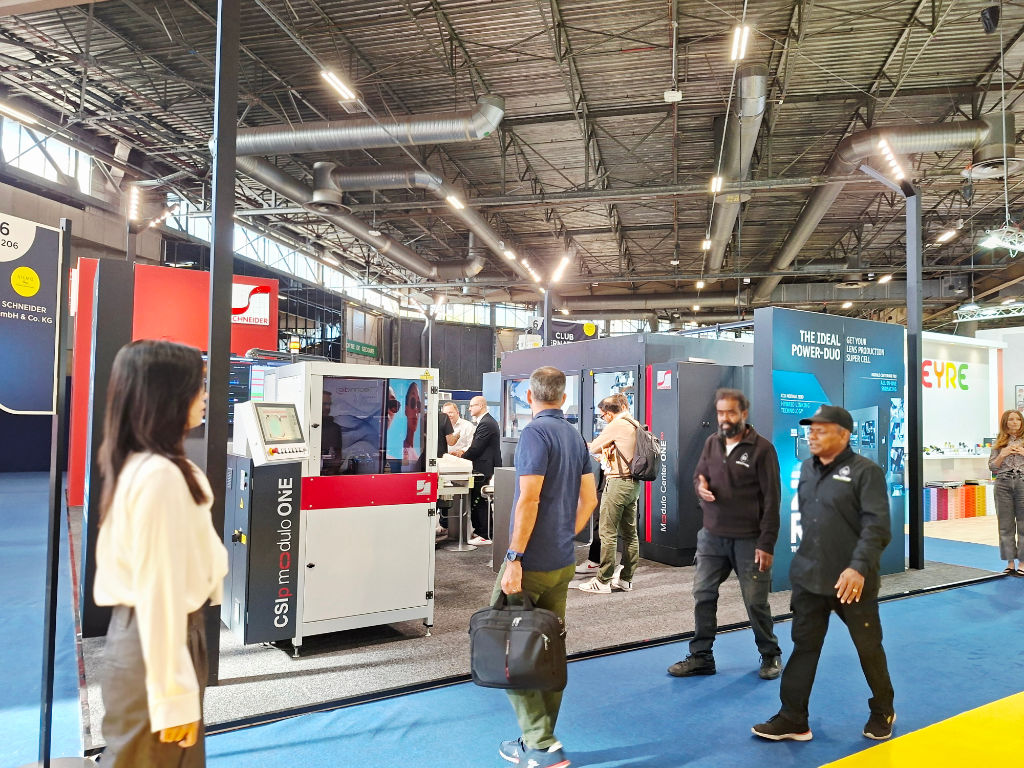
Schneider was on site with several machines. These included the latest innovation, Modulo Zero’s hybrid linking technology, which enables alloy-free production, as well as the Modulo Center One, the all-in-one surfacing center, and the CSI-P Modulo One for fully automated cosmetic inspection and full-map power measurement, among others.
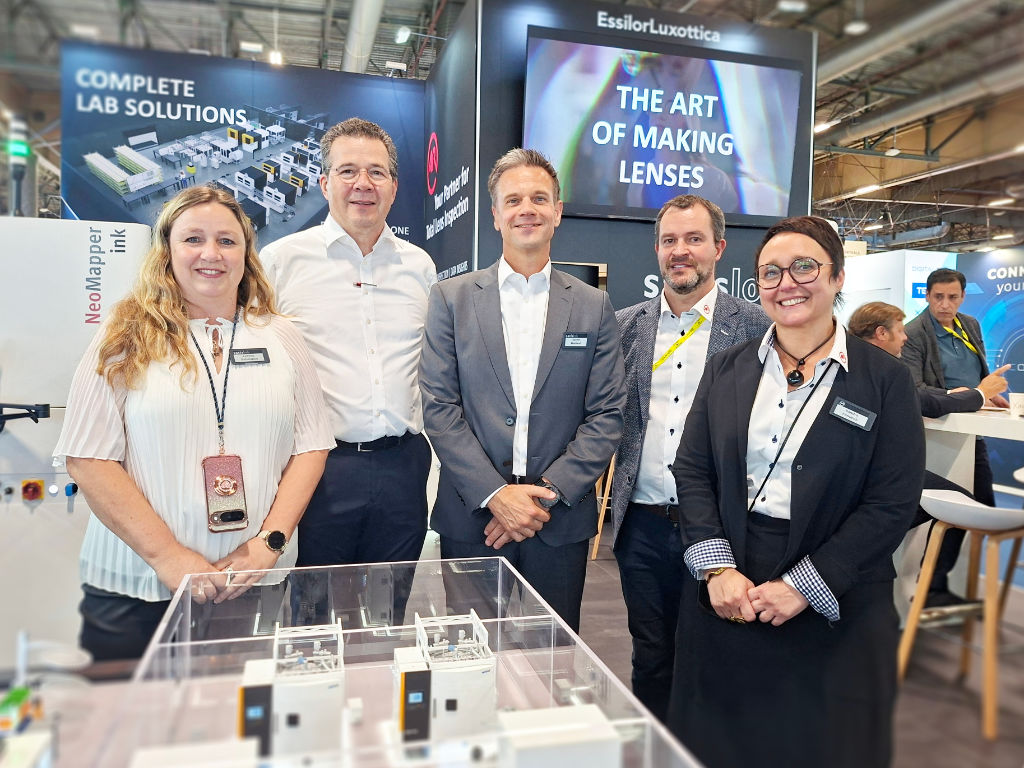
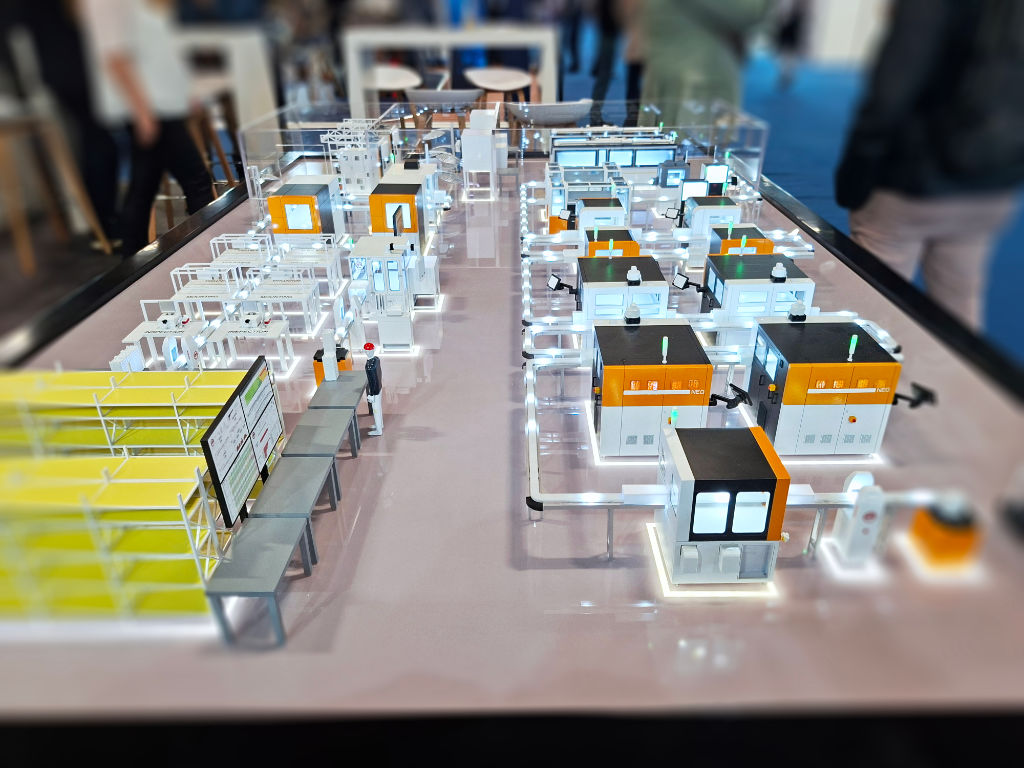
Satisloh and Automation & Robotics were present for the first time at Silmo at a joint booth, naturally alongside DAC Vision and SCL, which also belong to the EssilorLuxottica Group. Here, the NeoMapper ink – designed for fully automated inspection – took center stage; it is available with Cosme (for cosmetic inspection) and an additional ink-marking module.
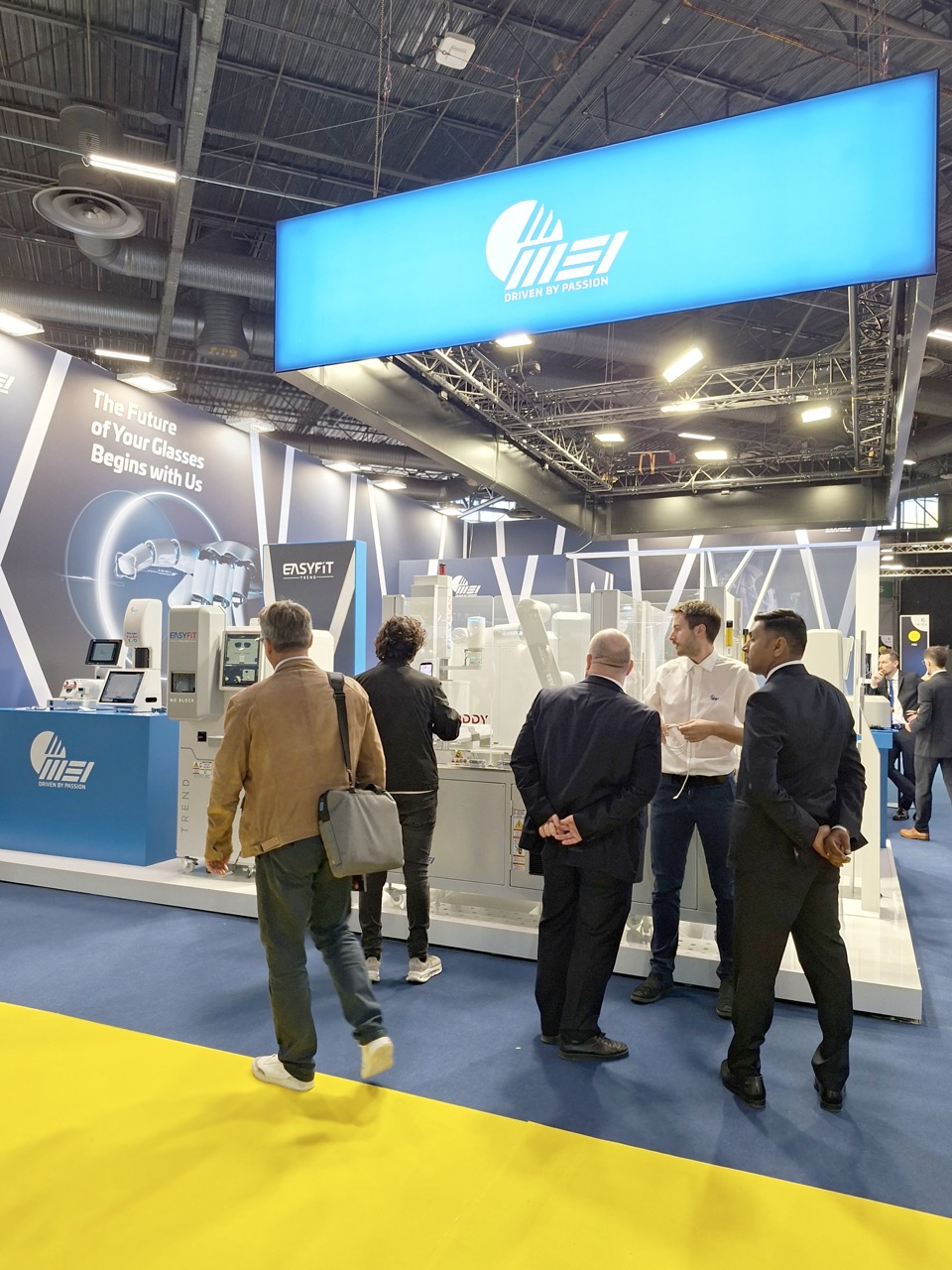
MEI was naturally present, given its focus on machinery for both opticians and optical labs. The EasyFit Trend, in particular, attracted a lot of attention, thanks to the EasyBuddy robotic arm, the pre-inspection of lenses using EasyScan can be seamlessly integrated with the edging process.
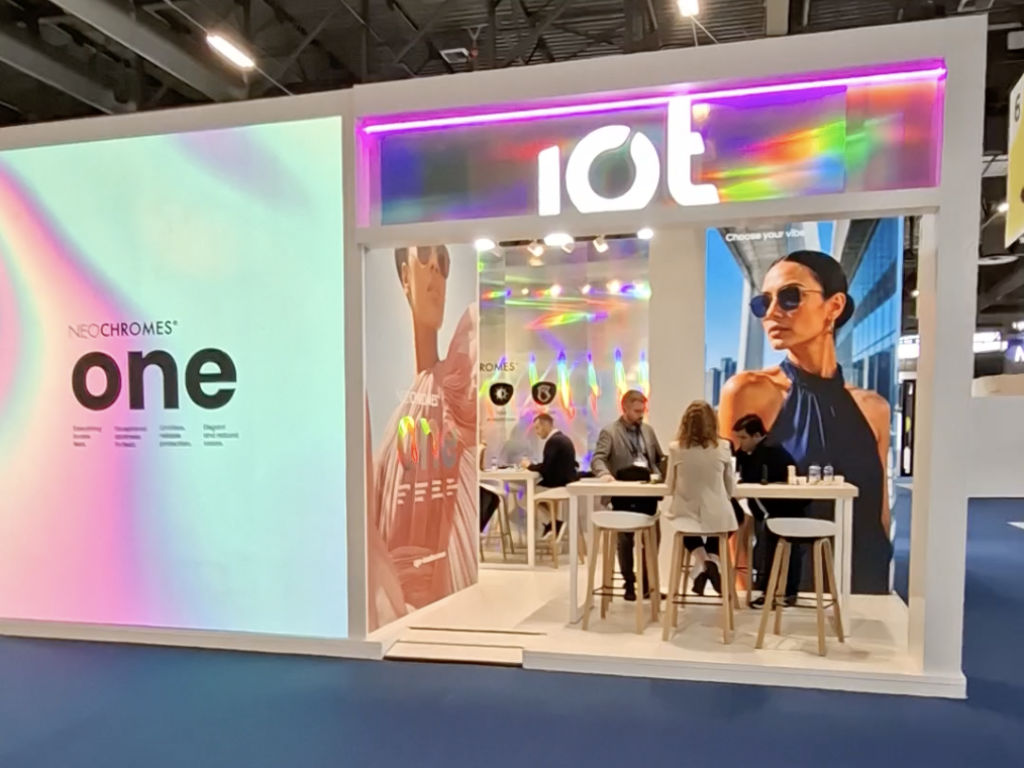
The IOT booth was hard to miss, as its special metallic effect made it visible and sparkling even from a distance. This was a smart move to draw visitors’ attention to Neochrome’s One photochromic lenses, which were the thematic focus. We also learned that the light-based 3D technology for manufacturing ophthalmic lenses is now entering its next phase and, thanks to a partnership with VisionLab in Spain, is now reaching its first consumers.
Horizons, in turn, brought the Mimesys world into focus and allowed trade visitors to immerse themselves directly in this world using VR headsets.
Awards mirror industry trends
The eagerly anticipated Silmo d’Or awards ceremony remains a staple of the event, as the prize is considered a barometer of the topics currently occupying the industry.
This year, the range of award-winning products spanned from children’s and sports eyewear to technological innovations and smart eyewear concepts. Particularly striking was the large number of solutions that combine digital technologies with traditional optical technology.
Laclarée was honored for its autofocus glasses, while Getd & Marienfeld received the award in the smart eyewear category. In the Vision segment, Mega Optic came out on top, and in the Low Vision category, Eschenbach Optik was awarded the Silmo d’Or.
At the same time, the artisanal side of the industry remained prominent. Awards went, among others, to Brett and Rolf Eyewear, whose frames combine traditional craftsmanship with contemporary design. The Austrian eyewear manufacturer Rolf won in the “Optical Frames: Craftsmanship & Know-how” category for a frame that combines a wooden core with an ultra-thin layer of genuine slate. Everything is handcrafted at the company’s own workshop in Tyrol. Due to the natural structure of the stone, each piece is one-of-a-kind. Designer brands also once again asserted their place at the awards ceremony. Among those receiving awards were Caroline Abram, Maison Lune, and Lancel in collaboration with Grosfilley.
The selection of winners demonstrates that the industry is currently pursuing multiple lines of development simultaneously. Innovation arises not only from digital technologies but also from material development, design, and artisanal craftsmanship.
The Optical Design Contest also made its own mark. Now in its fifth year, it was aimed at young designers who bring new ideas for the future of eyewear to life. The energy – and nervousness – of some finalists was palpable before the decision was announced.
First place went to Sophia Denison from the Savannah College of Art and Design in the U.S. Her project, “Dreamscape,” explored how visual perception can be shaped, drawing on societal discussions about attention and distraction.
Six decades of innovation and exchange
More than 950 exhibitors and around 1,500 brands presented their collections and innovations at the Paris Nord Villepinte exhibition center. According to the organizer, 32,108 trade visitors from nearly 150 countries attended the trade show. Last year, the figure was 33,358.
Once again, Silmo Paris reflected the full spectrum of the optical industry: from fashion and design to healthcare and craftsmanship, all the way to future-oriented digital topics. It was precisely this diversity that made the trade show so appealing.
When the international optical industry gathers again in Paris from September 24 to 27, 2027, many of these elements are likely to have gained even greater significance. The trade show will also be celebrating its 60th anniversary – as a key industry platform for change in a market that increasingly blends tradition and innovation.