

Using sunlight to keep eyewear clear – Part 1
A durable, sunlight-activated coating solution for passive defogging in eyewear
A new coating technology uses the near-infrared part of sunlight to passively heat eyewear lenses and reduce fogging. Unlike conventional solutions against fog, the new PFAS-free coating technology is protected inside the coating stack, making it durable, maintenance-free and compatible with modern lens designs.
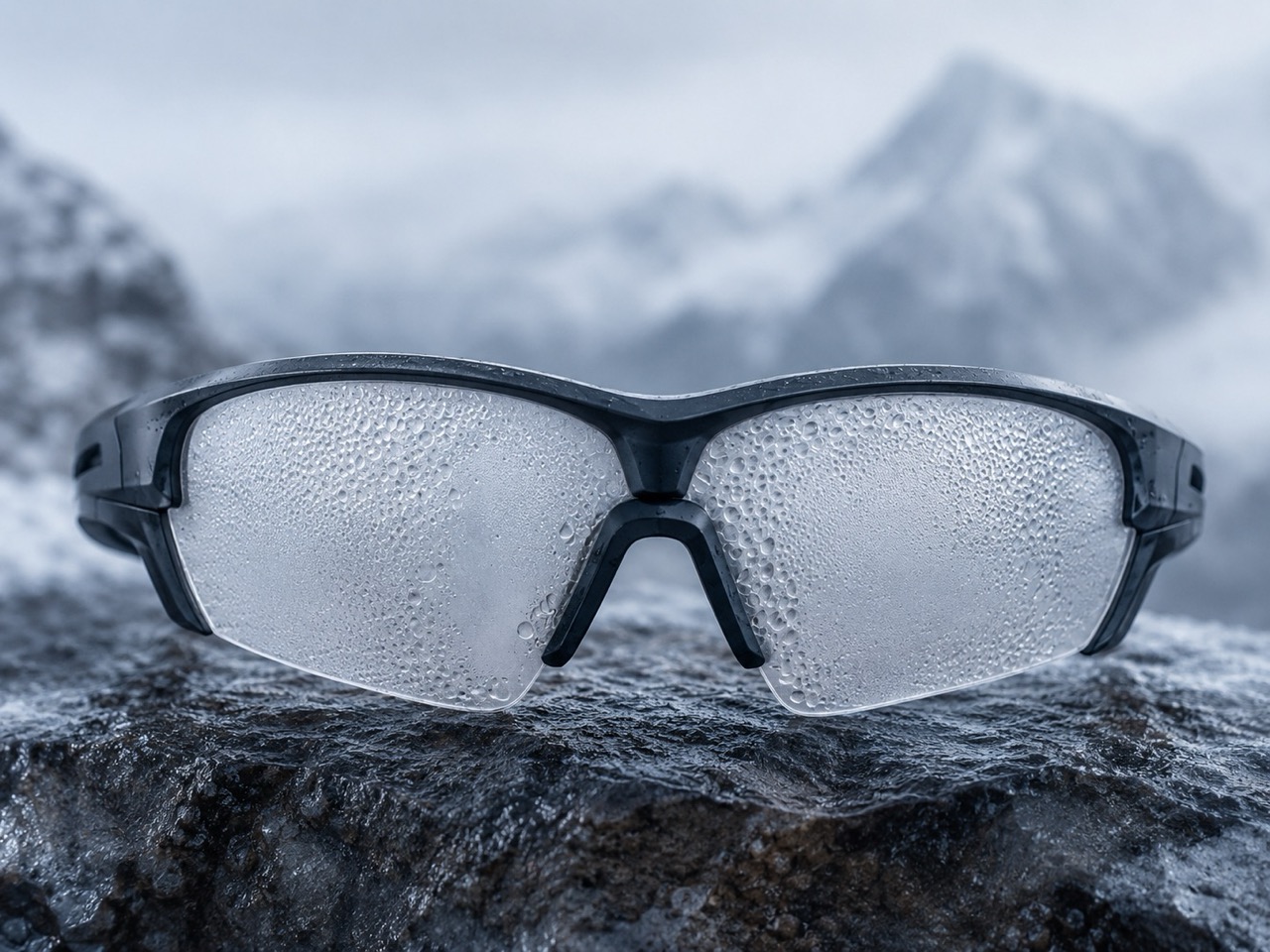
Fogging remains one of the most persistent problems in eyewear. It occurs when humid air condenses on a colder lens surface and forms small water droplets. These droplets scatter light, create haze and reduce visibility. In sports eyewear, safety glasses, ski goggles or everyday sunglasses, this is more than a minor inconvenience. Fogging can affect comfort, performance and, in demanding situations, even safety.
Current approaches and their limitations
The eyewear industry has developed many approaches to reduce or prevent this effect. The most common solutions are based on surface modification. Hydrophobic surfaces aim to repel water droplets, while hydrophilic surfaces spread condensed water into a thin transparent film. Both approaches can work and are widely used in products exposed to a higher risk of fogging.
However, surface-based solutions against fog share two important limitations: durability and compatibility. Since they must act as the outermost surface, they are directly exposed to abrasion, cleaning, contamination and environmental stress. Sprays and wipes can improve performance temporarily, but they require repeated application by the user.
Permanent coatings against fog are more convenient, but they may lose performance over time, especially under frequent cleaning or harsh outdoor use.
The second limitation is compatibility with other lens functionalities. If the coating function has to be placed at the surface, it competes with other surface properties such as anti-reflective, mirror, anti-fingerprint or easy-to-clean coatings. This is a restriction for modern eyewear, where lens systems are expected to combine optical performance, durability, design and convenience in one product.
Heating is another effective way to combat fogging. If the lens surface is warmed above the dew point, condensation can be reduced or or, under the right ambient conditions, prevented. This principle is already used in car windshields, where electrical heating elements remove fog or ice.
For eyewear, however, electrical heating introduces a practical bottleneck: batteries, wires and electronics add weight, complexity and cost. In conventional sports and sun eyewear, this is rarely accepted by brands or end users.This leads to a simple question: what if the lens could be heated passively, using a natural energy source that is already available outdoors?
Sunlight as an unused energy source
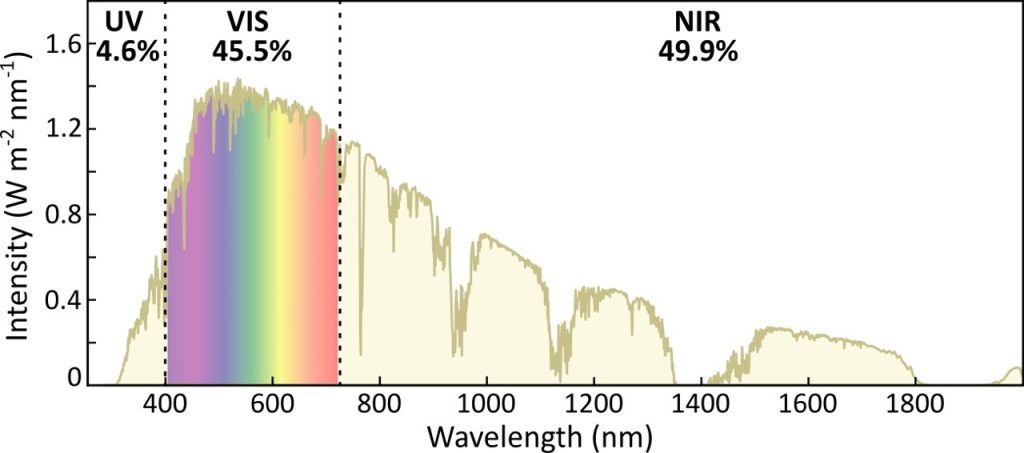
Sunlight provides a large amount of free energy. To understand how this energy can be used for defogging, it is helpful to look at the different wavelength ranges of solar radiation (Fig. 1).
Ultraviolet light represents only a small part of the total solar intensity, around 4.6%, and is generally blocked by modern eyewear lenses to protect the eyes.
Visible light accounts for roughly 45.5% of solar intensity and is carefully controlled by lens tint, transmission, polarization, mirror coatings and other optical functions to improve visual comfort.
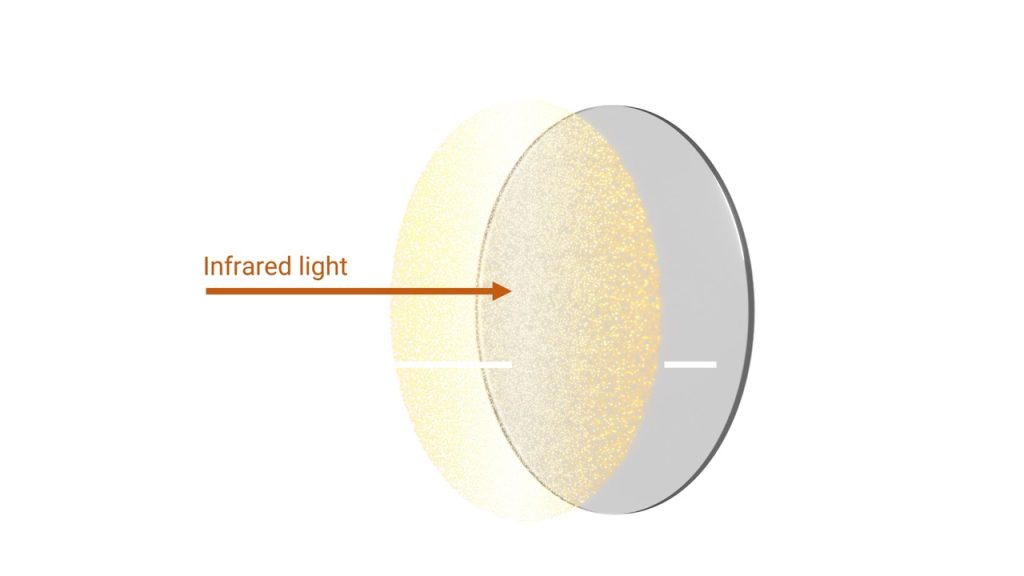
The rest of the solar intensity – so almost half of it – is near-infrared radiation, or NIR. It is invisible to the human eye, but it carries a vast amount of thermal energy. In many standard lenses, a significant part of this radiation passes through the lens without being used. If NIR radiation is absorbed in a controlled way, however, it can be converted into heat. This is highly attractive to fight fog formation.
A lens that absorbs NIR radiation can use sunlight to raise its own temperature. A warmer lens surface reduces the tendency for water vapor to condense and accelerates evaporation if fog has already formed. In other words, the invisible part of sunlight can become a passive heat source for clearer vision.
The ideal solution must combine this heating effect with the optical requirements of eyewear. It needs high NIR absorption, but also high visible transparency, low haze, appealing color and compatibility with established lens designs. This balance is difficult to achieve.
The challenge of transparent NIR absorption
Designing a transparent NIR-absorbing coating is a well-known challenge in optics. The visible and near-infrared ranges are directly next to each other in the solar spectrum. A material that absorbs strongly in the NIR often also affects the visible range.
Several approaches have been explored in research and industry. Infrared-absorbing dyes are among the most mature solutions and are used, for example, in special IR-protective glasses. However, these dyes usually reduce visible transparency significantly. This limits their use to applications where protection is more important than cosmetic appearance or visual brightness.
Other concepts include plasmonic nanoparticles, core-shell particles, broadband absorbers and multilayer stacks. Each approach has potential, but for eyewear the requirements are particularly strict. Because, in addition to the requirements for the coating itself, it must also be scalable in production and remain durable in real use. Many existing concepts struggle with at least one of these points, whether through high cost, limited scalability, visible transparency loss, complex processing or excessive thickness. This is where Solar Defog Technology (SDT) by Solabs introduces a different approach.

Absorbing near-infrared radiation with a semicontinuous nanolayer
The new coating technology is based on a semicontinuous nanolayer that selectively absorbs near-infrared radiation. Depending on the final lens design, the coating can absorb up to 70% of NIR radiation or maintaining visible transparency of up to 80%.
The nanolayer can be produced using different materials, which gives flexibility in terms of optical design and cost. The coating is manufactured with standard physical vapor deposition processes such as e-beam evaporation, thermal evaporation or sputtering. These are established technologies in optical coating production and are compatible with industrial eyewear manufacturing.
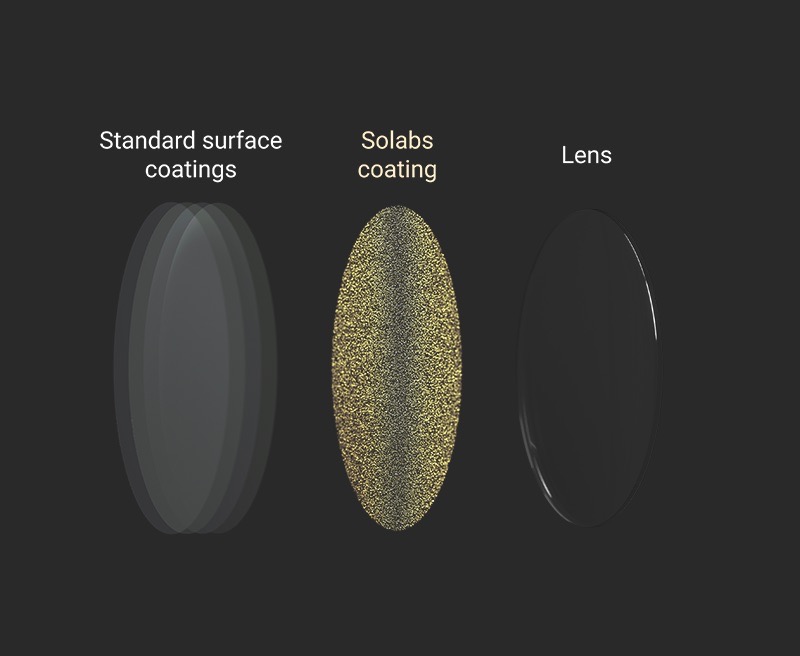
The key difference of the defog technology compared with conventional anti-fog solutions is the position of the function. SDT by Solabs does not need to be the outermost surface. The NIR-absorbing layer can be integrated inside standard anti-reflective or mirror coating stacks. This protects the active layer from abrasion, cleaning, contamination and environmental exposure.
As a result, the functionality is not created by a sensitive surface treatment, but by a protected photothermal layer inside the coating architecture. This layer is PFAS-free and makes the coating durable, maintenance-free and compatible with additional lens functions such as AR, mirror, anti-fingerprint or even surface based anti-fog coatings. The technology can be added without forcing a completely new product architecture.
With Solabs’ in-house coating simulation algorithm, different mirror colors can be reproduced while adding strong NIR absorption. This allows the coating technology to be adapted to existing product designs instead of limiting them.
The durability of the coating was validated together with Bühler Leybold Optics according to industrial requirements. The coated lenses passed relevant tests such as abrasion, adhesion and climatic exposure, supporting compatibility with established eyewear product standards.

Performance in practice
The working principle is simple: when the lens is exposed to sunlight, the coating absorbs near-infrared radiation and converts it into heat. This increases the lens temperature and combats fog formation. Laboratory and field tests show that a sun lens with SDT by Solabs can heat several degrees more than a comparable reference sun lens when exposed to sunlight. This temperature increase has a strong practical effect. Under relevant test conditions, the defogging time can be reduced by up to a factor of 10, leading to clearer vision. The function is built into the lens and works passively whenever sunlight is available.
This makes the new technology especially interesting for outdoor applications where fogging occurs during activity, temperature changes or high humidity. Skiing, cycling, running, hiking, mountaineering and safety eyewear are typical examples. In these situations, users do not want to stop, remove their glasses or manually restore visibility. A lens that heats passively and defogs faster helps maintain clear vision, comfort and confidence during use.
The effect naturally depends on environmental conditions such as sunlight intensity and humidity. However, even under cloudy conditions, diffuse sunlight can provide energy to heat the lens and help counteract fog formation.
In addition, because the lens retains part of the absorbed heat, the benefit can continue for one to two minutes after moving into shade or indoor environments, a common situation in which fogging occurs.
The technology can also be combined with conventional surface-based anti-fog coatings. This opens the possibility of a dual-action approach: a durable, lens-integrated photothermal function combined with a surface treatment for additional protection in environments where no natural sunlight is available. It adds a durable, maintenance-free solution against fog without increasing product complexity for the consumer. The technology is invisible in daily handling, requires no behavioral change and can be integrated into mirror designs.
From laboratory to product
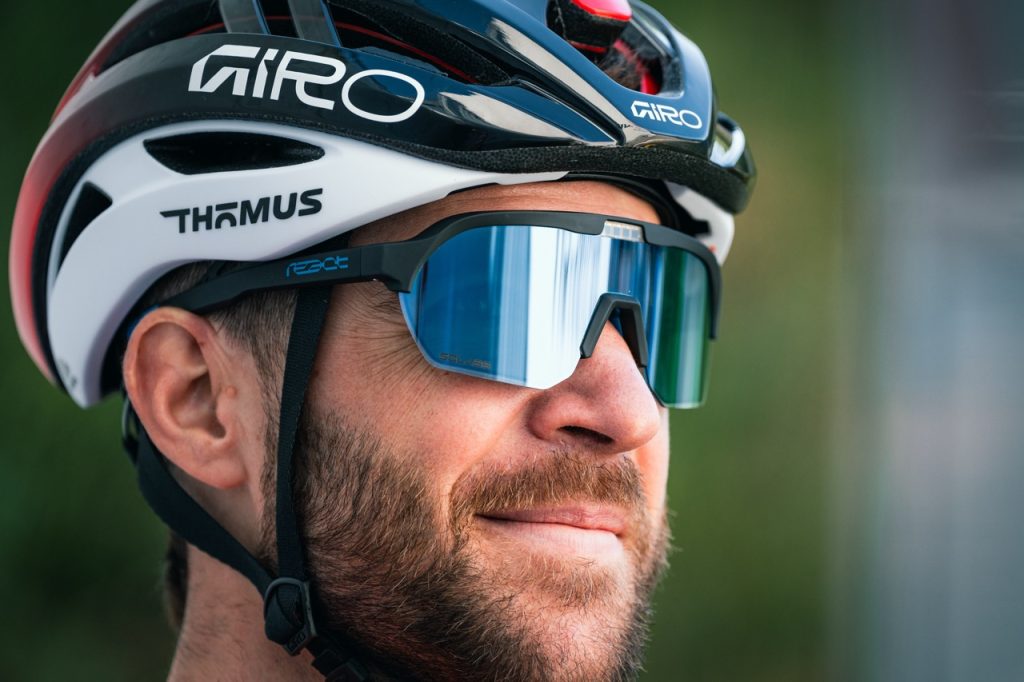
The first test on the market was realized in collaboration with React Swiss Eyewear with the launch of the Optray Sky SDT by Solabs. For this product, the coating was successfully implemented in the industrial production process of React Swiss Eyewear. Existing mirror color designs were replicated while integrating the new semicontinuous layer, allowing the brand to maintain its product aesthetics while adding a new function.
The lenses also withstood industrial durability testing, confirming that the coating concept is suitable for real eyewear conditions. After industrialization was proven, the product was launched, and end-user feedback was collected.
Initial user feedback has been very positive, including feedback from athletes such as mountain biker and World Cup race winner Lars Forster.
Outlook
SDT by Solabs is the first application of a broader NIR coating platform. It shows how invisible parts of sunlight can be used to create visible benefits for the user.
In a second article, published in MAFO 01/2027, we will take a broader look at near-infrared control in eyewear and discuss how the same technology platform can enable additional functionalities beyond fog reduction.