
Transitions: Breaking out of the niche
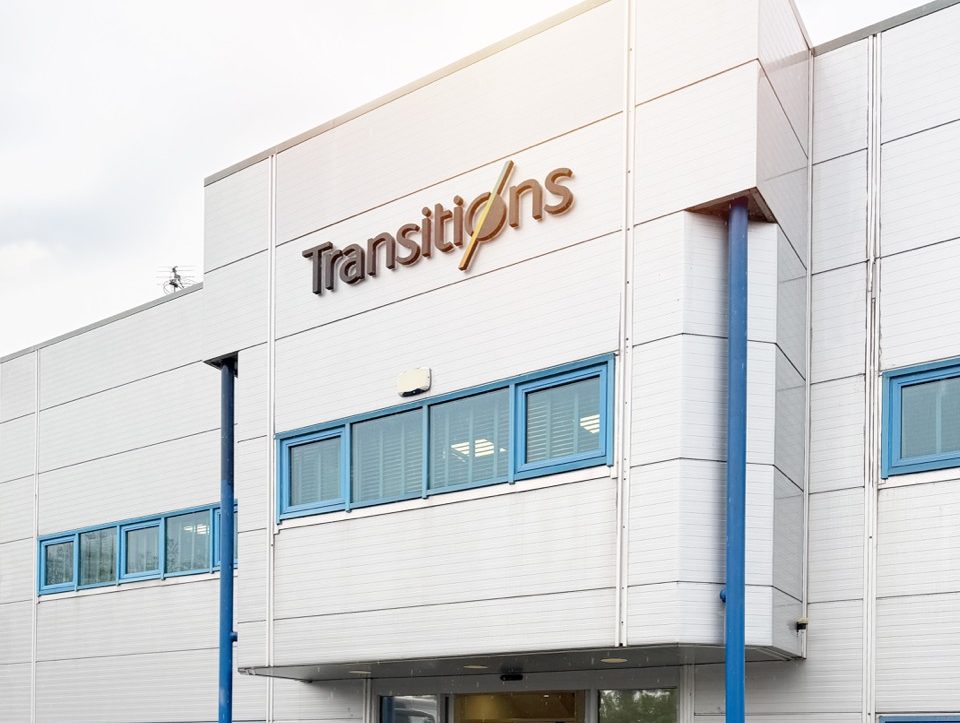
Visiting Transitions in Ireland
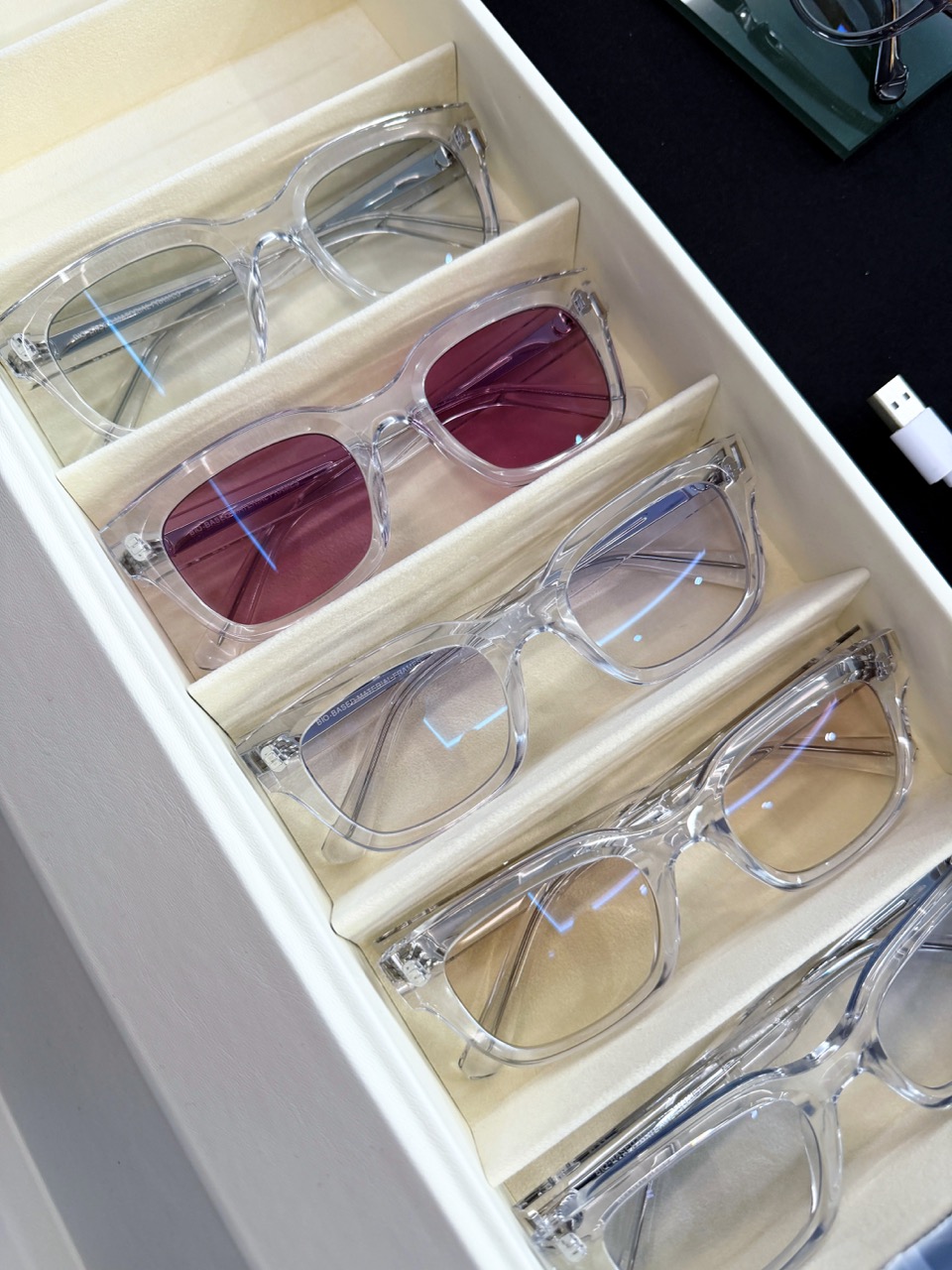
Over the past several years, Transitions Optical has undergone a significant product and brand evolution, driven by a strategic focus on consumer relevance, innovation, and premium design. The objective was not only to redefine and significantly improve the consumer experience, but also to modernize the brand image by developing dynamic lenses that combine advanced performance with contemporary aesthetics. Over the course of five years, the company produced approximately 450 prototypes and conducted more than 100,000 tests to lay a solid foundation for the next generation of Transitions lenses. Today, they come in many vibrant colors and even with dynamic polarization. This required not just a manufacturing facility, but an innovation center – which MAFO visited in Ireland.
It gets dark, it gets light. It gets dark, it gets light. And no, we are not (yet) talking about Transitions lenses, but the weather in Galway, Ireland. Here in this coastal town on Ireland’s west coast, sun and rain seem to alternate reliably every 15 minutes, and the rain clouds pass by so quickly that a constant interplay of light and dark ensues.
So it makes a certain amount of sense that, of all places, the country with such changeable weather conditions is home to what is probably the world’s best-known Transitions facility and innovation center. And this is exactly where a group of expert opticians has made their way.
“Welcome to Ireland”
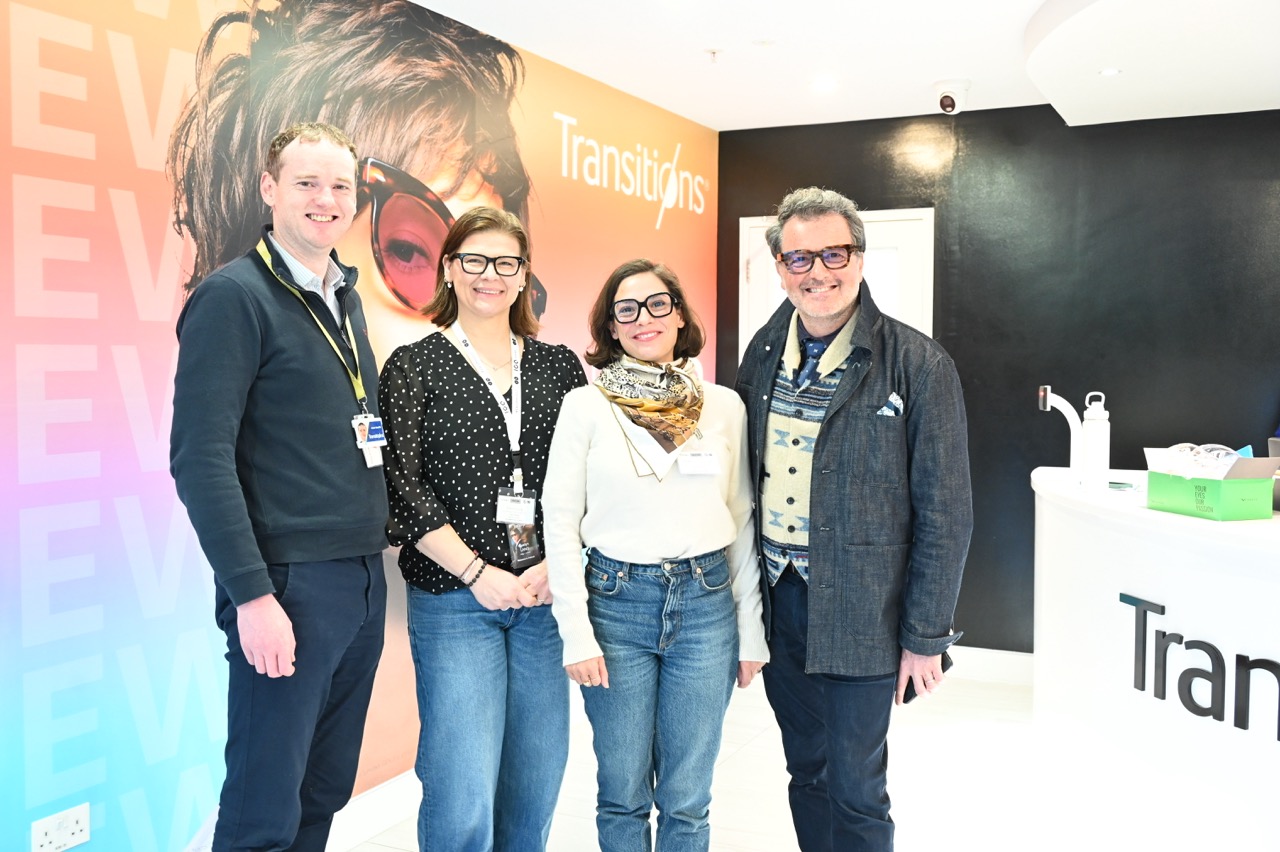
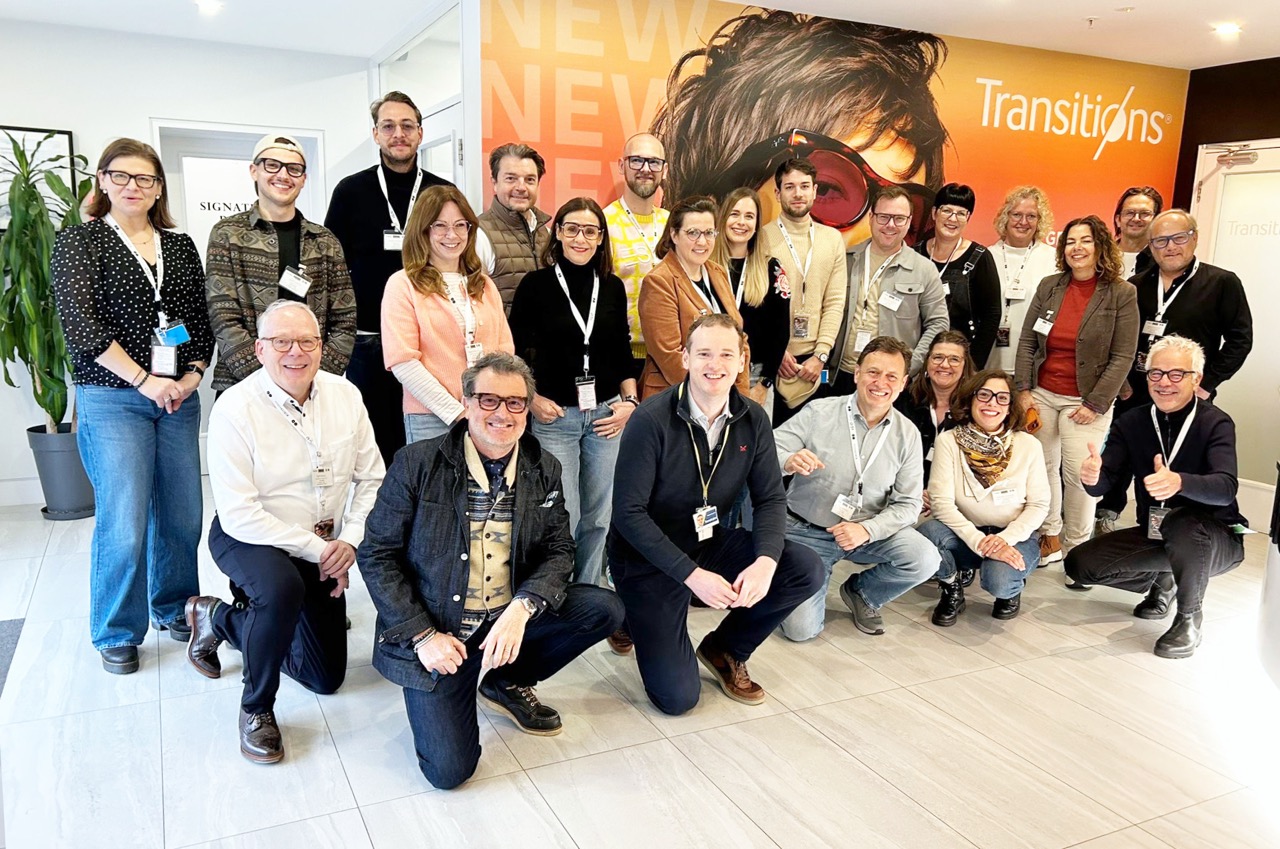
“Welcome to Ireland, welcome to Tuam, and welcome to Transitions. I am delighted to have you all here today!” says Kevin Woulfe, Plant Director of the Transitions Optical Innovation and Technology Center in Ireland, as he welcomes the tour group, consisting of trade journalists, independent opticians, and several Rupp + Hubrach employees.
The plant in Tuam, a town located about 30 kilometers northeast of Galway, opened in 1994 and also serves as an Innovation and Technology Center. Originally, the plant was intended solely as a production site for manufacturing Transitions lenses for the European market. Over the past ten years, however, its function has changed fundamentally. Today, in addition to pure production, the plant also serves as a center for innovation and technology.
Over 200 employees work at the Tuam site, many of whom work in Research and Development—and the plant’s function isn’t the only thing that has changed at Transitions over the past ten years; the company’s image has also become significantly more stylish.
New products = better image
Photochromic lenses have been around since the 1960s. However, this long history is not entirely positive for the relatively young company Transitions Optical. For example, in Germany, the market share of photochromic lenses was around 30% decades ago, says Laurent Dosseville, the Commercial Director Europe, Middle East, Africa, Turkey and Russia – Essilor Transitions. Today, the market share in Germany is in the single digits and is therefore comparably low.
This is likely due to negative associations people have with the old lenses – such as the fact that they had a distinct yellow tint. Yet this is precisely where company executives see an opportunity for the future: “Back then, the yellow color reminded people of old-school products. Today, we know that consumers don’t mind it at all, because younger consumers no longer have that association,” explains Dosseville.
The goal, then, is to win over the target audience of every genre and age with trendy lenses that adapt to light faster than any previous generation of Transitions lenses.
Focus on research and development
For these reasons, research and development are particularly important to the company. On-site, MAFO identifies four key areas that provide a solid foundation for this division. These include a two-part production process, the formulation-Lab, quality assurance and analytical laboratories, and a research centre. People from all these different areas must work seamlessly together to ensure that a new product ultimately reaches the market. This process typically takes years.
Trade visitors are not permitted to take photos, as a large part of the tour concerns research and development, from which no sensitive information may be disclosed – and even the visitors’ Ray-Ban Meta glasses must, as an exception, be left outside.
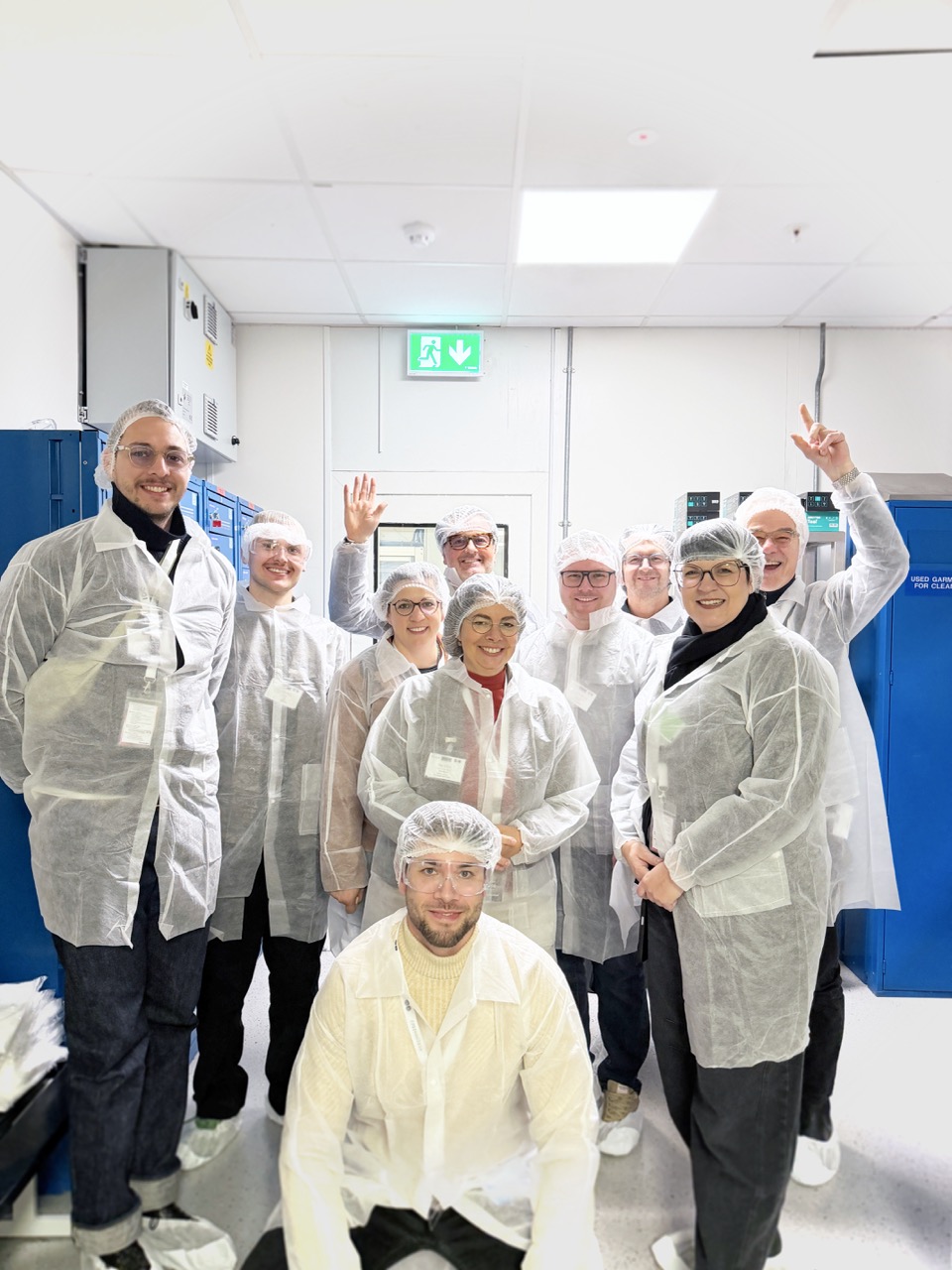
The group of visitors now put on cleanroom clothing, as the first stop on the itinerary is the manufacturing facility. The Core Technology Manager at Transitions Optical, leads the tour.
Two-part production
There are two production lines. Both production lines are used for mass production where Transitions coatings are applied on lenses and then shipped to the Prescription Labs from where they are sent to Opticians. However, crucially, both lines are also used for Research & Development. Both lines are used to test whether new developments can be seamlessly integrated into production or to identify areas that still need optimization.
“What’s unique here is that the R&D team works every day with the operations team and the engineering team. That allows us to develop new products faster and to develop new products better,” explains the Core Technology Manager.
A drop of color
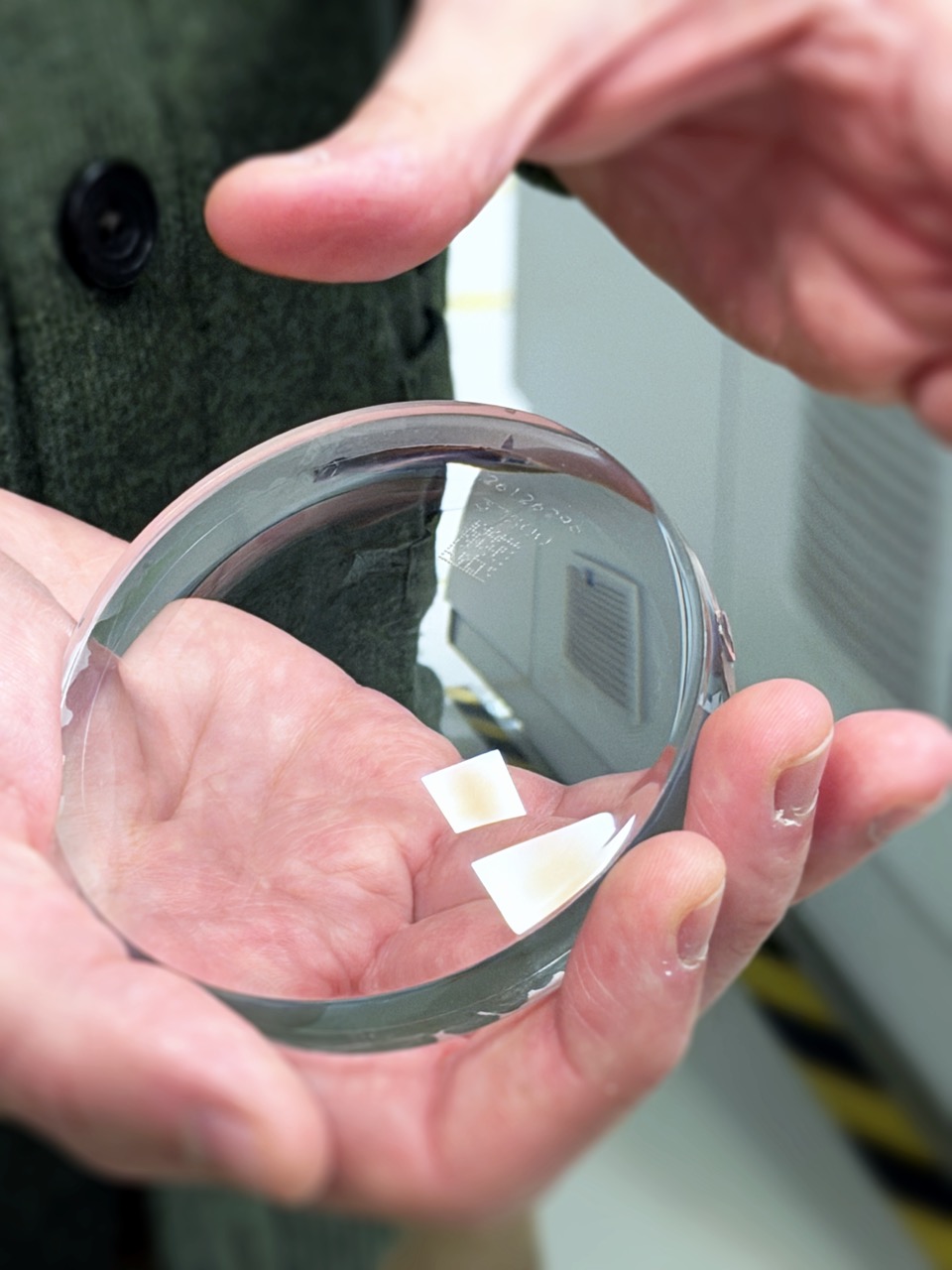
But what distinguishes this production process from standard spectacle lens manufacturing? And what transforms a transparent lens into a photochromic one? At first glance, a single drop of coating makes all the difference.
“This is the core of Transitions technology. This coating is the photochromic layer that provides the color and dynamic light management,” explains the Core Technology Manager.
From the outside, the process looks relatively simple, but during the process, a wide variety of parameters is constantly monitored by the production team. All of these factors are crucial for achieving the desired performance of the photochromic lens.
To better understand why this brief process step is so complex to develop, we’ll move on to the formulation lab.
The chemistry lab – getting down to the nitty-gritty
As we step into the chemistry lab, things quiet down. The chemists in the lab are working with intense concentration, and the journalists are asked to stop all audio recordings. It’s all about the substance – the chemical “magic” behind Transitions – and what is being researched and developed here is top secret.
The formulation-lab is where the dyes and molecules of the future are created. Because every single dye ever used in Transitions lenses is custom designed. However, this doesn’t just refer to the final colors in the catalog. Transitions has already developed thousands of dyes, which are protected as part of Transitions’ extensive patent portfolio.
Some special colors are developed exclusively for specific brands with plano lenses or even just for a very specific collection. In some cases, chemists spend years tinkering to create a dye.
The art of color design
Blue + Yellow = Green – and the color mixture is done? Unfortunately, it’s not that simple in chemistry. To the layperson, it may sound abstract at first why it takes so long to develop a specific dye. The reason lies in the very different requirements for chemical structure and process suitability.
For example, the absorption spectrum must be stable, and there must be no unwanted absorption outside certain wavelength ranges. In addition, color appearance and contrast must meet the requirements.

Furthermore, the dyes must exhibit high photo- and thermostability so that they remain stable for years even under UV light and fluctuating temperatures, etc.
Within the matrix itself, the dyes must dissolve and disperse well so that, for example, no streaks form. Nor must they crystallize – and chemical side reactions, such as those involving the coating, are of course undesirable.
These are just a few of the criteria that must be met. There are many others, including requirements for biological safety, material standards, process suitability, and more.
How Transitions lenses work: The ophthalmic lenses contain photochromic molecules in the lens material that react to UV light. When this radiation hits the lens, the molecular structure changes. In its clear state, the molecule exists in a closed ring structure. This structure absorbs hardly any visible light – the lens is transparent. When UV light hits the molecule, it supplies energy, creating an open ring structure (photochemical reaction). Light in the visible spectrum is absorbed, and the lens darkens. This process is reversible. The degree of darkness and reaction speed depend, among other things, on the molecular chemistry, the material matrix, and the temperature.
Matrix: In the development of the new Transitions Gen-S lenses, a key focus was on the matrix – the substrate material of the lens blank. You can think of this, very roughly, as a saturated sponge in which the photochromic dyes are suspended. The matrix significantly determines how quickly the lens darkens, how quickly it clears up indoors, or how dark the lens becomes in the sun. For a dye to change its structure, it needs minimal leeway, but not too much. If the material is too hard or dense, the particles move with difficulty. If, on the other hand, it is too soft, they react quickly but are less stable as a result.
The best of both worlds – photochromic and polarized lenses in one product
Each new Transitions lens type has a different research focus. For example, Transitions(R) GEN S(TM) was developed with a focus on speed, and the lenses are available in eight fashionable colors. Here, a major challenge for the developers was ensuring that the tint did not change during the activation / fadeback phase. With Transitions (R) XTRActive(R), on the other hand, the focus is on tinting behind the windshield.
One of the latest products has presented researchers with entirely new challenges: Transitions(R) XTRAactive(R) Polarized(TM). These lenses combine the functions of photochromism and polarization in a single lens. They are thus not only self-tinting but also polarizing.
The polarization here is dynamic. In their clear state, the lenses do not appear polarized, while in their darkened state they achieve a polarization level of approximately 90% (Based on tests across materials on gray lenses @ 23°C, using ISO 12312-1 standard). By comparison, standard polarized sunglass lenses achieve a polarization level of 95%.
Unlike usual, the polarization here is not generated by an integrated film. Exactly how the dynamic polarization is achieved instead, however, remains Transitions’ secret for now.
The group of visitors now heads to an area that is at least somewhat less research-critical: quality assurance & Analytical Laboratories.
Quality assurance and analytical laboratories
Quality assurance occupies a large portion of the facility in Tuam. In a separate building, the spectacle lenses undergo a wide variety of intensive tests. What the researchers next door have developed must prove itself here under simulated real-world conditions – after all, real eyeglasses are often exposed to a wide range of demands over several years.
This includes determining whether the dyes actually remain stable over a period of months to years and how they react under various outdoor conditions. Under the electron microscope, employees examine the structure in minute detail and can observe even small changes directly. The pattern here is as unique as a person’s DNA.
But the lens also has to withstand a lot mechanically. Take the ball drop test, for example, where a heavy ball is dropped onto the lens. There are also many other devices and tests that simulate wear and tear caused by dust, scratches, and so on.
It’s getting dark
Things get particularly exciting, however, in a room where employees work in a heavily darkened room and, generally speaking, measure the photochromic performance. Various tests can only be conducted here in the dark, as the lenses must be clear at the start. This ensures, among other things, that the measurement conditions are always identical.
Thousands of lenses are tested in these laboratories each year.
The age of the lenses is simulated, along with how they react under various temperature, humidity, and light conditions. Furthermore, measurements must be taken at a wide range of wavelengths.
Constant temperature conditions are maintained in the laboratories.
Scientific studies
As the final item on the agenda – at least in terms of technical content – participants were treated to some recent study results presented by Transitions R&D Vision Scientist. The expert’s key message quickly became clear: Transitions lenses clearly improve visual quality – and do so beyond simply correcting vision.
In various studies, researchers have investigated, for example, how wearing photochromic lenses affects glare sensitivity, contrast sensitivity, and overall light exposure.
Experts conducted studies under real-world conditions in 12 countries worldwide, across varying climatic conditions. With Transitions(R) GEN S(TM) lenses, participants experienced comfortable light conditions for an average of 90% of the time they wore them. With clear lenses, this was true for only 30% of the time.
Other studies showed that users of Transitions lenses squinted significantly less, and that contrast sensitivity improved, because color receptors are more stressed when wearing glasses with clear lenses. In all cases, however, the comparison referred to clear lenses and not to sun protection lenses.
With this overview of the studies, the production tour came to an end, and the visitors moved on to the less technical part of the day. A boat tour awaited them, during which participants could test Transitions lenses under real-world conditions.
But there was plenty of time for fun as well: under bright sunshine, the trade visitors learned how to prepare a classic Irish coffee, which they could then enjoy on deck. Another highlight was the Irish dance performance right on board.
And of course, no exciting day in Ireland would be complete without a visit to the Irish pub – except that, for once, this part of the evening wasn’t the secret of the Transitions developers, but rather remains the secret of the tour group.