

IXI glasses: adaptive optics and a new optician‑led distribution model
An interview with Niko Eiden and Eric Plat
Progressive lenses completely reimagined: Finnish start-up IXI is working on electronically controlled glasses that dynamically switch between near, intermediate and far ranges – without any visible external mechanics or cameras. Together with a large French optician group, preparations are now underway for market entry. MAFO spoke with IXI co-founder Niko Eiden and Eric Plat, CEO of Atol les Opticiens, at MAFO – The Conference in Milan about positioning, the pilot phase, and the “wow” experience for customers.
Classic progressive lenses have undergone continuous development over decades through optimized progression zones, individualized calculations, big data models, and biometric parameters. But the basic principle has remained the same – a static surface geometry distributes several vision zones across a single lens.
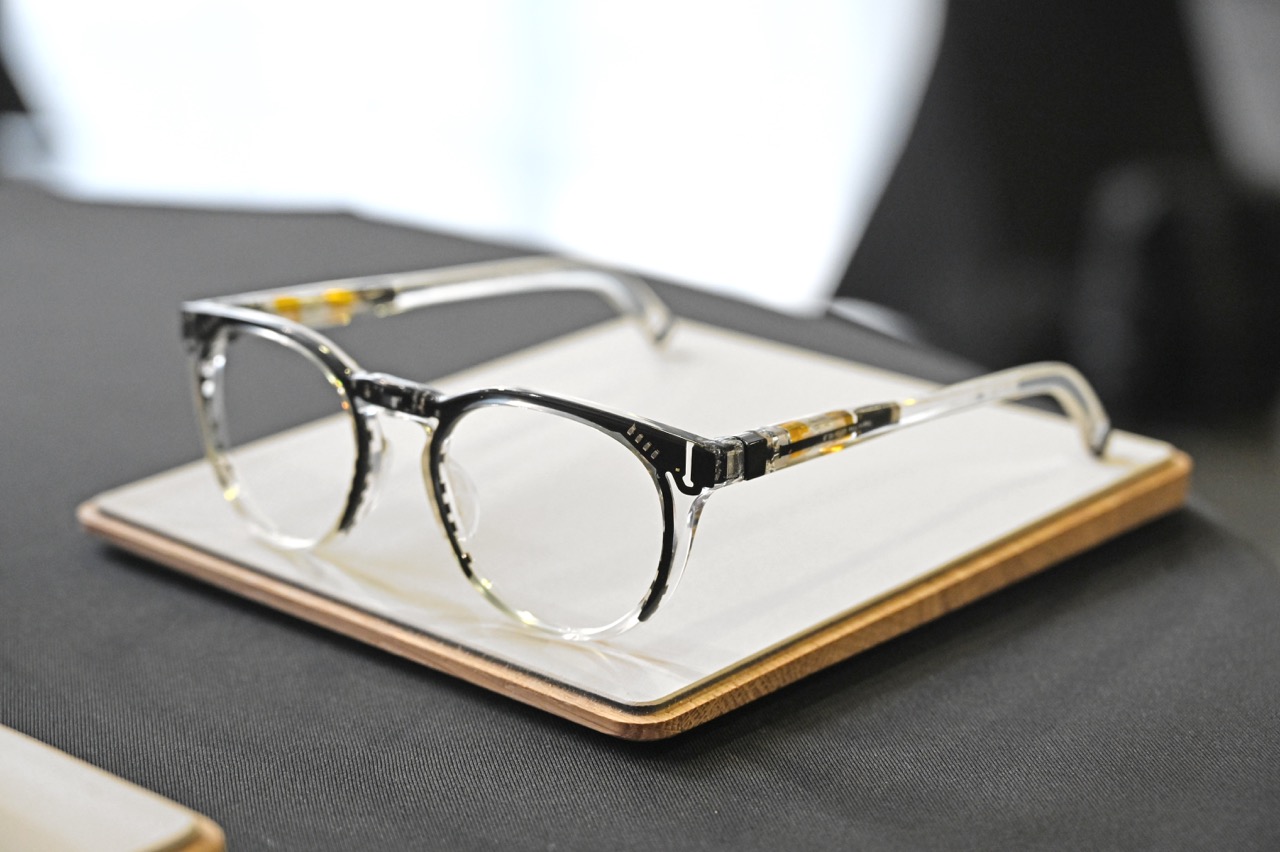
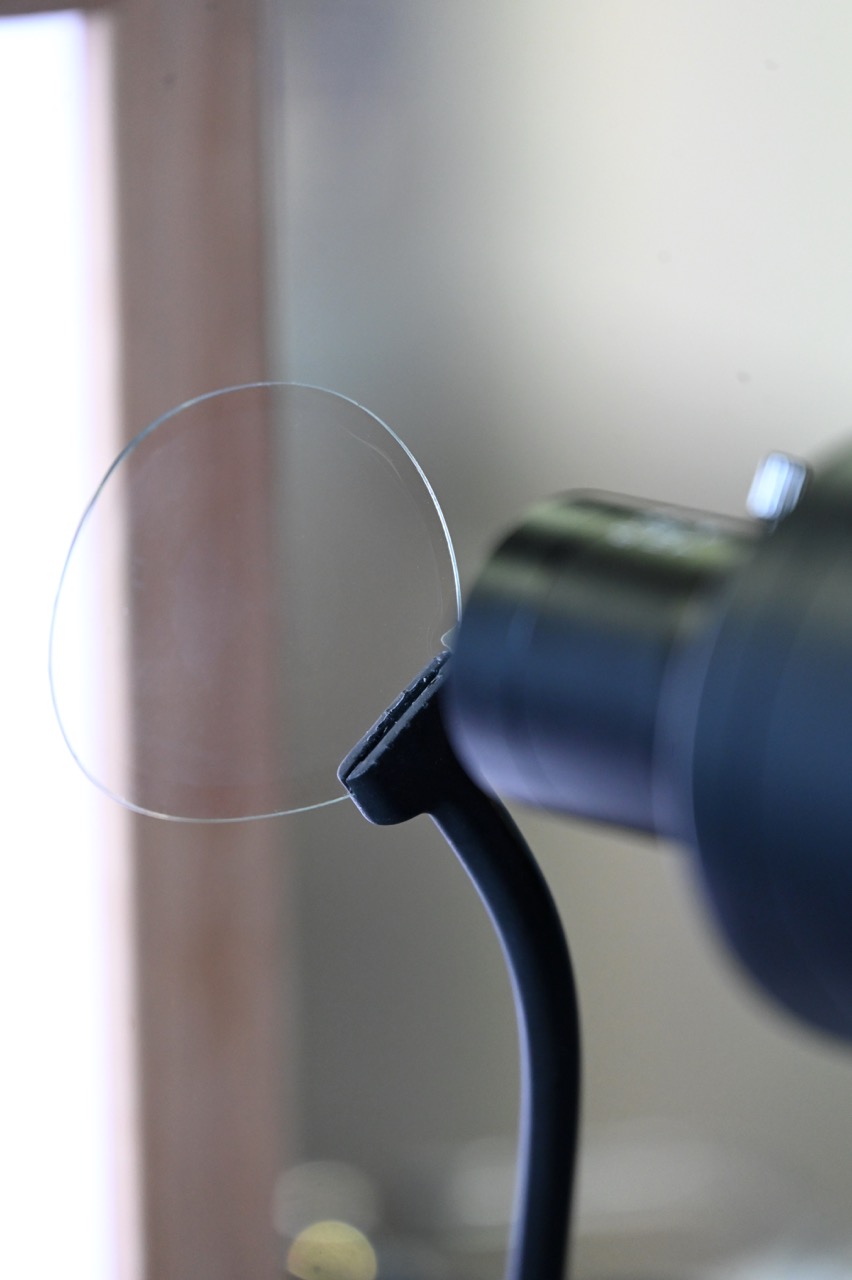
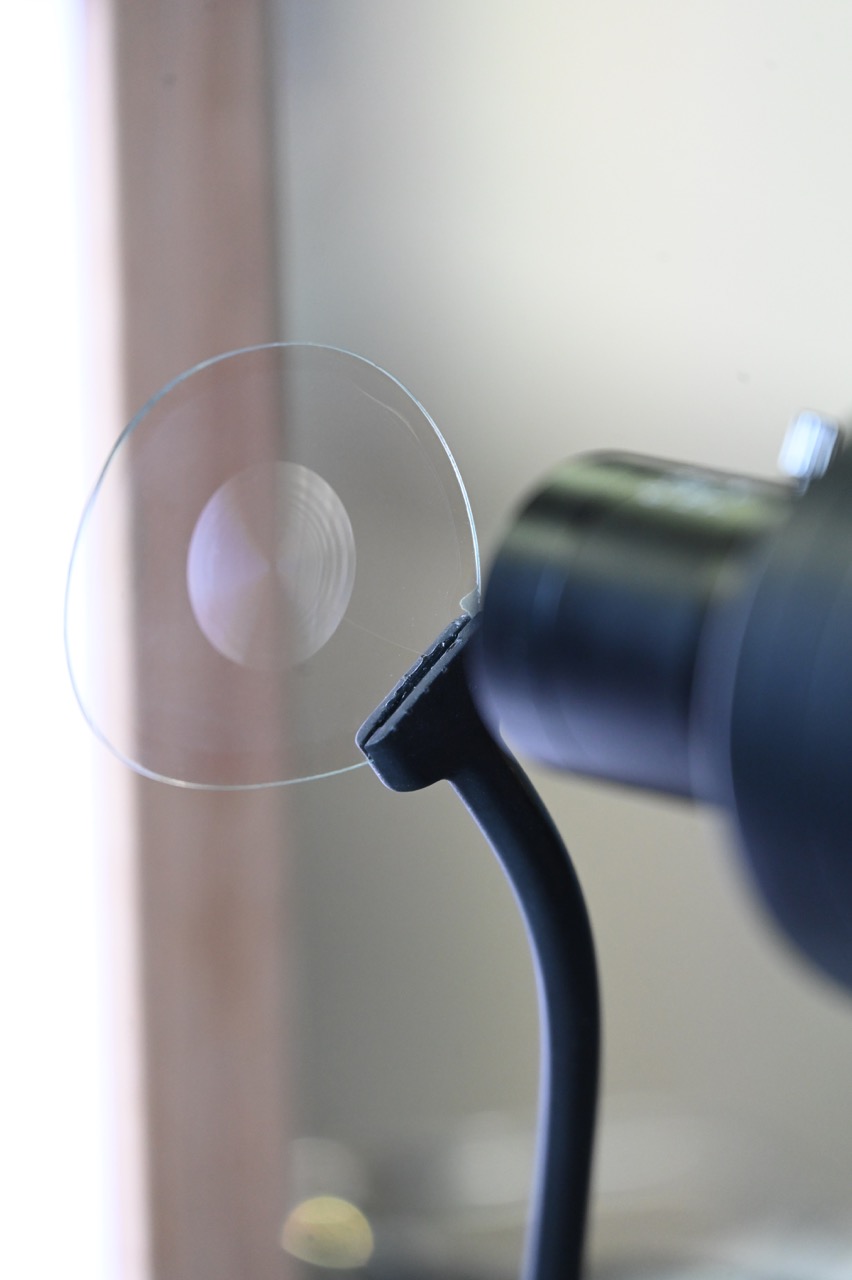
IXI takes a completely different approach. Instead of integrating several fixed vision zones into one surface, the optical effect is controlled electronically. This is not a new approach, as there are other providers who are producing the first glasses in this area or are about to enter the market. With IXI, the lens appears completely clear; only after switching it on can the electronically modified optically effective surface be seen. The highlight: an integrated, energy-efficient eye-tracking system recognizes the wearer’s line of sight. Depending on whether the wearer is looking into the distance, at intermediate distances, or close up, a corresponding optical effect is activated.
This creates a hybrid system: classic distance correction combined with dynamically switchable areas. The goal is nothing less than a new generation of progressive glasses – and a potential shift in the consulting and business model of ophthalmic optics. Niko Eiden and Erik Plat had a clear statement on how these glasses will find their wearers in the future, whether in the ophthalmic optics sector or rather through another distribution channel.
MAFO: You have just signed a letter of intent for a collaboration with Atol and Vizio in France. This will give you easy access to around 3,000 opticians in the French market. Why are you taking this step now?
Eiden: For us, it is crucial to establish partnerships well before the final product is completed. We need to know early on how the product will be distributed, presented, and sold. This agreement is a logical continuation of our work to date – and at the same time our first public partnership in France. The fact that we are starting with such a strong partner is an important signal for us.
MAFO: So it is also a signal to the market?
Eiden: Yes, definitely. We are entering a phase in which we are no longer just developing, but are making concrete preparations for how we will enter the market.
Plat: Our approach is to combine our market knowledge in France and Europe with IXI’s technological innovation. We want to develop an economic and production model that is truly suited to the optical industry. The focus is on the customer experience in the store – but also on how opticians work with a product that is more than just a frame with two lenses. We are talking about a complete vision system here.
MAFO: How will the product be positioned in the market? Alongside classic progressive lenses and clearly in the premium segment?
Eiden: Initially, it will definitely be in the premium segment. We have significantly more components than in classic glasses: electronics, sensors, power supply, software. The lens itself is also more complex in design. Nevertheless, we have worked hard to keep the price positioning realistic. So, in terms of price, we are at the level of high-quality premium progressive lenses – even though the product is much more technologically sophisticated.
MAFO: Will there still be different price levels, for example depending on lens power or specific coatings?
Eiden: We want to keep it simple. Initially, we plan to have one main category. Complex gradations or many equipment variants are not planned for the time being. Additional parameters, such as those for toric lenses, do not cause significant additional costs in our production.
MAFO: What is the process like in an optician’s shop? How long does the customer wait for their personal model?
Eiden: That’s exactly why cooperation is important. We work with a central, renowned independent lens manufacturer in Europe (Swissoptic, editor’s note). Our goal is to achieve delivery times that are standard for the industry. Internally, we calculate around five days from order to delivery – comparable to high-quality individual lenses.
Plat: That’s crucial for us. Innovation must not mean that processes in the business get out of sync. When we introduce a new product, it must be integrable into the existing infrastructure.
MAFO: You talk about co-development. Do you continue to develop together?
Eiden: Absolutely. We contribute our ideas, discuss them intensively with Eric and his team, and receive feedback from real stores. We then test them in pilot operations with real customers. This is extremely valuable because we don’t optimize in the lab, but in the market.
Plat: Our group comprises more than 3,000 independent opticians. We have been investing in innovation for over 20 years, testing new generations of lenses and we support startups ourselves. Innovation is part of our DNA. Progressive lenses are not at the end of their life cycle – but the classic concept is reaching its limits. That’s why we are open to new approaches.
MAFO: What does the customer experience when they first put them on?
Eiden: The decisive moment is the transition – when an optical effect appears and then disappears again. It feels almost magical because it happens without any conscious movement.
This can be demonstrated very clearly in the store. A tablet can be used to detect whether the customer is looking at the display or not. This allows the switch between distance and near vision to be shown intuitively. It is not yet the final individual version, but it illustrates the principle very clearly.
MAFO: You work with eye tracking without cameras. Why?
Eiden: Camera-based eye trackers generate enormous amounts of data – millions of pixels at high frame rates. This requires a lot of computing power, memory, and battery capacity. That would not be realistic for a pair of glasses suitable for everyday use.
That’s why we use low-energy technology with LEDs and photodiodes around the eye. The development took years – including thermal challenges in the nose area. Today, we have a system that fits into a normal-looking frame.
MAFO: People who need reading glasses often have certain anatomical characteristics. Does pupil size play a role?
Eiden: No. Pupil size alone is not a decisive factor. Our system does not rely on the pupil only – the eye-tracking algorithm processes input from multiple sensors per eye and reliably distinguishes the pupil from surrounding features such as the sclera, skin, and eyelashes. These elements do not interfere with tracking accuracy.
No. Pupil size alone is not a decisive factor. Our system does not rely on the pupil only – the eye-tracking algorithm processes input from multiple sensors per eye and reliably distinguishes the pupil from surrounding features such as the sclera, skin, and eyelashes. These elements do not interfere with tracking accuracy.
MAFO: What about road safety?
Eiden: An important point! Far vision correction is static and remains intact under all circumstances – even when the battery is empty. The dynamic functions primarily affect near and intermediate range. In addition, there will be a mode that deactivates all dynamic functions.
MAFO: Where do you currently stand in terms of regulations?
Eiden: The key milestone this year is CE marking. To achieve this, we need a “product freeze”, meaning the design is finalized and no further changes are made. Only then can the formal procedures begin. Without CE marking, there can be no commercialization.
MAFO: How will the pilot phase be rolled out?
Plat: We want to leverage the diversity of our group: city center locations, shopping centers, different sales volumes. Whether 30, 50, or 100 stores – we will define that together. The goal is to identify the ideal profile of a target store.
MAFO: Let’s look five years ahead: What needs to happen for this to actually be the biggest change in the optical retail industry in decades?
Eiden: The first generation has to be convincing. It has to offer a clearly noticeable added value compared to today’s progressive lenses. If that succeeds, we can build on the integrated technology – eye tracking, lenses, frames – as a unit.
Progressive care is only the first application. Other areas of application are conceivable in the future, and we already have ideas for these. You will certainly hear more about this in the future. But for now, we are taking it one step at a time.
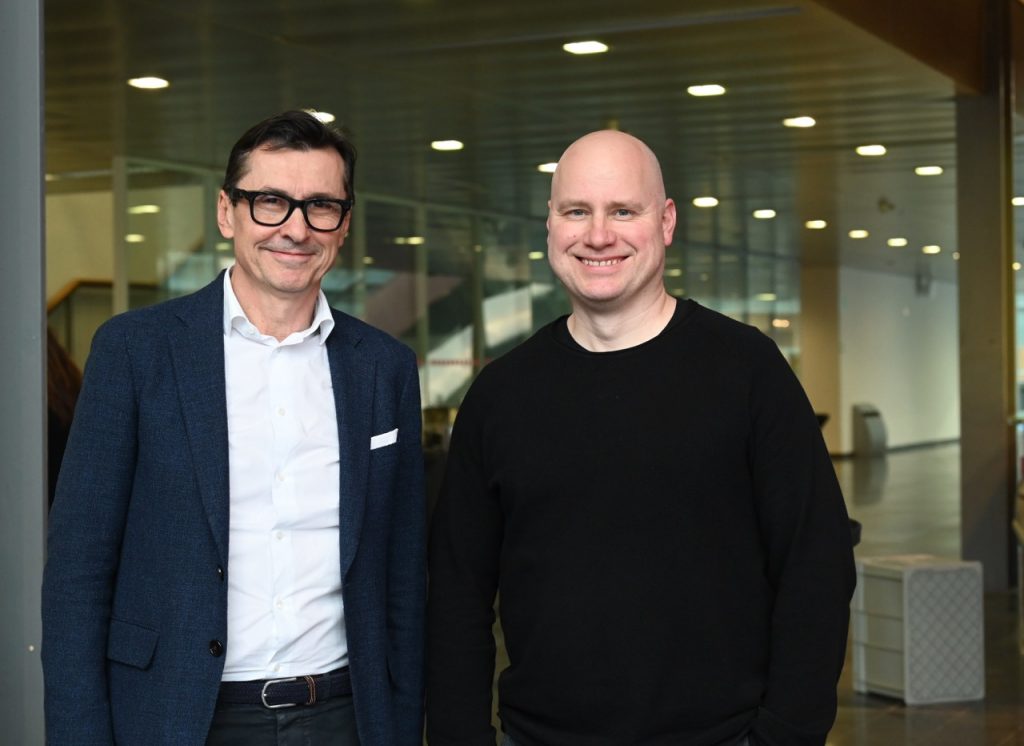
Niko Eiden
Niko Eiden is co-founder and CEO of the vision tech company IXI, which develops autofocus glasses for presbyopes. The Finnish entrepreneur is also co-founder of the VR technology company Varjo and has many years of experience in the development of wearable high-tech systems. His focus is on transferring advanced optical and sensor technologies to ophthalmic applications.
Eric Plat
Eric Plat is president and CEO of the French opticians’ cooperative Atol les Opticiens, which he has headed since 2010. A trained optician, he began his career as an independent Atol member and later moved into the management of the organization. Under his leadership, Atol has developed into one of the most important innovation and distribution networks in French optometry.