
Smart glasses and digital twins in myopia management
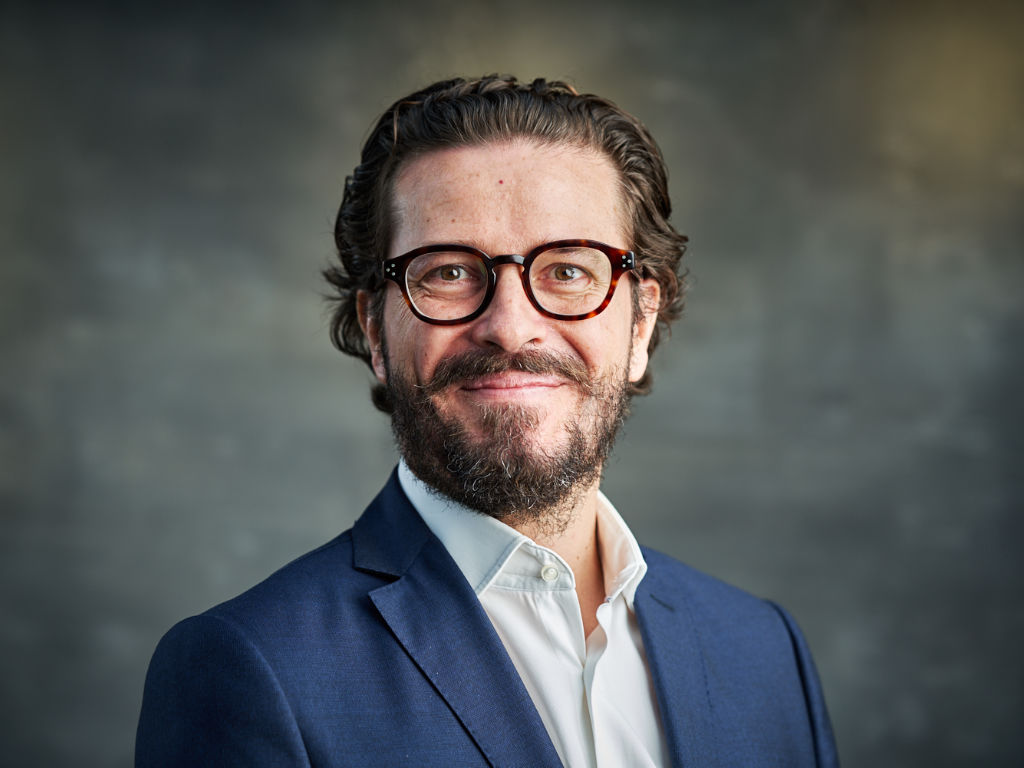
An interview with Arnaud Ribadeau Dumas
The importance of myopia management is widely recognized in the industry. At the same time, many questions remain unanswered: Why does a particular design work exceptionally well for 80% of children but very poorly for a few? Or what role do certain biomarkers play in the success of the treatment? In this interview, Arnaud Ribadeau Dumas from EssilorLuxottica explains what modern myopia management looks like today and what opportunities lie ahead, such as measuring the light spectrum or near vision behavior under real-world conditions by using smart glasses.
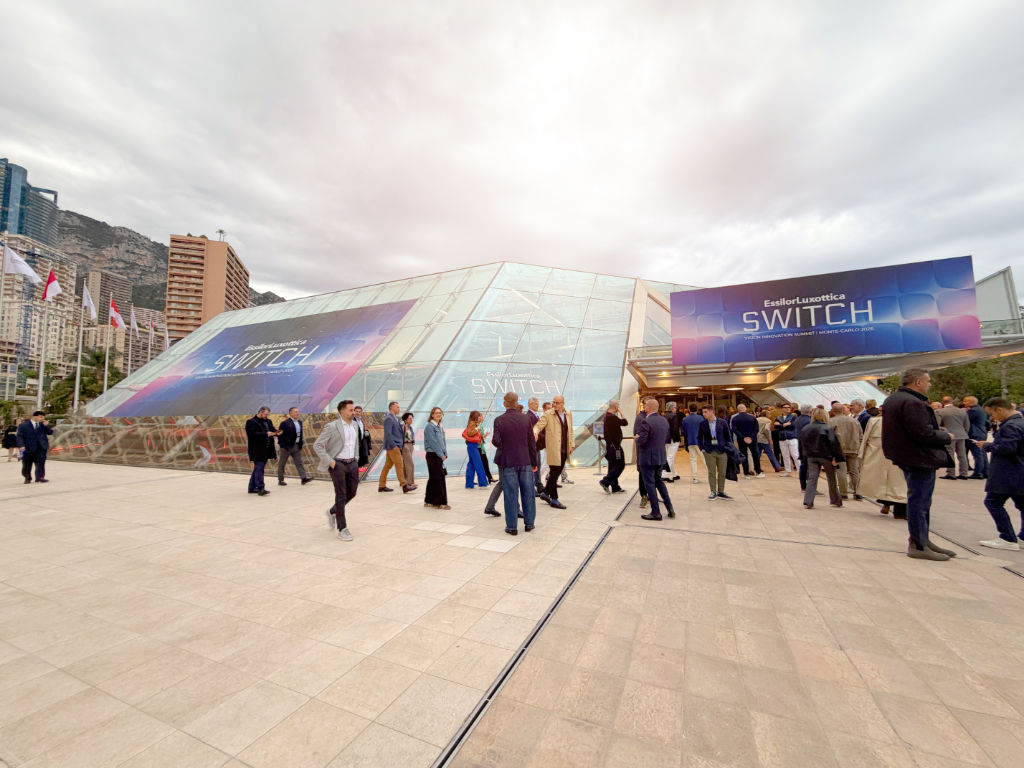
At the SWITCH Innovation Summit hosted by EssilorLuxottica, which took place from April 13 to 15 in Monte Carlo, Monaco, a wide range of future-oriented topics were presented; these included myopia management, the digital twin, and smart glasses for children. MAFO spoke with expert Arnaud Ribadeau Dumas in Monte Carlo.
MAFO: We heard a lot about digital twins today. What is the purpose of the digital twin in myopia management?
Ribadeau Dumas: We use the digital twin to improve the design of the lenses or to go faster in the process of innovation. Imagine you have to go through a clinical trial – usually it takes six months to prepare the trial, six months to recruit the children, and then follow one or two or three years of results. That means if you want three years of results, you need four and a half for the whole clinical trial; that’s too long.
With the digital twin, our discovery of the mechanism of ametropization of the eye, and the understanding of the light interaction with the retina cells, we can simulate new designs. Those can be used with a digital twin as a kind of virtual clinical trial. And once we have defined the design that looks most promising, we go to the real clinical trial.
MAFO: How much time can be saved here?
Ribadeau Dumas: It’s difficult to answer precisely how much time we save, but we can have far more designs and concepts that we can test in a much shorter time. Finally, we chose the two or three most promising concepts to start the real clinical trial. So, it’s more to make sure we have something more efficient and not only a question of timing.
MAFO: How close are we to truly personalized myopia management where treatment is adapted to each child individually?
Ribadeau Dumas: There are a lot of things that we know empirically already. We know, for example, that some kids react to microlenses – other kids react more to contrast diffusion reduction. But at the same time, we don’t always know why.
Now imagine you have a kid that is not reacting well to a treatment. The first thing we’ll do now is either increase the dose of treatment to make sure that they are using the product 12 hours a day, or, for microlenses, we increase the power of the microlenses.
But if this adapted treatment still doesn’t work, we change. It’s like you take paracetamol and it doesn’t work. Then you take ibuprofen, and now it’s working because you are reacting better to one or the other painkiller. It’s the same story. That is the first level of personalization; we take into account the reaction kids have to the treatment.
MAFO: What is the second level of personalization?
Ribadeau Dumas: The second level of personalization will come when we really understand why, even for one treatment, 80% of the kids react very well, but maybe 10–20 still don’t react properly. But we’re probably still a few years away from a definitive answer to that question.
In France we started a five-year innovation program with a consortium of five different partners. Thanks to this, we are starting to understand that some elements are influencing the reaction of the kids to the treatment. Here, we identified some biomarkers that we take into account for giving a certain type of treatment.
The second level will come in a few years. It is more specific to understand the profile, biomarkers, and genetics for the best solution.
MAFO: Does combined therapy with atropine or ortho-k also play a role?
Ribadeau Dumas: Yes, absolutely. However, combining ortho-k with another treatment is difficult because you have the lenses on your eyes. Then during the day you don’t need lenses anymore, and most of the people who use ortho-k are not wearing glasses.
An easier combined therapy is to use spectacle lenses with atropine. We know that atropine works, but we know that atropine works at a higher dosage and usually less at a low dose, especially in Caucasians. And we know that atropine can have some rebound effect as well. For example, when you stop and then your eye keeps on accelerating.
MAFO: How should one get started?
Ribadeau Dumas: We generally consider starting myopia management with spectacle lenses designed for myopia control. If this approach alone is not sufficiently effective, atropine can be added as a secondary level of treatment.
This is comparable to adding a second antibiotic when the initial one leads to some improvement but does not fully address the problem, because certain bacteria may be resistant. So, there is absolutely no restriction on combining spectacle lenses with atropine therapy.
Even more importantly, when atropine treatment is discontinued, a stronger generation two lens design can be used to compensate for part of the rebound effect. This approach is empirical, as no specific clinical trials have been conducted for this indication.
In practice, this combination works very well, as do other types of combined treatment strategies.
MiSight contact lenses for kids or others are also an interesting option for kids, depending on the activity.
And that’s also interesting about the new smart glasses for kids that we are launching. Here, we can measure the wearing time and the wearing patterns, or we can discover that every Wednesday afternoon someone goes for sport and takes their glasses off. Then the ECP can say, “For the afternoon, you better use your contact lenses so that you always have a treatment on.”
MAFO: You just mentioned your new Stellest Smartglasses for kids, that are already available in China. Can you please specify what kinds of clinical or behavioral insights can be derived from those glasses?
Ribadeau Dumas: First of all, the wearing time. You need to know if the glasses are worn 10 or 12 hours a day. That’s key because it’s a treatment! And like any treatment, if you stop it, you increase the risk. If you don’t wear it 12 hours a day, we know it’s less good.
The second information is the wearing pattern during the day or during the week, because people have different activities to do on Monday, Wednesday or Sunday. Maybe they don´t use it if they go to school – maybe the whole weekend. Or a 16-years old don´t use it at night because she wants to party and don´t want to go with glasses. So, the pattern is important.
MAFO: In the future, the glasses should be able to measure even more parameter …
Ribadeau Dumas: Yes, correct. The next generation of smart glasses for myopia management will also measure the light exposure. We conduct a lot of research and data in this area in different light spectrums to understand which is good and which is not good – or if some part of the light spectrum is missing so that the myopia will keep on evolving. Probably in one year we will have smart frames with light spectrum measurement.
Another important tool for the future is the measurement of the reading distance. We know that near-distance activity is very important for provoking the eyeball elongation. Here too, especially the pattern is interesting. Because sometimes we say the reading distance is a problem, but if you read and you take a pause every 20 minutes, it is much better than reading two hours in a row.
And it is also important to have a measurement for the parents because sometimes after a year or so they come back and say the power has increased, and the glasses don’t work. Then the ECP has a communication problem. Then it is much easier for the ECP if they have a wearing pattern they can show. That should be given to the parents.

There are some very interesting psychological studies that show that if you inform the parents that the wearing time is not enough, they will change the wearing time. They will influence their kids.
We are also working on some kind of way to engage the responsibility of the kids from a gaming perspective. This is not about making them guilty but about supporting right behaviors. Similar to smartphone information, telling you if you used your smartphone more or less compared to other weeks.
MAFO: What else does the data help with, and what role will AI play?
Ribadeau Dumas: As you see, we are working on a very holistic approach. Therefore, we need the consent of the parents to collect the data of the wearing patterns, wearing times, etc., and we relate it to the efficacy of a product.
Ideally, in our studies, we also cross that with the genetics of the kids so that we can get to the personalization you were mentioning before. Our personalization is coming from our own clinical studies cohort of kids that we have set up. But if we could have real-life evidence, real-life data, then the science will go much faster – we are not hiding that.
Collecting data – anonymous of course – makes the science go faster with Big Data and AI. That will help us understand the mechanism better and other things we have not discovered yet that will help increase the treatment efficacy.
MAFO: To achieve this goal, you need as much data as possible. Do you have any data on the market penetration of myopia management lenses?
Ribadeau Dumas: Unfortunately, the statistics are not so simple because kids in China, for example, start using the lenses at around six, and they stop at 12, 13, or 14 because myopia usually stabilizes there around 14.
In the Caucasian world, myopia starts a little bit later, more around eight. But here you have a stabilization around 16 or 17. And then you have people going to university, and then again, they start to have myopia. Therefore, it’s difficult to get a percentage because of those different situations.
But at least for China, we have an estimate of the market size, based on what we sell and our market share. We estimate that there are already more than 25% of kids between 6 and 14 that are using myopia management solutions. But to be precise, when 25% refers to children aged 6 to 13, that spans roughly six to seven years. But they often only use it for three years, so that 25% probably represents only half of them.
If the question is, how many kids have used at some point in time a myopia management solution? Our estimation is roughly 30% to 40% in China. In Caucasian countries it differs, penetration is lower. In some Asian countries the penetration is probably around 30% to 40%, but countries like the UK or Germany are not far from 10% only.
One of the reasons is that some of the big players have not yet jumped in, but we need those big chains for a very good penetration. And it is a question of the structure. If the kids need a prescription from an ophthalmologist, for example.
MAFO: Would you rather see it in the hands of ophthalmologists or in the hands of optometrists?
Ribadeau Dumas: That’s a very important question. In some countries you need a prescription from an ophthalmologist by regulation or for the insurance. Opticians in Germany told me, for example, that even though they cannot prescribe under a certain age, they talk about it to build awareness.
They saw it as their duty. If there is a kid who is eight years old with a minus two prescription and he comes back next year with -2.5 or -3.0, they feel responsible to inform the parents about treatment options.
MAFO: Costs are also a factor when it comes to penetration. What is the current situation in different countries?
Ribadeau Dumas: We have built something we call the medico-economic dossier. It is a comparison between the burden of disease, which is the long-term cost for the health care system. Of all the pathologies that are linked to myopia, retinal detachment, glaucoma, etc., those costs are much, much higher than having to pay for a pair of glasses.
However, now the problem is the timing, right? What you pay now is an expense for the insurance system. But what you will have to pay tomorrow is not the responsibility of the current government, so it may change only if public authorities have long term perspectives.
However, we are going government after government with very scientific-based studies done by third parties to prove the burden of disease and to also have a cost avoidance model that allows us to calculate how much cost avoidance you could have if you invest now.
We have countries that totally embarked on it. China, for example, understood that the long-term cost is huge if they don’t treat myopia now. Although that does not mean it’s completely free. In Switzerland it’s free. In France it’s covered by the complementary and private insurances. In the US, we just got the FDA authorization. It’s covered by the managed care companies as one of the highest coverage levels.
MAFO: So, we probably still have a lot of work to do in some countries, like Germany …
Ribadeau Dumas: Yes, definitely. There is still a lot of work to be done in Germany. We need to collaborate more closely with the public and the insurance system. We also need to convince opticians that it is part of their job to educate patients and engage with them – including large chains like Fielmann.
And we need to convince ophthalmologists of the product’s effectiveness so that they prescribe it whenever they identify risk factors. For example, if both parents are myopic. The likelihood that the children will be affected is quite high. But if the child is somewhat introverted, prefers to stay at home, and doesn’t like playing sports outdoors, etc., the risk is also higher.
We need to take the child’s overall profile into account. So yes, we still have a bit of work ahead of us, but we’re counting on the help of the whole medical community.
MAFO: Thank you very much for the interview.
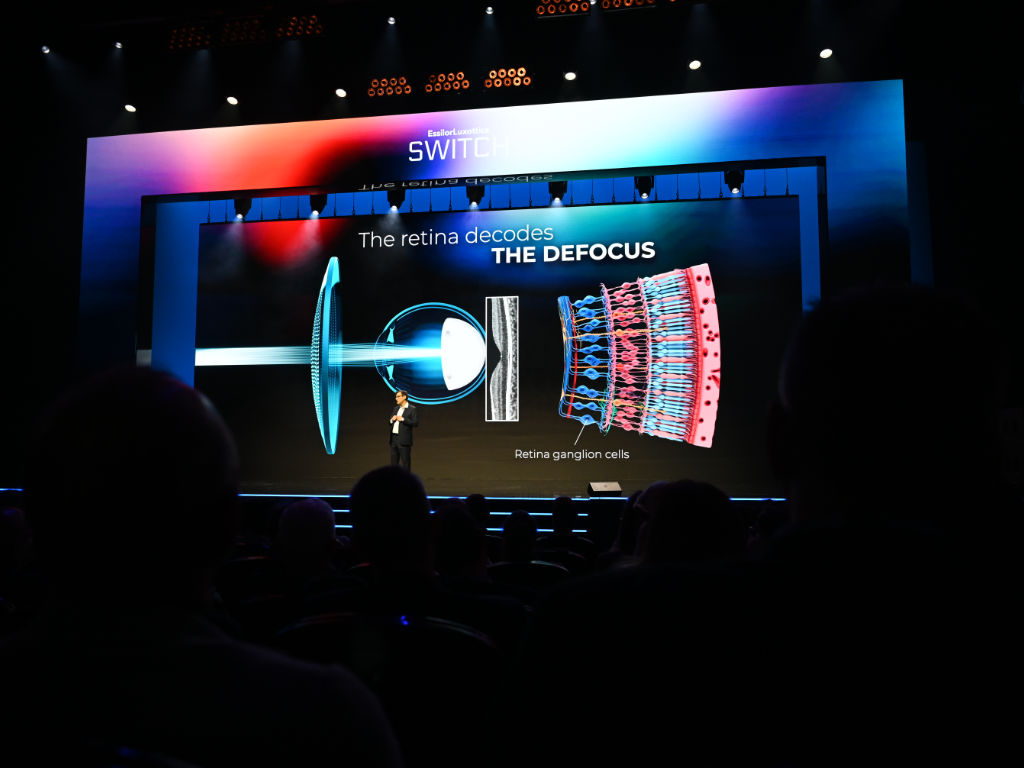
What is a digital twin in myopia management?
In general terms, a digital twin describes a virtual, computer-generated representation of a real-world system. In industry, this is used, for example, with aircraft or machinery, and in medicine, for instance, to visualize organs.
The digital twin in myopia management is a relatively new concept. It serves to predict the progression of a child’s myopia on an individual basis and to influence it in a targeted manner, rather than relying solely on average values from studies. To do this, a digital twin of the eye is created using a wide variety of data. This includes, for example, the anatomy of the eye — including the cornea, lens, etc. — the axial length, refraction data, fundus data, optical imaging properties, and more.