
Laclarée: Fluid-autofocus eyeglasses
Correcting presbyopia
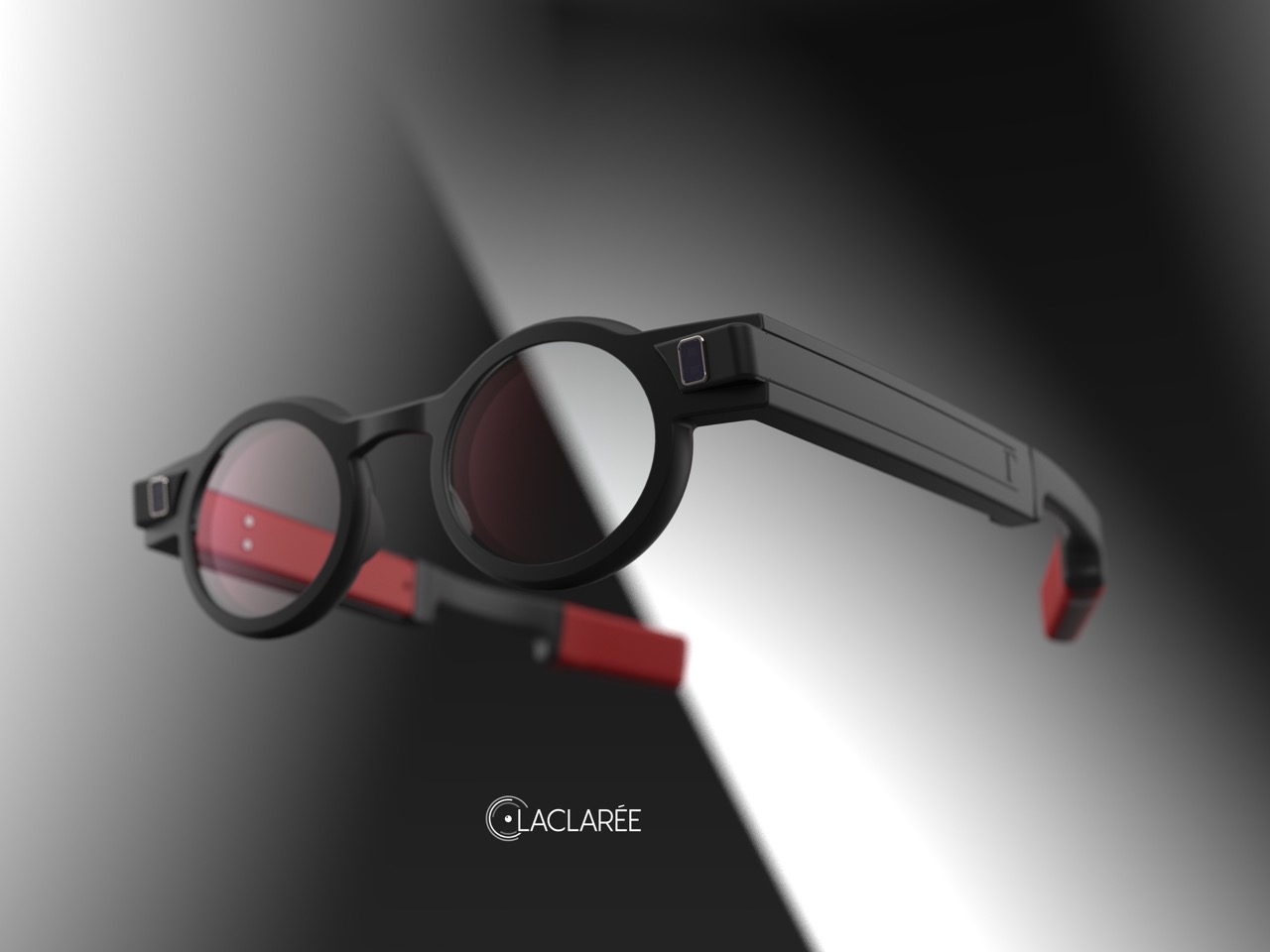
Presbyopia is an age-related vision disorder that affects everyone from around the age of 40. It causes a progressive loss of accommodation, that is the eye’s ability to focus at close-range distances. Effectively correcting presbyopia requires a dynamic solution capable of restoring sharp vision at any viewing distance. However, most existing corrective solutions are static, resulting in reduced quality of vision for the wearer. For several years, Laclarée has been developing an adaptive eyeglass solution based on variable-focus lenses controlled by distance sensors. This technology aims to restore sharp vision across a wide field of view without requiring any conscious intervention from the wearer.
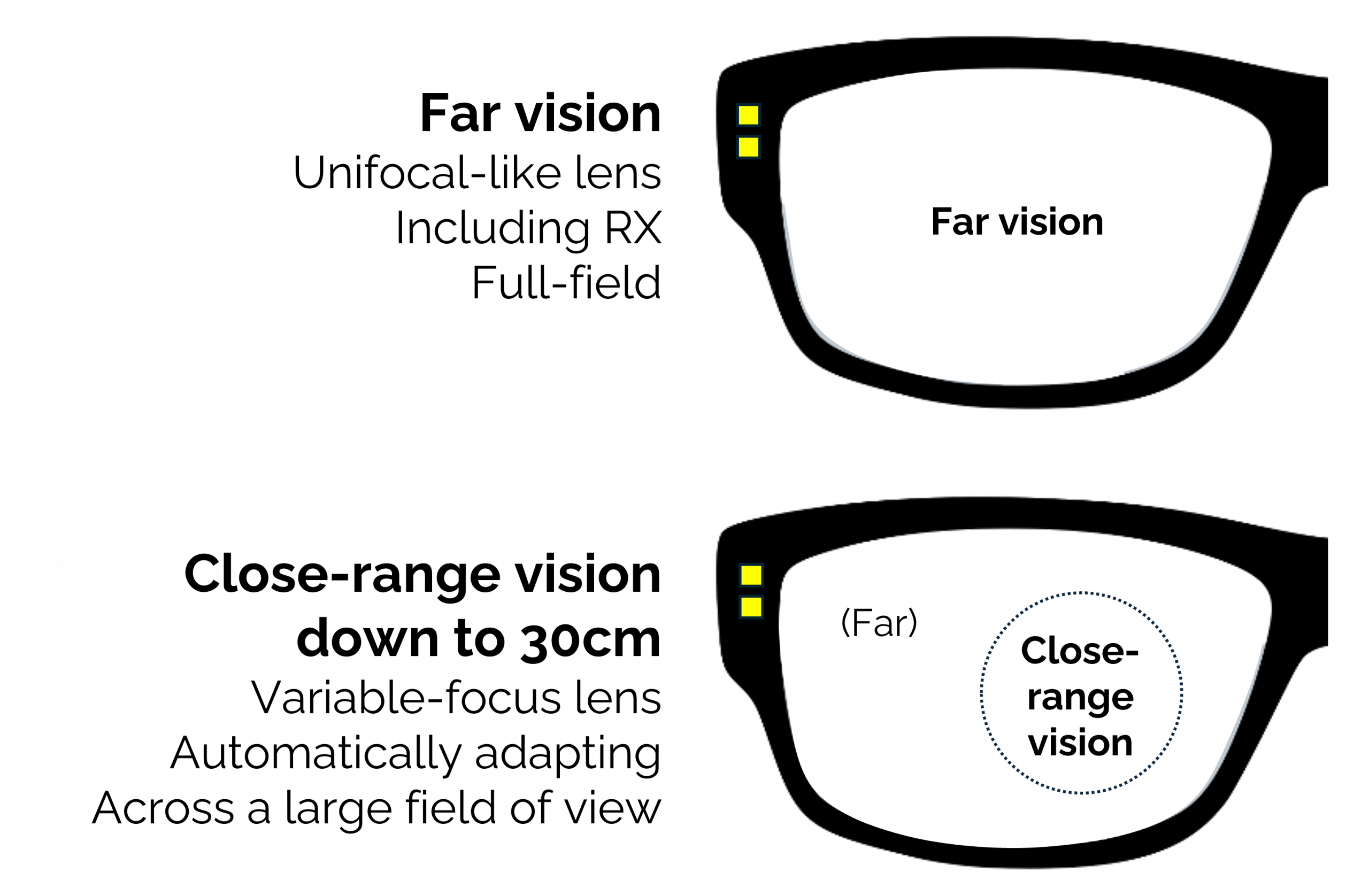
To better understand the added value for users of fluid-autofocus eyeglasses, let us start by taking a closer look at how those glasses work. Figure 1 on page 25 serves as an illustration.
Variable focus provided by fluid-filled lenses
On top of a unifocal lens incorporating the wearer’s far-vision correction (myopia, hyperopia, astigmatism), a 20mm-diameter variable-focus lens, centered relative to the wearer’s pupil is integrated. This variable-focus lens provides an additional optical power (addition), which is controlled by the embedded electronic master system. It ensures the required focusing correction for comfortable vision. The lens architecture also guarantees that this variable-focus lens remains inconspicuous.The focus is controlled using information from two distance sensors that measure the time of flight of invisible near-infrared pulses.
The addition provided by the variable-focus lenses is accurately adjusted so that visual acuity remains optimal at all times. The diameter of the variable-focus lenses is sized to provide comfortable field of view in close-range distance tasks, such as reading, working on screens, using a smartphone. When the wearer looks at far distance, this field of view expands to the full visual field, as the variable lenses naturally “disappear” due to zero added optical power.
This technology, protected by several international patents, is based on fluid-filled lenses driven by electrostatic actuators located in the temples of the eyeglasses. This technology was specifically designed for presbyopia-correcting eyeglasses. Based on a refractive approach, it inherently delivers excellent quality of vision for the wearer, offering a broad dioptric range, high optical transparency and no aberrations.
Last, the wearer’s journey remains unchanged: they visit the optical retailer to select a frame from the available range, optionally experience the autofocus functionality with the trial kit offered by Laclarée, and have the optician take centration measurements. The prescription, centration data, and chosen frame model are then sent to Laclarée to produce the eyeglasses.
Retrieve natural focusing
By restoring sharp focus at all viewing distances, automatically and across a wide field of view, Laclarée’s adaptive eyeglasses are a genuine breakthrough for the ophthalmic world. Ultimately, they enable to retrieve natural focusing.
From a technical standpoint, in order to replicate the natural accommodation, Laclarée proposes dedicated architecture. The lens incorporates an optical doublet formed by two liquids featuring a refractive index difference and separated by a deformable membrane. The curvature of the membrane is generated by the differential pressure induced by the actuator, producing the required focusing power.
Functional specifications are presented in the table 1. These are derived from a thorough needs analysis, based on a combination of market studies, optician interviews, scientific literature and wearer tests. At the end, resulting vision with the Laclarée eyeglasses is very close to pre-presbyopic vision.
Specifications
|
Addition range |
From 0 to +2.75D |
|
Sphere range |
From -5 to +5D |
|
Cylinder range |
Up to +3.5D |
|
Lens contour |
Any shape |
|
UV and coatings |
UV blocking, anti-scratch, anti-reflection, optional top coat |
|
Transmission |
≥ 95% |
|
Lens variable zone |
20mm diameter |
|
Base curves |
4D – 6D |
|
Focusing distances |
Any distance > 30 cm |
|
Focusing modes |
Autofocus (default) Manual (via app) |
|
Response time |
≤ 1s |
|
Autonomy |
20h, daily recharge via 5V USB charger, removable batteries |
|
Weight on nose |
≤ 30g |
|
Operating factors |
-10°C to 40°C, IP54 |
Table 1: Functional specifications of Laclarée’s eyeglasses.
Additionally, Laclarée’s eyeglasses provide the possibility to readjust the lens near vision correction throughout presbyopia for a longer eyeglass lifetime: the maximal addition which is recommended by the optometric exam (Add) can be changed at any time by the eye care professional, allowing readjustment throughout the presbyopia evolution occurring naturally between the ages of 40 and 60.
The technology has been tested on multiple occasions with presbyopic populations of varied profiles, including those satisfied or dissatisfied with their current solutions, in different settings such as optical trade shows, consumer innovation fairs, clinical investigations, and internal studies.
Common activities were assessed, including computer work, smartphone use, motion tasks, reading, manual activities, and driving. In several situations, such as navigating staircases, the lens architecture with the adaptive variable zone has shown to be easier to adapt to than progressive lenses which inherently exhibit lateral aberrations and distortions.
The seamless way in which the technology allows real-time transitions between different viewing distances consistently impresses users and leaves them amazed. A demo video on a former Beta prototype can be accessed with the QR code at the end of the article.
Dedicated assembly line
Thanks to its unique technology, Laclarée aims to become a key industrial player in the autofocus eyeglass market. The company is currently setting up its assembly line for small-series production, in Lyon, France. This line will serve as a pilot for what can later be deployed on a larger scale.
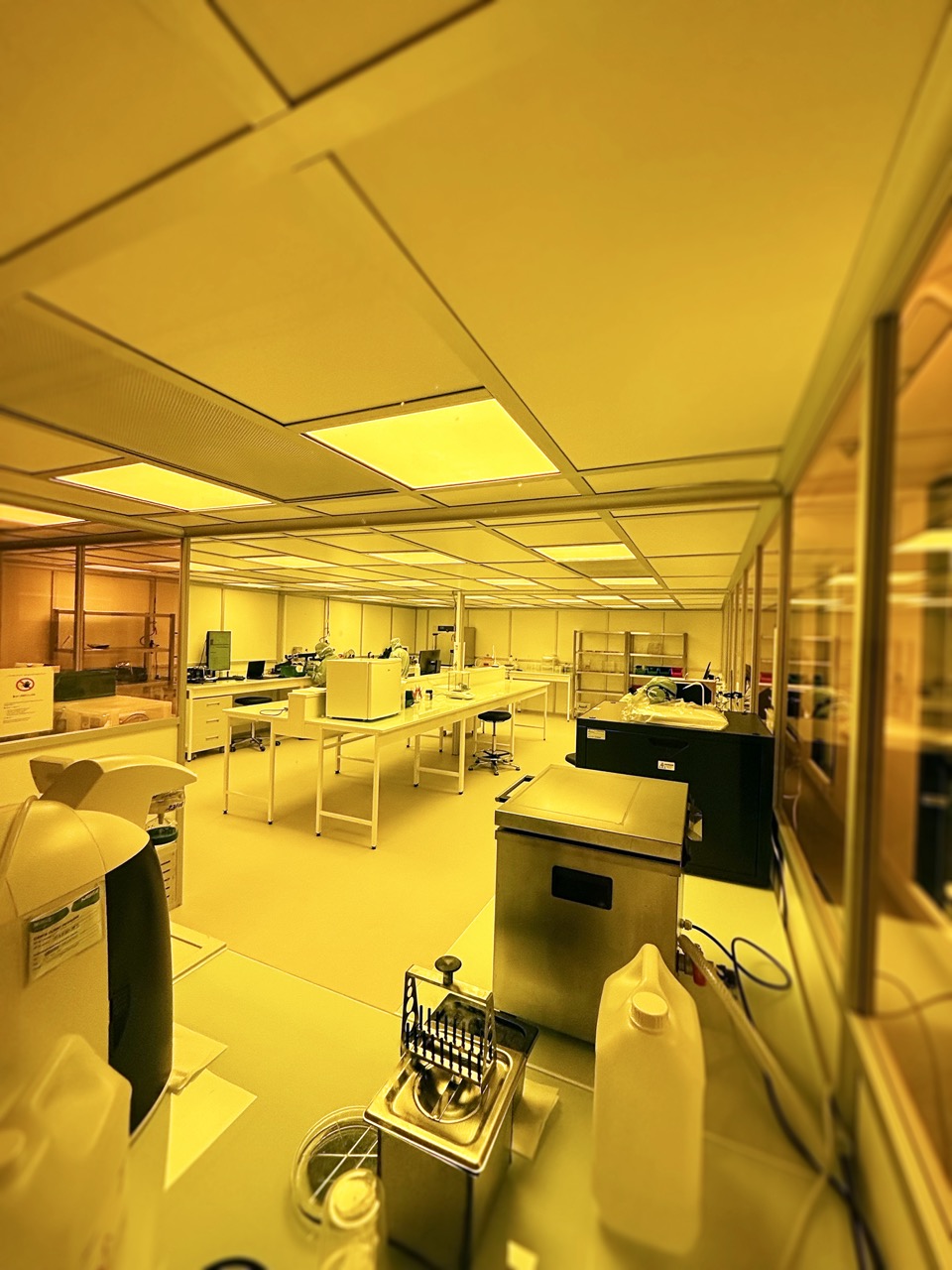
Prior to assembly, the various component parts are sourced from carefully selected suppliers and partners, notably the coated RX unifocal lenses to correct for static refractive errors. The assembly of these components is then carried out in a dedicated cleanroom (ISO 7, 60 m²) as can be seen on figure 2.
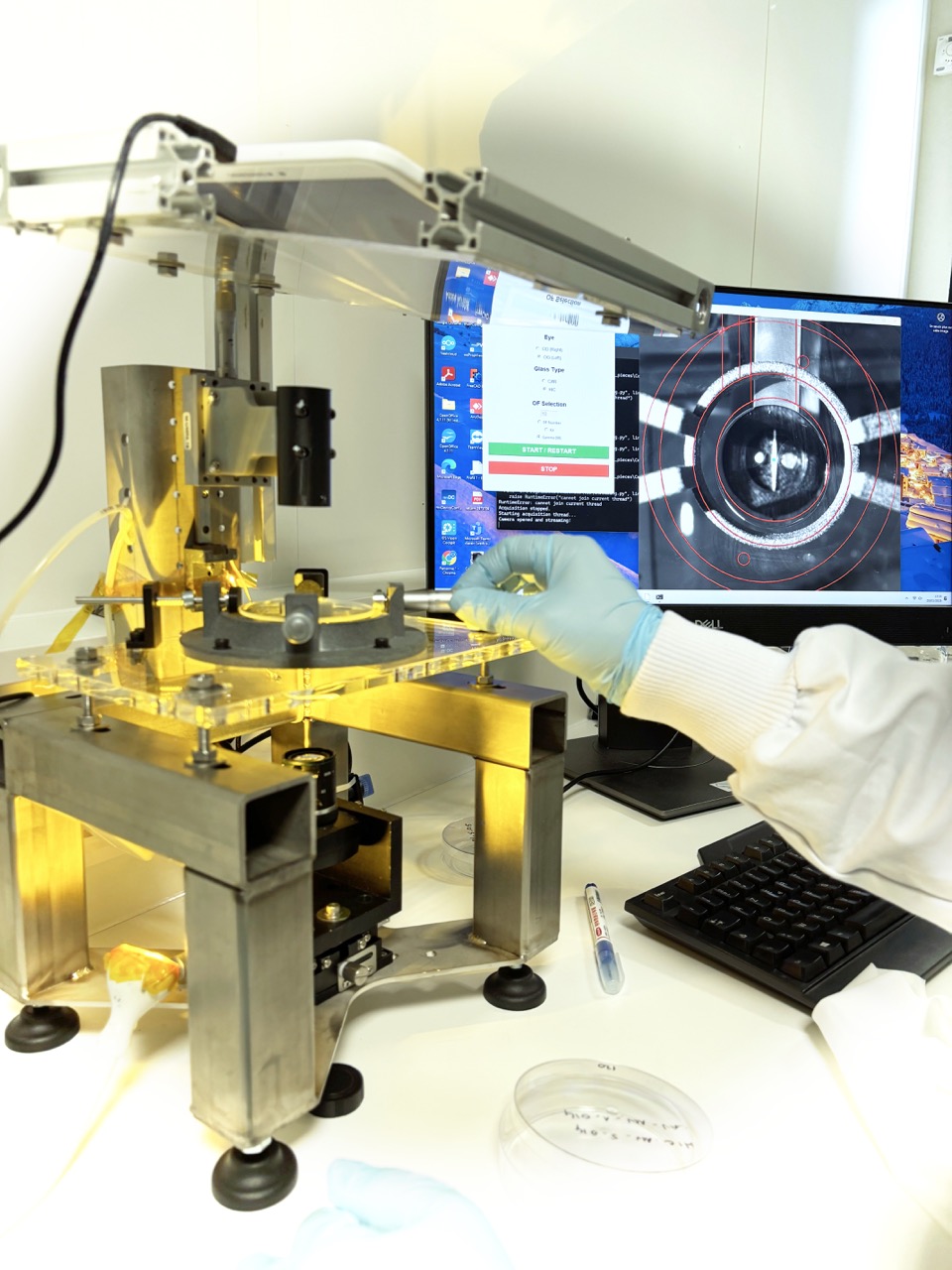
The assembly line consists of “in-house” assembly and test benches. Standard ophthalmic industry equipment does not meet the requirements of Laclarée’s technology, so the processes are continuously adapted and customized, demanding a high level of innovation in an otherwise well-established industry.
Although some process steps, such as blocking, cutting and optical power verification, are familiar in the ophthalmic field, their implementation here involves re-engineering to integrate with the technology. Other processes are specific, such as layer bonding, filling, and optical power tuning.
Commercial launch
Laclarée is preparing its first commercial launch, with an initial product line named Gamma. The line will feature three eyewear models, each available in three sizes to ensure an optimal fit for the wearer. These models will be available at the stores of Laclarée’s partner opticians. A pilot commercial test will be conducted before the end of the year, and full commercialization will begin in 2027.
From the outset, the company has chosen to retain full control over its technology and manufacturing by developing both eyewear prototypes and the corresponding assembly tools. This demanding approach relies on the recruitment of a multidisciplinary team capable of addressing a broad variety of challenges and upholding high scientific and technical standards consistent with breakthrough innovation.
This strategy creates significant value for the company through in-depth knowledge of the technology’s critical parameters, which is essential to future industrial success.
At the end of 2025, the company relocated to larger premises to accommodate with the new requirements of entering its next phase of development. To further support the transition from a technology-focused company to an industrial and commercial organization, a new CEO has joined the team: Franck Leclere, an experienced executive in the ophthalmic optics industry.

Dr. Jessica Jarosz
Jessica Jarosz, Ph.D., is CTO and specialized in vision science, ophthalmic devices and instruments.

Dr. Pierre Prache
Pierre Prache, Ph.D., is COO and specialized in electronics.
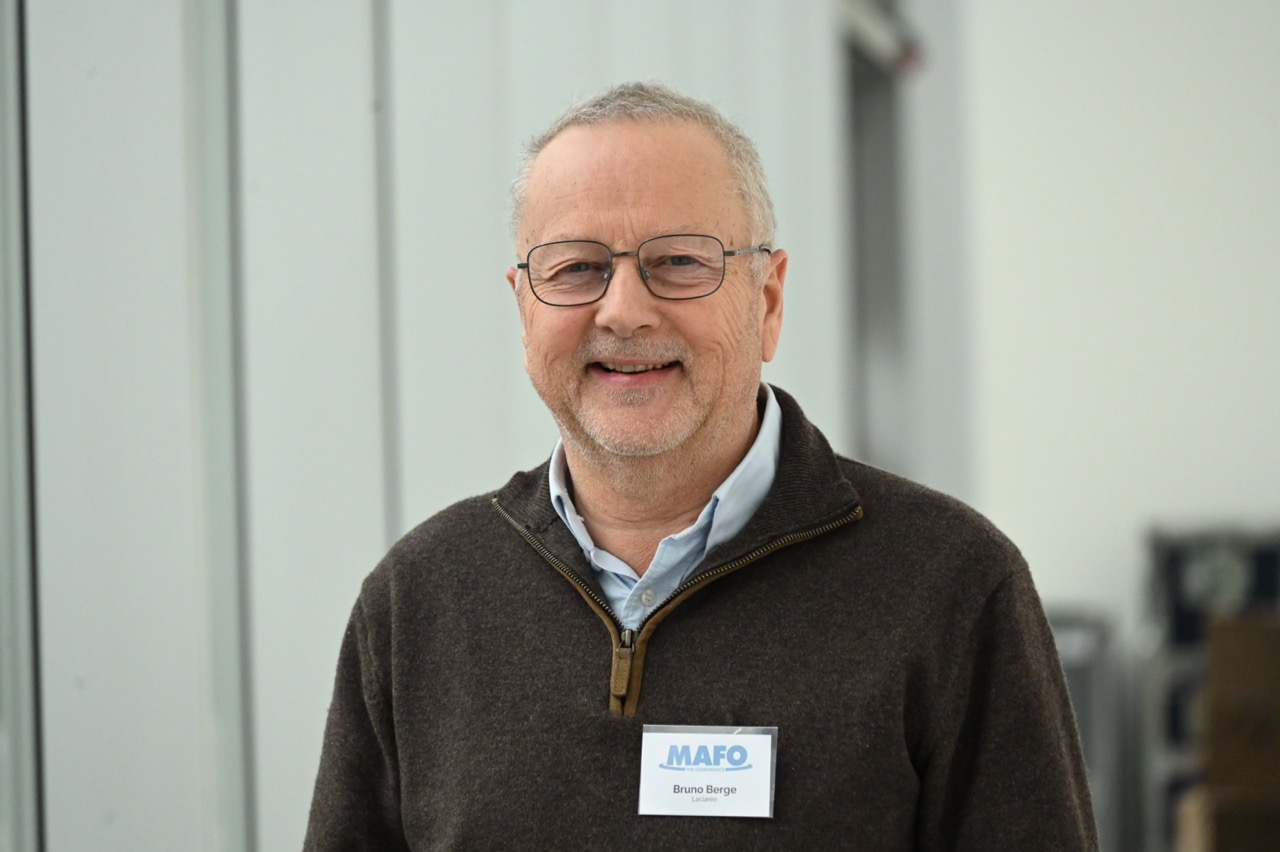
Dr. Bruno Berge
Bruno Berge, Ph.D., is CSO & Founder with established expertise in variable-focus lenses.